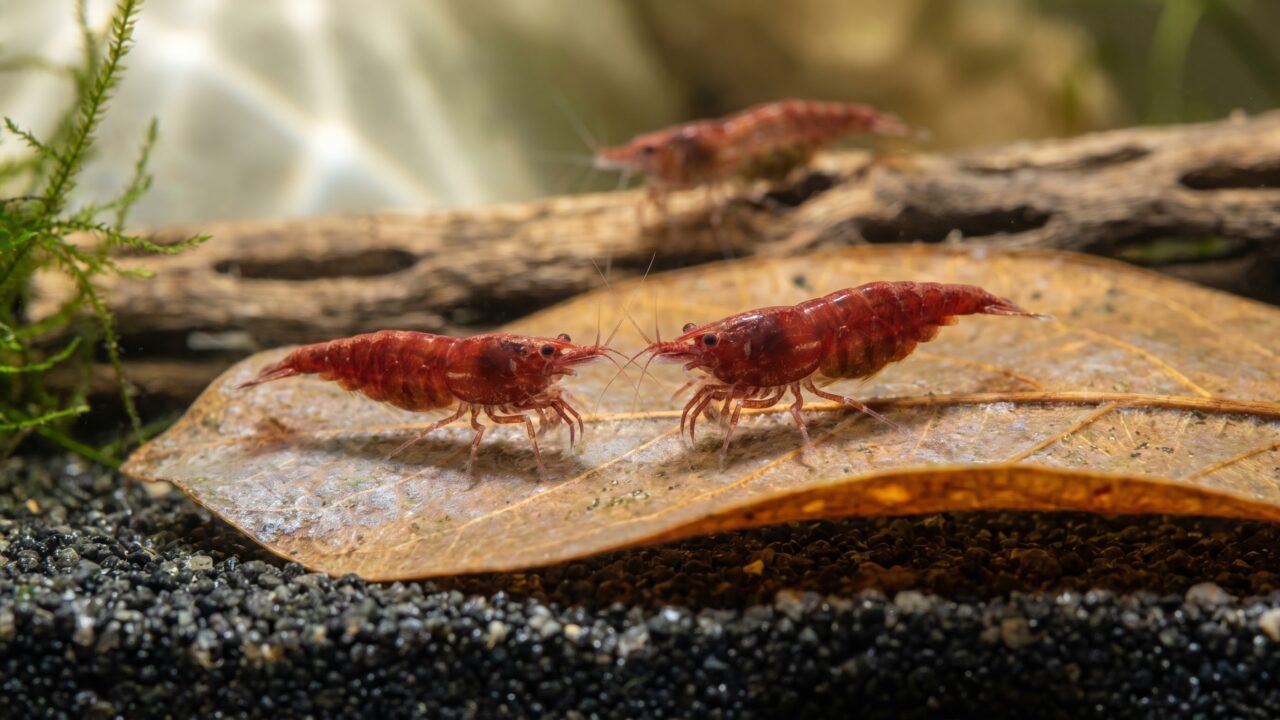
Every few minutes, a healthy shrimp picks up its tiny chelae and combs the nearest surface for something to eat. It grazes the glass, works across a moss clump, climbs a piece of driftwood. It is not waiting for you to feed it. It is eating constantly, and what it is eating, most of the time, is biofilm.
Freshwater dwarf shrimp, including Neocaridina davidi (cherry shrimp and all color variants) and the Caridina species kept in aquariums, are omnivores that feed on biofilms, algae, and detritus in the wild. They do not eat rooted plants. Their specialized mouthparts and feeding appendages are built for grazing fine organic material from submerged surfaces, not chewing through vegetation. Supplemental foods from a bottle or a blanching pot matter, but they come second to a well-established biofilm layer in your tank. Understanding that order of priority keeps colonies fed, water clean, and shrimp alive.
Biofilm: the food your tank makes for free
Biofilm is a thin, living matrix of bacteria, microalgae, fungi, diatoms, and protozoa that coats every submerged surface in a mature aquarium. You cannot see most of it, but your shrimp can find it by touch. Research on wild populations confirms just how effective these grazers are: in a 30-day feeding experiment, Neocaridina denticulata sinensis reduced periphyton density on submerged plant surfaces by more than 70% - a result reported by Ye (2017) and cited in a longer mesocosm study published in Knowledge and Management of Aquatic Ecosystems. Atyid shrimp as a group are recognized benthic consumers that graze periphyton and process fine organic matter, directly influencing algal biomass and nutrient cycling in freshwater systems.
For shrimplets, biofilm is especially critical. Newly hatched juveniles are tiny enough that they cannot handle most prepared foods, but they can graze biofilm from the moment they leave the mother. A biofilm-based culture study found that juvenile Neocaridina davidi reared with biofilm as the sole diet had significantly higher survival and biomass than those without adequate substrate. The research showed that biofilm composed mainly of microalgae, diatoms, cyanobacteria, and ciliates was sufficient for early-stage growth. This is why baby shrimp care starts with a well-cycled, mature tank, not a pile of powdered food.
Promoting biofilm in your own tank is straightforward:
- Let the tank mature for at least 6-8 weeks before adding shrimp (cycling also ensures ammonia and nitrite read 0).
- Add Indian almond leaves, alder cones, or small pieces of driftwood. As these botanicals decompose, they release tannins and organic compounds that feed biofilm-forming microorganisms and create additional colonization surfaces.
- Use a sponge filter. The sponge surface is one of the densest biofilm habitats in the tank, and shrimp spend hours on it.
- Avoid harsh chemical treatments. Any medication containing copper is lethal to shrimp even at low concentrations. According to the University of Florida IFAS Extension, most invertebrates are highly sensitive to copper and will not survive a copper treatment. Check fertilizers too, because some liquid plant fertilizers contain chelated copper.
Biofilm powder products, such as GlasGarten Bacter AE, accelerate biofilm development by adding microorganisms, amino acids, and enzymes to the aquarium. The manufacturer states that it "improves water quality and increases the development of the bio layer needed by shrimp and especially their offspring." These products are useful during tank cycling and when raising a large batch of shrimplets, but they are a booster, not a substitute for a cycled tank.
What shrimp actually eat: algae, detritus, and more
Beyond biofilm, shrimp graze opportunistically. Soft algae, particularly diatoms, are eaten readily. Green spot algae is often cited by hobbyists as something shrimp will tackle in its early, softer stage, though this varies considerably and the nuances deserve their own treatment - see do shrimp eat algae for the full breakdown. Hard, patch-forming green algae and fully established green spot algae are generally ignored.
Shrimp also process detritus: dead plant matter, decaying leaf litter, and the fine organic particles that settle on substrate. This is part of their ecological role in any freshwater system. Leaf litter like Indian almond leaves is not just a water conditioner; as the leaf breaks down, shrimp graze the microbial community growing on its surface. A partially decomposed leaf with white fuzz is not a problem. It is a banquet.
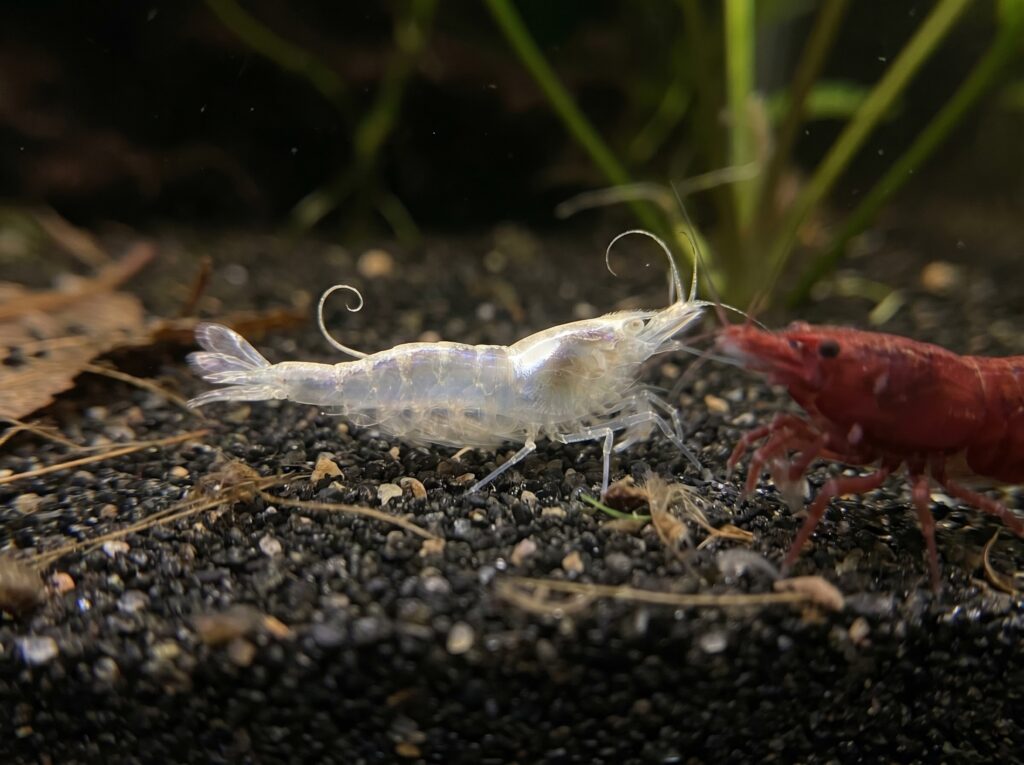
One feeding behavior that surprises new keepers is molt consumption. After a shrimp sheds its exoskeleton, the colony will usually eat the old shell within a day or two. Leave it. The molt contains calcium and other minerals the shrimp reabsorbs, and the rest of the colony benefits from those nutrients too. Removing molts routinely deprives the tank of a natural mineral recycling loop. This matters because calcium and magnesium together govern how well the new exoskeleton hardens after each molt. Research on crustacean physiology confirms that these two minerals interact directly, affecting carapace hardness, molting hormone levels, and chitinase activity. Good water parameters, not just food, carry most of that mineral load, which is why a proper GH is the foundation of molting health, not a food additive.
Supplemental foods: what to add and how to choose
In a mature, well-planted tank with healthy biofilm, supplemental feeding fills nutritional gaps rather than providing the core diet. The right supplement adds protein sources, specific vitamins, and minerals that biofilm alone may not deliver in consistent quantities. The wrong one rots in the tank and crashes your water quality.
Specialty shrimp foods are the most reliable option because they are formulated to hold together in water without dissolving into soup. GlasGarten Shrimp Dinner 2, for example, is described by the manufacturer as "the daily main meal for a balanced diet for shrimp in the aquarium" and contains a mix of algae (chlorella, spirulina, kelp), spinach, molluscs, crustaceans, vegetable protein extracts, cereals, minerals, nettle, walnut leaves, yeast extract, herbs, and fennel. The full ingredient spectrum reflects the omnivorous nature of the animal. Spirulina in particular has solid research support: a meta-analysis of 24 shrimp comparisons found that dietary spirulina supplementation significantly improved final body weight, with an optimal inclusion level of around 1.67% of the diet. Carotenoids in spirulina also support color expression, which matters if you are working on high-grade Neocaridina color lines.
For a curated breakdown of commercial options across different budgets and colony sizes, the best shrimp food article covers the leading brands with their actual ingredient profiles.
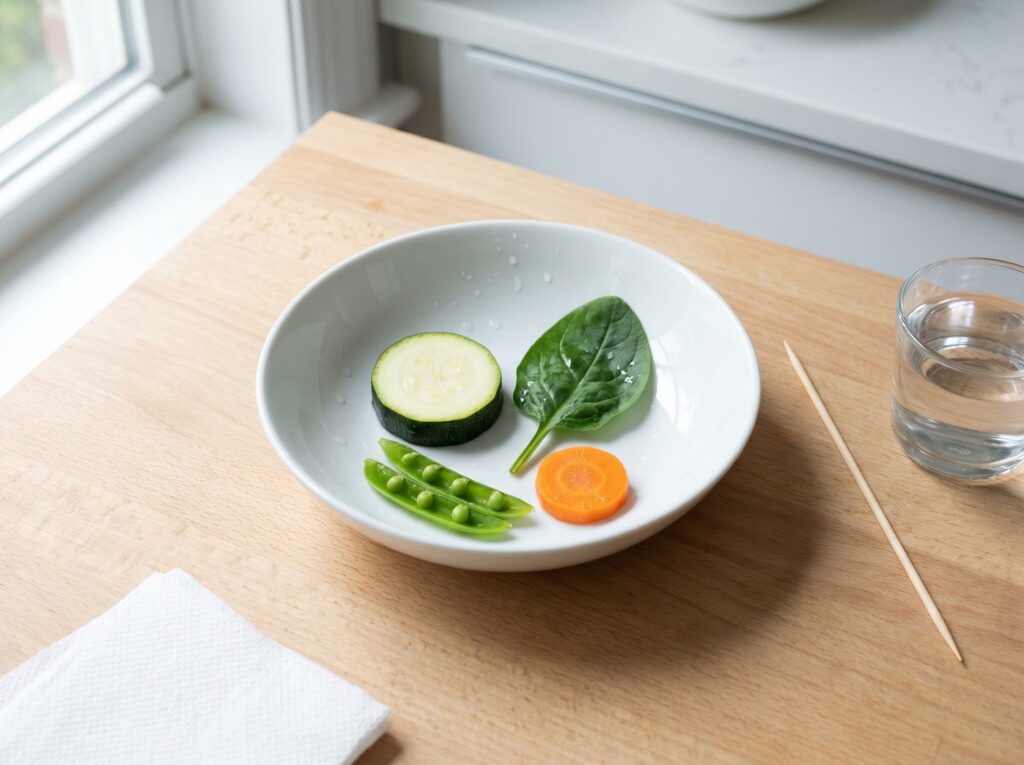
Blanched vegetables are a practical and low-cost supplement. Shrimp graze them slowly over several hours, which makes them a good weekend feeding option when you are away. The vegetables that work well, and why, differ mainly by texture and nutrient density:
- Zucchini and cucumber: Soft enough when blanched, low in oxalates, easy to sink. Skin can stay on.
- Spinach: High in iron; calcium is present but largely bound to oxalates, so do not rely on it for mineral supplementation. Blanch briefly to soften. One minute is enough.
- Peas: Shell them first. The pea itself is dense in protein relative to most vegetables.
- Broccoli and cabbage: Both work and provide variety. Blanch for about two minutes.
- Carrots and sweet potato: Peel first, blanch two to three minutes. Denser texture means longer blanch time.
Always let blanched vegetables cool completely before adding them to the tank. Hot water raises tank temperature and stresses shrimp. Remove any uneaten vegetable pieces within 24 hours to prevent decomposition from spiking ammonia.
The blanching guide
| Vegetable | Prep | Blanch time | Notes |
|---|---|---|---|
| Zucchini / courgette | Slice 0.5 cm rounds; skin on | 1-2 min | Sinks easily; shrimp favorite |
| Cucumber | Slice; remove seeds | 1-2 min | Low nutrient density but popular |
| Spinach | Rinse well | 1 min | Rich in iron; use sparingly (oxalates) |
| Peas | Shell; cut large ones in half | 2 min | Good protein source; popular with berried females |
| Broccoli florets | Small pieces; rinse | 2 min | Remove within 12 h; cloud risk if left |
| Cabbage | Tear into small pieces | 2 min | Cost-effective; sinks well |
| Carrot | Peel; thin slices | 2-3 min | Dense; good beta-carotene source |
| Sweet potato | Peel; thin slices | 2-3 min | Popular; higher sugar content; remove promptly |
Blanching method: bring water to a boil, add vegetables, time from when boiling resumes. Drain, cool to room temperature, then add to tank. A clean clip or small weight helps it sink.
Overfeeding: the actual danger
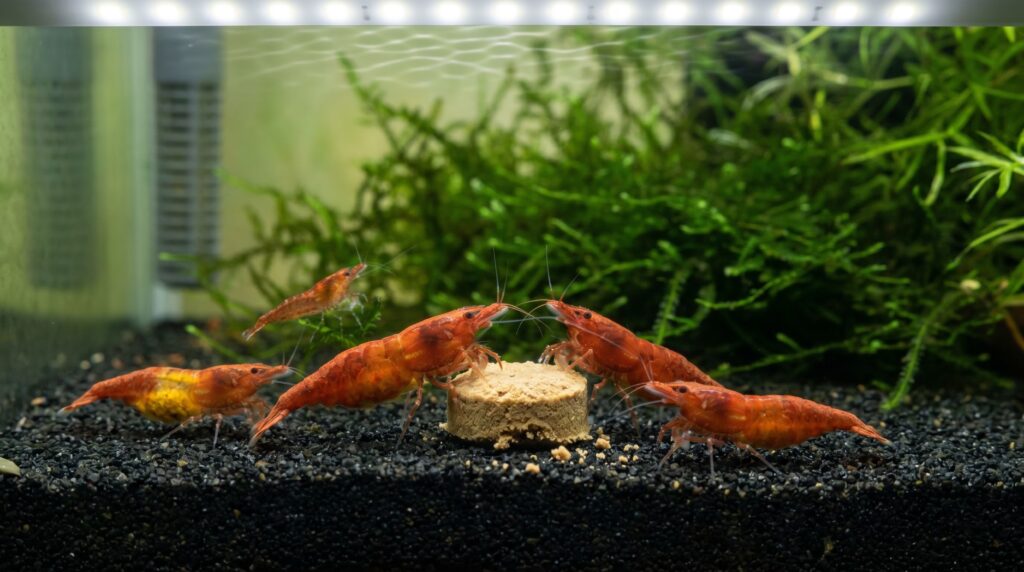
Overfeeding is consistently the highest-frequency beginner mistake in shrimp keeping, and it kills colonies faster than almost any other single error. Uneaten food does not just sit harmlessly on the substrate. It decays, and as it decays it produces ammonia. Ammonia spikes nitrite. Both are acutely toxic to shrimp. In a small aquarium with a modest bacterial colony, a single oversized feeding event can destabilize the nitrogen cycle within hours. A colony that appeared healthy on Monday can be losing animals by Wednesday, and the keeper may never identify the food as the cause.
There is a secondary effect that is slower but equally damaging: excess organic matter in the tank creates conditions for parasites and pathogens. Planaria, hydra, Vorticella, and bacterial infections all thrive when the organic load is high. A light, consistent feeding schedule is one of the most effective things you can do to keep these problems from gaining a foothold. The overfeeding shrimp article covers the full cascade in detail, including how to recognize early signs and reset water quality quickly.
The rule that experienced keepers apply consistently is simple: feed only what the colony can consume within two to three hours. If food remains after that window, it is too much. Remove the leftovers with a turkey baster or small siphon. For specialty pellets, a pinhead-sized portion per 10 to 15 adult shrimp is a reasonable starting point. Size up only when you see shrimp competing hard for food, not before.
A feeding schedule for a typical colony
The table below assumes an established tank (at least 8 weeks cycled) with healthy biofilm, a moderate planting level, and a colony of 20 to 30 adult shrimp. Adjust frequency downward for sparser colonies or tanks with heavy algae growth (biofilm is abundant; they need less supplementation). Adjust upward slightly for heavy breeding colonies where many shrimplets are present.
| Day | Feed type | Portion size | Remove after |
|---|---|---|---|
| Monday | Specialty shrimp pellet or granule | Pinhead per 10-15 shrimp | 3 h |
| Tuesday | No supplemental feeding (biofilm day) | - | - |
| Wednesday | Blanched vegetable (zucchini or spinach) | One thin slice per 20 shrimp | 24 h |
| Thursday | No supplemental feeding | - | - |
| Friday | Specialty shrimp food (different variety) | Pinhead per 10-15 shrimp | 3 h |
| Saturday | Botanical leaf or Shrimp Snack stick (optional) | One small leaf / half a stick | 48-72 h (leave to graze) |
| Sunday | No supplemental feeding | - | - |
That works out to three supplemental feedings per week for a colony of 20 to 30 shrimp. On the days with no supplemental feeding, healthy shrimp graze biofilm, algae, and any leaf litter in the tank. If you observe that your shrimp are still finding plenty to graze between feedings, dial back to two supplemental feedings per week. If you notice shrimp clustering hungrily around the feeding spot long after food is gone, add one more session, but do not increase portion size first.
Shrimplet-heavy tanks benefit from a fine biofilm powder (such as Bacter AE, dosed at the manufacturer's low-stocking rate) on off-feeding days, since juveniles cannot access pellets efficiently. A layer of fine substrate enriched with biofilm is the shrimplet nursery the colony needs. More on that at baby shrimp care.
A note on what shrimp do not need
Protein-rich foods marketed for carnivorous fish, bloodworm-heavy diets, and high-nitrogen supplements create more waste than a colony of small shrimp can justify. Shrimp are efficient. Their biofilm-and-algae baseline diet is low in protein relative to fish diets, and their bodies are small. Over-supplementing with high-protein foods accelerates the ammonia production problem described above without meaningfully improving growth rates or breeding success in healthy animals.
Copper-containing fertilizers, certain disease treatments, and in some areas first-draw tap water from copper pipes are the most common silent threats to a shrimp tank's feeding and health. The University of Florida IFAS Extension is explicit: invertebrates should be removed before any copper treatment is applied and not returned until copper concentrations are at or near zero. Before dosing any liquid fertilizer, check the label for copper content. If it lists copper as an ingredient, it is not shrimp-safe.