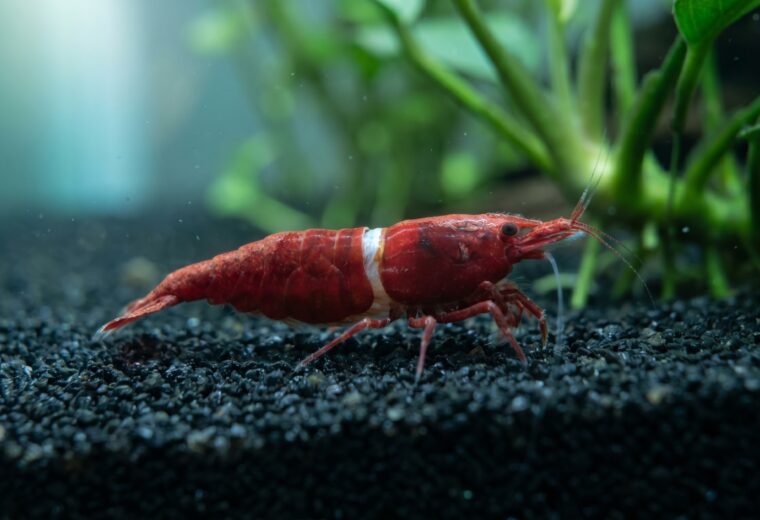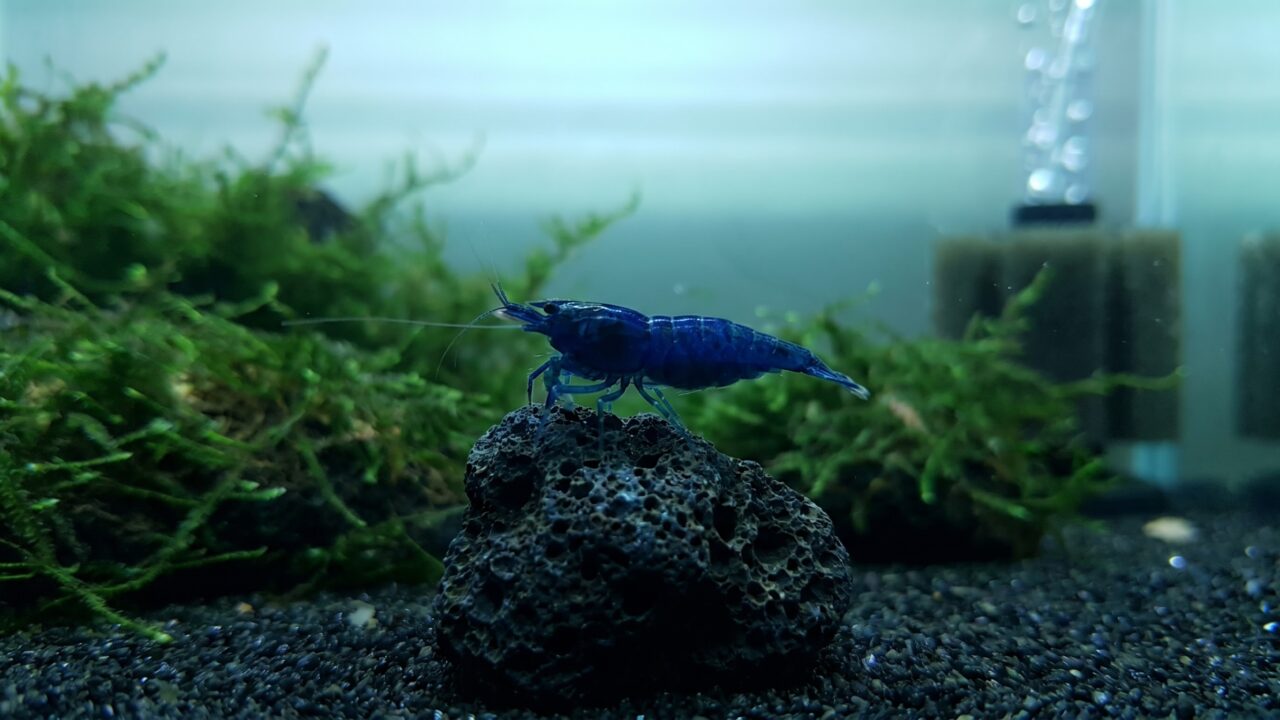
A top-grade Blue Dream shrimp shows no patches, no translucent legs, no faint brown cast - just a saturated, even blue from the tip of the rostrum to the last segment of the tail. That depth of color is the whole point of the line, and it takes years of careful selection to produce it. The good news is that keeping Blue Dreams is no harder than keeping Red Cherry shrimp. They share the same water, the same food, and the same tank logic. What trips people up is the naming: "Blue Dream," "Blue Velvet," and "Blue Diamond" are all blue Neocaridina, but they come from different breeding paths, and mixing them is a reliable way to end up with a tank full of brown shrimp.
This guide covers care (identical to standard Neocaridina parameters), what produces that solid blue color, how to read the grade you are buying, and why those three names refer to genuinely distinct lines worth keeping separate.
Care: the same Neocaridina parameters
Blue Dream shrimp are Neocaridina davidi, and every care requirement follows from that. The species is native to fresh water across Taiwan, eastern China, Vietnam, and the Korean Peninsula - inhabiting both slow-moving and swift-moving streams - where it grazes on biofilm, algae, and decomposing plant matter. In a tank, you are recreating those conditions in miniature.
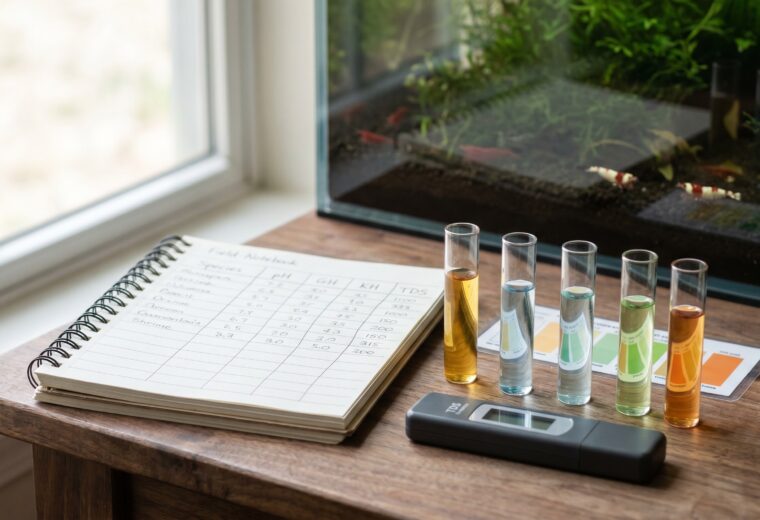
Target these water values and hold them steady:
| Parameter | Target range | Why it matters |
|---|---|---|
| GH | 6-8 dGH | Calcium and magnesium for molting and shell formation |
| KH | 1-4 dKH | Buffers pH against swings |
| TDS | 150-250 ppm | Overall dissolved solids load; tracks mineral balance |
| pH | 6.5-7.5 | Neutral to mildly alkaline; matches native habitat |
| Temperature | 18-26°C (64-79°F); optimal 22-24°C | Cooler mid-range supports longer lifespans and color expression; avoid exceeding 26°C as egg viability drops |
| Ammonia | 0 ppm | Any ammonia reading means the tank is not ready |
| Nitrite | 0 ppm | Same; nitrite is lethal at very low concentrations |
| Nitrate | Under 20 ppm | Regular small water changes keep this in range |
The temperature ceiling deserves attention. A published study on Neocaridina heteropoda heteropoda (the same species complex) found that females held at 32°C lost their eggs entirely. At 24°C the same animals hatched a mean of 24.2 juveniles per female. The message is practical: Blue Dreams kept in a warm room above 26°C will be stressed even if no individual number looks alarming. Run a fan across the surface in summer if you need to cool the tank a few degrees.
Consistent parameters matter far more than chasing perfect numbers. A colony settled at GH 7 and TDS 190 will breed readily and hold color. That same colony dragged through weekly swings from GH 5 up to GH 9 will begin dropping females within a few weeks. Keep adjustments small and gradual. For a full breakdown of how each parameter works mechanically, see our shrimp water parameters guide.
Setting up the water
If your tap water falls roughly in the GH 6-8 and pH 6.8-7.5 range after dechlorination, you can use it directly. Test it first. Many keepers use reverse-osmosis water and remineralize it to a known starting point. SaltyShrimp Shrimp Mineral GH/KH+ is the product most widely used for this: the manufacturer specifies that one level measuring spoon (about 2 g) per 10 liters of RO water targets approximately 6 dGH and approximately 300 µS conductance, with a GH-to-KH output ratio of 1.0 to 0.5. Mix it in a bucket before adding it to the tank, never pour dry powder directly into the aquarium.
One copper risk that catches beginners off guard: if your home has copper supply pipes, let the tap run for 30-60 seconds before collecting water for the tank. Water that has been sitting in copper pipes overnight can carry enough dissolved copper to harm shrimp. For the same reason, never use copper-based fish medications (common for ich or velvet) in a tank that holds shrimp, and check the label of any liquid plant fertilizer before dosing - some formulations contain copper at concentrations safe for plants but toxic to invertebrates. There is no antidote; prevention is the only strategy. Our copper and shrimp guide covers the full risk map.
Tank setup
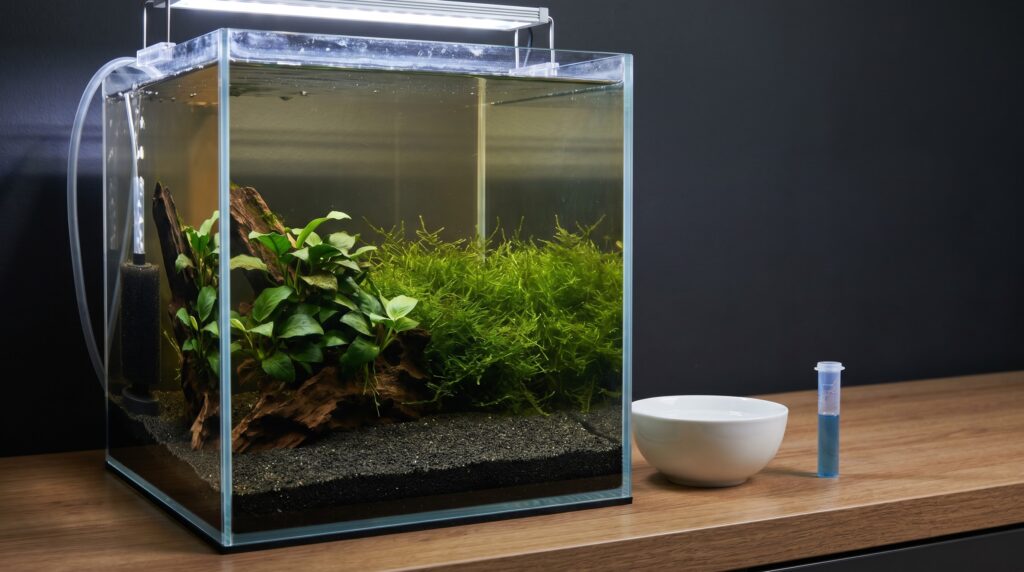
A 10-liter (roughly 3-gallon) tank can sustain a small colony, but 30-40 liters gives you the water volume that buffers against parameter swings - which matters far more than surface area for shrimp. Cycle the tank fully before adding any animals: ammonia must hit zero, then nitrite must hit zero, before the first shrimp goes in. A sponge filter is the standard choice because it provides gentle flow, supports biofilm growth on the foam surface, and poses no suction risk to shrimplets.
Substrate color has a measurable effect on how the shrimp look and behave. A peer-reviewed study on N. davidi color morphs found that all morphs - including the white-bodied strain - consistently chose dark substrates over light ones. A dark substrate makes the blue pigmentation visually pop and appears to reduce stress-related color fading. Fine black or dark volcanic sand is the practical choice.
Plants serve two purposes: they maintain water quality through nutrient uptake, and they provide grazing surfaces where biofilm accumulates. Java moss, Anubias, and floating plants all work well. Shrimp spend a notable fraction of their day picking through moss strands and plant surfaces - the denser the planting, the more natural foraging time they get. Feed a small, dedicated shrimp food two to three times per week. In a mature, planted tank, the shrimp graze biofilm and algae between meals and rarely look underfed.
Acclimating new shrimp
Shrimp are far less able than fish to regulate internal water balance quickly, so a sudden TDS or pH shift causes osmotic stress. To acclimate new arrivals, set up a drip line into a bucket or container holding the shrimp and their shipping water. Run it at a slow trickle, targeting a full drip per second, and let the volume build for about 90 minutes. Once the water has roughly doubled, transfer the shrimp by net and pour the blended water away. Never pour bag water directly into the aquarium, both for the shrimp's sake and to avoid introducing pathogens.
What makes the blue so deep
Blue coloration in N. davidi comes from iridophores - specialized cells that contain stacks of reflective platelets and produce blue light by structural interference rather than by pigment absorption. The color you see is physics, not dye. A high-grade Blue Dream has a dense, uniform population of iridophores covering the body, legs, and antennae. Lower-grade individuals have fewer or patchily distributed iridophores, and you can see through them - the muscle tissue underneath gives those areas a translucent or faintly brownish cast.
This is the core of Blue Dream grading: opacity is a direct proxy for iridophore density, which is the heritable trait that breeders are selecting for. Feed a colony that already has good iridophore genetics, and you are not going to transform a pale animal into a deep one. Diet and water quality can keep the color at its genetic ceiling, but they cannot raise that ceiling. The ceiling itself is genetics, set over many generations of selective culling.
One practical note: shrimp express color most intensely when they feel secure. A new arrival to an unfamiliar tank will often look washed out for a week or two. The same animal can look impressively blue six weeks later once it has settled and stopped hiding. Do not judge a new purchase immediately; give the colony four to six weeks before assessing color quality.
Grading: from pale to painted
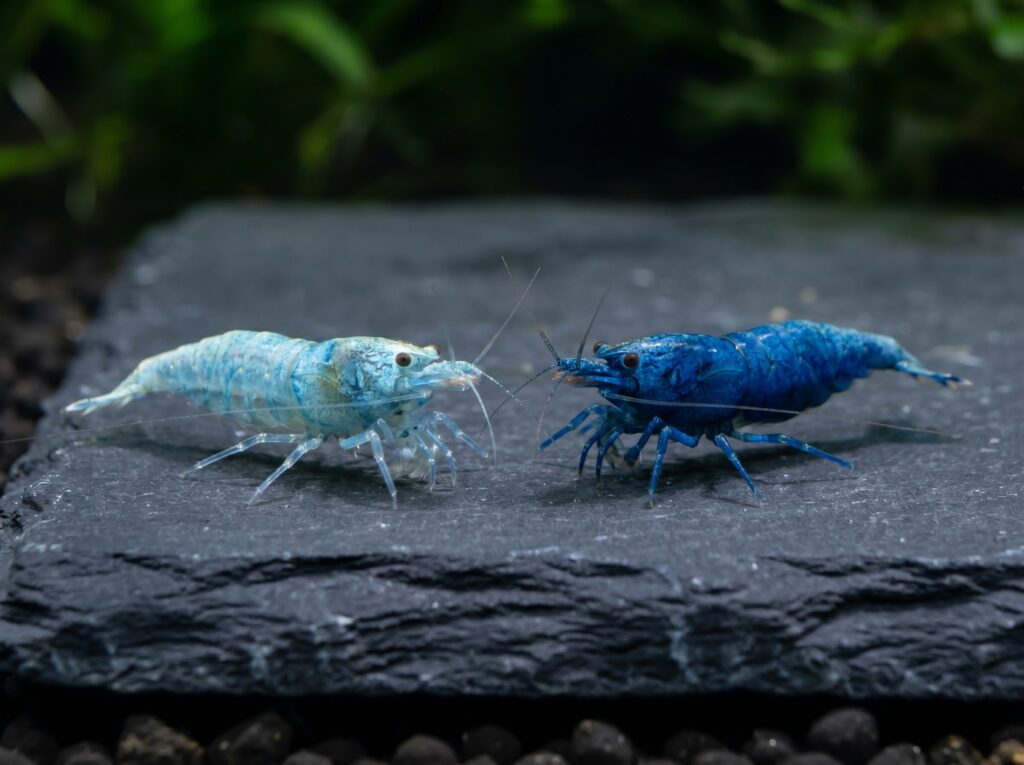
Blue Dream grading follows the same logic as the red cherry grading system, just applied to blue coloration. The hobby has not standardized a single naming tier for the blue line the way it has for red cherry shrimp (Cherry, Sakura, Fire Red, Painted Fire Red), but the criteria are consistent. For more on how Neocaridina grading works across all color lines, see our Neocaridina grading guide.
In practice, Blue Dream grade is evaluated on three criteria: color depth (how dark and saturated the blue is), body coverage (what percentage of the body shows solid color), and leg and antenna coloration (whether the appendages are blue or translucent). The best animals show full coverage everywhere. The following table is a working field guide for assessing what you have or what you are buying:
| Grade description | Body color | Legs and antennae | Translucent patches | Typical use |
|---|---|---|---|---|
| Low / starter | Pale sky blue, faint | Mostly clear | Large areas, especially midback | Colony start if budget is limited; heavy culling needed |
| Mid | Medium blue, some saturation | Faint blue tinge on legs | Visible patches at abdomen or head | Good foundation stock; breed selectively |
| High | Rich, even blue throughout | Blue or blue-grey, minimal transparency | Minor patches under magnification only | Display colony; solid breeding stock |
| Top / "painted" | Deep, opaque, near-navy | Fully blue including tips | None visible in normal light | Premium breeding pair; carry the best iridophore genetics |
Males are typically a grade or two below females from the same spawn - they are smaller and carry fewer iridophores in absolute terms, though in well-selected lines some males approach female coloration. When assessing a colony, judge by the females. A group of females that all hit "high" grade is a strong line; a group where females vary widely between low and high suggests the breeding stock was not well selected.
Culling - removing low-grade animals from the breeding pool - is how you move a colony upward over time. Pull the palest animals out into a separate tank or a community tank with peaceful fish. You do not have to destroy them; you just stop them from breeding into the main line. See our full guide to Neocaridina color reversion for the genetics of why unmanaged colonies drift toward lower color expression.
Blue Dream vs Blue Velvet vs Blue Diamond: what actually differs
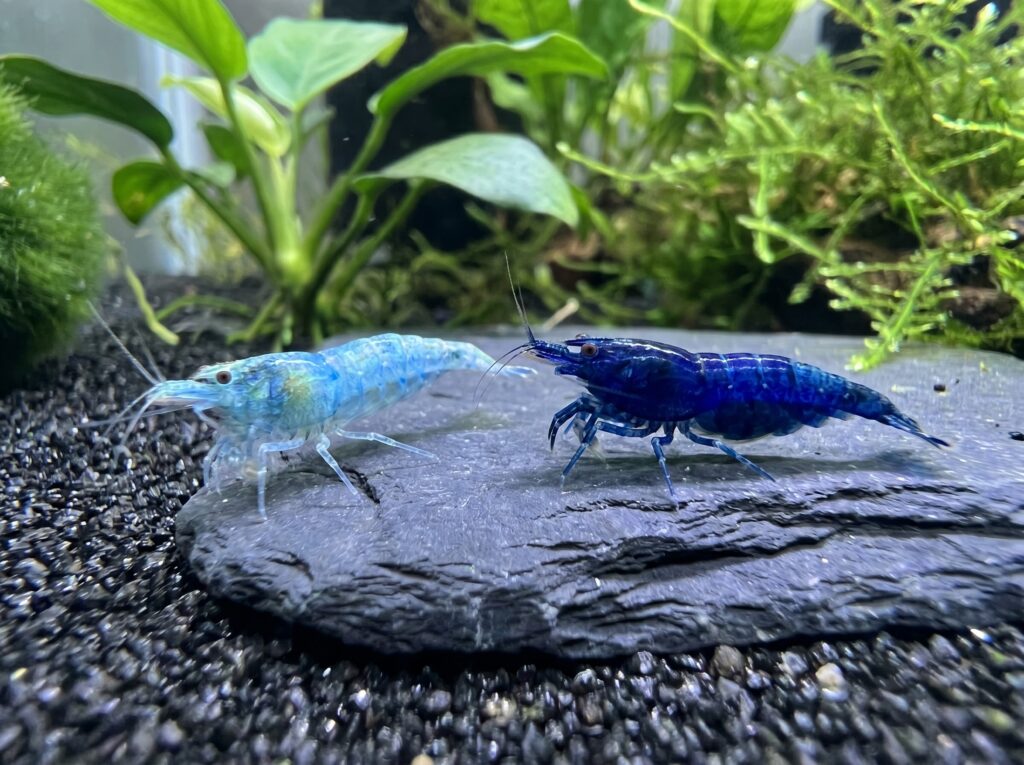
This is the question that generates the most confusion at point of purchase, and the short answer is that all three are Neocaridina davidi with blue coloration - same care, same water, same food - but they came from different selective breeding paths and they do not breed cleanly with each other.
The table below maps the three main blue lines plus Blue Jelly, which sometimes appears in import lists:
| Name | Typical color depth | Opacity | Lineage (hobby account) | Offspring if crossed with another blue line | Notes on naming |
|---|---|---|---|---|---|
| Blue Dream | Deep royal to navy blue | High - opaque at top grade | Developed from Carbon Rili / Chocolate Neocaridina; sometimes traced to "Schoko" line | Brown, pied, or pale blue offspring; color integrity lost | The name used for the deepest, most opaque blue line in the hobby; some sellers use it loosely |
| Blue Velvet | Light to mid sky blue | Lower - translucent, powdery look | Developed from Red Rili line; some accounts cite Blue Carbon Rili cross | Brown, pied, or pale offspring | Outside the USA "Blue Velvet" sometimes refers to what American sellers call Blue Dream; naming is not standardized globally |
| Blue Diamond | Deep sapphire, dark | High - dense, opaque | Developed via Chocolate Neocaridina selection; claimed in some hobby accounts to be a precursor to Blue Dream, but this relationship is unverified hobby lore with no corroborating published source | Brown or pied offspring | Less common in trade; often confused with high-grade Blue Dream; may be the same line under a different breeder's label |
| Blue Jelly | Pale, cool blue | Low - deliberately translucent, "glassy" look | Red Rili lineage; selected for translucency rather than opacity | Occasional red-tinged offspring from ancestral Rili genetics | Common name outside the USA; US hobbyists sometimes use "Blue Velvet" for this type |
The naming problem is real and persistent. Common names for shrimp varieties are not scientifically standardized - any breeder or importer can call their animals whatever they choose. What you can rely on is the description: opacity and color depth are observable. If a seller calls their animals "Blue Dream" but the photos show light, translucent blue bodies, you are looking at Blue Velvet or Blue Jelly stock regardless of the label. Ask for close-up photos of females in good light before buying.
The practical rule: keep blue-line shrimp separate from every other Neocaridina color line, and keep the blue sub-lines separate from each other if you care about color quality. Blue Dreams crossed with Blue Velvets produce offspring across the full spectrum of blue expression - including washed-out, translucent animals that look nothing like either parent at their best. Mixed blue lines are a fine community display; they are not a breeding project.
Breeding true: why offspring sometimes turn brown
A well-managed Blue Dream colony breeds readily. Females reach sexual maturity at roughly eight to ten weeks of age. Once a female molts after maturation, males detect the pheromone release and initiate a brief, frantic swimming behavior called a "mating run." Fertilization happens within hours of the molt. The female carries 43-60 fertilized eggs fanned under her abdomen for approximately 18-24 days at typical aquarium temperatures of 22-24°C, and the eggs hatch as fully formed miniature shrimp about 1-2 mm in length - N. davidi has no free-swimming larval stage.
Start a colony with at least 10 shrimp (a mix of males and females), and give the tank four to six weeks to mature before expecting breeding activity. A sponge filter is essential here: fine-mesh or powered intake filters will suck up shrimplets, which are small enough to vanish into a canister filter intake without a pre-filter sponge.
Brown or pale offspring in a supposedly pure Blue Dream colony happen for two reasons. The first is mixed stock: if you started with shrimp from a seller whose colony contained other color lines, those genetics are already in the pool. The blue coloration in N. davidi depends on a specific expression pattern of iridophores; recessive or partially expressed genetics from other lines can produce animals that show less blue or none at all. The second reason is within-line regression. A colony left unmanaged - where every animal breeds, including the palest ones - drifts toward lower color expression over generations. The solution to both problems is the same: cull consistently, and source your foundation stock from a breeder who has maintained a clean, single-line colony.
For context on how color genetics work across Neocaridina lines more broadly, see our color reversion guide. The full genetics of chromatophore expression in N. davidi is not thoroughly mapped in the published literature - the Wikipedia entry on N. davidi notes that "there is limited public information about the heritability and inheritance patterns, expression, and polymorphism of color traits" - so the practical guidance above is based on observed breeder outcomes rather than a complete genetic model.
The most common beginner failure
Putting Blue Dreams in an uncycled tank kills them within days. Ammonia - produced by uneaten food, shrimp waste, and decaying plant matter - is acutely toxic at concentrations well below 1 ppm. The nitrogen cycle converts ammonia to nitrite, then nitrite to nitrate, via two distinct populations of beneficial bacteria. Both conversions must be running before you add shrimp. This typically takes four to six weeks from a cold start, or faster if you seed the filter with established media from a cycled tank. Test ammonia and nitrite independently, on different days, and only add shrimp when both consistently read zero. Nitrate under 20 ppm is your ongoing target, maintained with small weekly water changes of 10-15% using water pre-matched to tank temperature and parameters.
The second killer that takes beginners by surprise is the white ring of death, which shows up as a pale, hard-edged line where the carapace meets the abdomen when a molt goes wrong. It means the shrimp could not shed its old shell cleanly, and it is almost always fatal once visible. The root cause is insufficient GH (specifically the calcium and magnesium component), either because the tank water is too soft or because a sudden water change shifted parameters mid-molt. Cuttlebone is a valid preventive supplement for gradually raising GH in soft water, but it cannot reverse a molt that is already in progress - once the white ring appears, the outcome is almost always fatal regardless of what you add. The correct approach is prevention: maintain GH in the 6-8 dGH range consistently so shrimp have the mineral supply they need before the molt begins. Our white ring of death guide covers diagnosis and prevention in detail.