Set up the water right, and Neocaridina davidi will breed faster than almost any other freshwater invertebrate you can keep. That is the honest summary of cherry shrimp care. GH between 6 and 8 dGH, TDS around 150-250 ppm, pH in the 6.5-7.5 range, a cycled filter, and a handful of plants - that is the foundation. Get those five things in place and a healthy, stable colony roughly doubles every couple of months, so a starter group of 10-15 shrimp typically grows into the low hundreds over about 8-12 months.
Cherry shrimp are hardy by dwarf-shrimp standards, but they are still small invertebrates with thin exoskeletons and no tolerance for copper, sudden parameter swings, or ammonia spikes. One note before anything else: this guide is for Neocaridina. Crystal and bee shrimp are Caridina, and they need completely different water - soft and acidic at pH 5.8-6.4, near-zero KH, over an active buffering substrate - so do not apply these numbers to them (see Neocaridina vs Caridina water).
Species background: what cherry shrimp actually are
Neocaridina davidi (Bouvier, 1904) belongs to the family Atyidae, order Decapoda - the same group as crabs and lobsters, just scaled down to a maximum of about 3-4 cm. The species is native to inland freshwater bodies across Taiwan, eastern China, the Korean Peninsula, and Vietnam, where it inhabits lakes, ponds, rivers, and slow-moving streams.
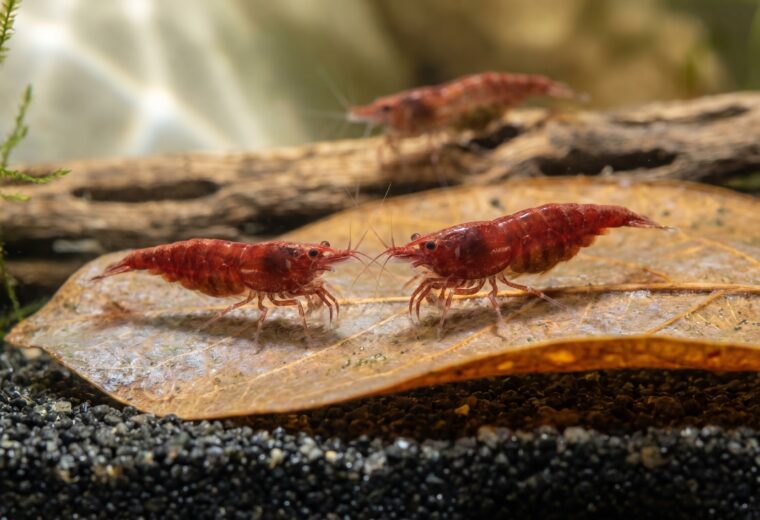
Wild individuals are mottled brown, essentially invisible against leaf litter. Every color form sold in the hobby - red, orange, yellow, blue, green, black, white - is the same species, produced by decades of selective breeding for pigment expression. This matters for two reasons: all color lines share identical water-parameter requirements, and they will freely crossbreed if mixed together, reverting offspring toward the original brown within a few generations. Keep your color lines separate.
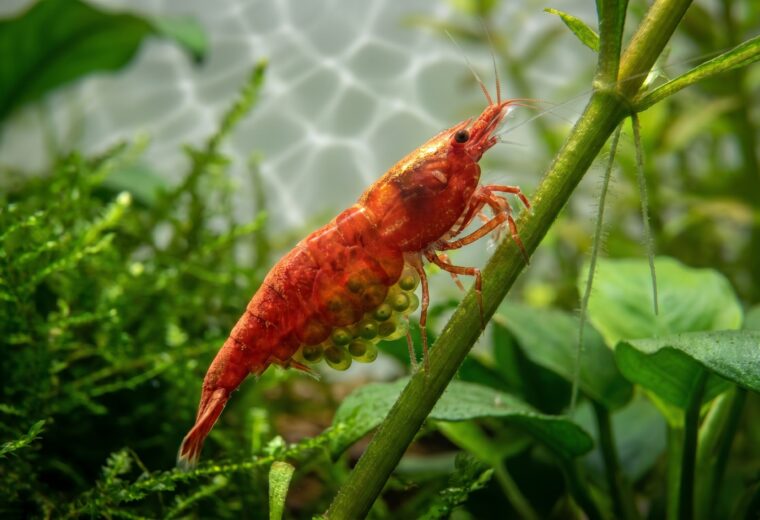
Adult females typically reach 3-4 cm; males run noticeably smaller, usually 2-2.5 cm. Females are also rounder in the abdomen (the "saddle" of developing eggs is visible through the carapace) and tend to show deeper coloration once a colony is well-fed. Lifespan in captivity is 1-2 years, and temperature is the main lever you control. There is a real trade-off here: breeding-optimum warmth (about 24-26°C) speeds metabolism, so the colony grows fastest but individual shrimp age faster and sit toward the lower end of that range. Cooler water (about 20-22°C) slows metabolism, breeds more slowly, and pushes individual lifespan toward the 1.5-2 year end. Sustained water above 27°C shortens life on both counts. Pick the end of the range that matches your priority - fast colony growth or longer-lived individuals - rather than chasing both at once.
Water parameters: the numbers that matter
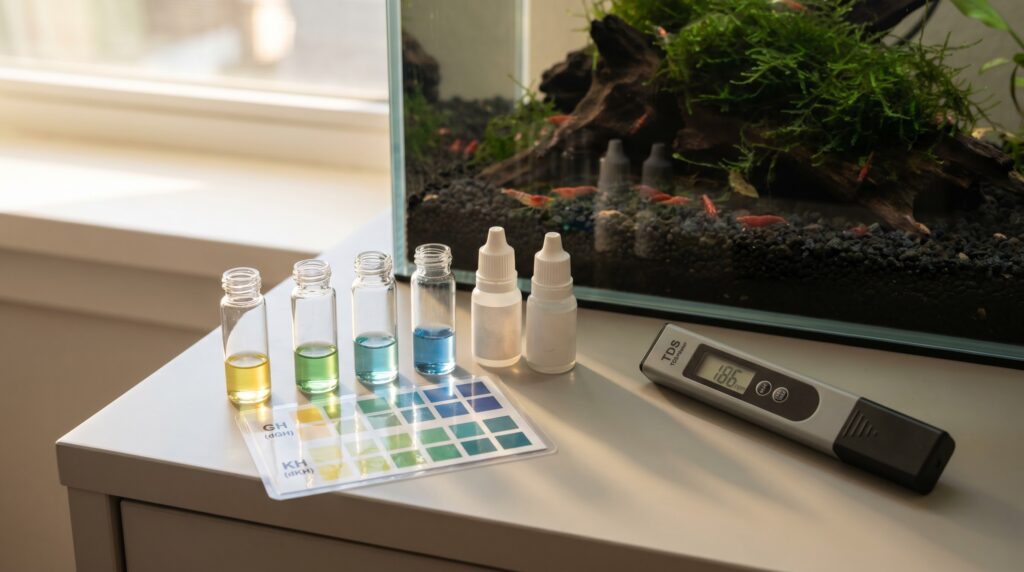
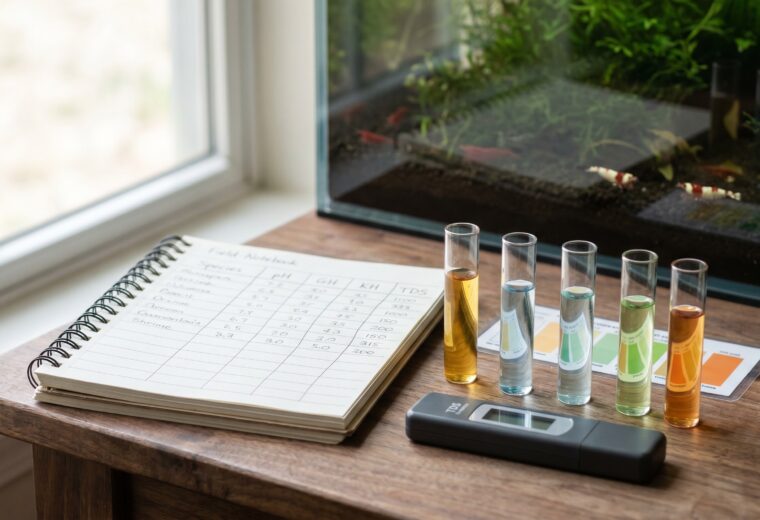
The table below is the core reference. These ranges are the keeper's practical target, not lab minimums:
| Parameter | Target range | Why it matters |
|---|---|---|
| GH (general hardness) | 6-8 dGH | Calcium and magnesium for exoskeleton formation and successful molting |
| KH (carbonate hardness) | 1-4 dKH | Buffers pH against swings; Neocaridina are fine even at KH 0-2 as long as it is stable |
| TDS (total dissolved solids) | 150-250 ppm | Proxy for total mineral load; keep it stable between water changes |
| pH | 6.5-7.5 | Wide tolerance, but swings stress shrimp |
| Temperature | 18-26°C (64-79°F) | Breeding optimum 22-26°C; above 26°C stresses the colony; lower end extends lifespan |
| Ammonia / nitrite | 0 ppm (both) | Any detectable level is dangerous to shrimp |
| Nitrate | Under 20 ppm | Higher concentrations reduce breeding rate and shrimplet survival |
GH is the single most important parameter. Calcium and magnesium are what shrimp use to build and shed their exoskeletons, and scientific research on crustacean physiology confirms that "calcium ions are critical for the mineralization of the new shell and are closely associated with its mechanical strength," with more than 80% of total body calcium deposited in the exoskeleton. When GH falls below about 5 dGH, molting failures and the white ring of death become common. See the article on shrimp water parameters for a full explanation of each parameter.
Stability matters as much as hitting the right numbers. A tank sitting at GH 7, pH 7.1, and TDS 190 day after day is far safer than one that bounces between GH 6 and 9 with each water change. Shrimp regulate their internal osmotic balance continuously; rapid shifts in surrounding water chemistry force that system to compensate faster than it can, causing osmotic stress that triggers oxidative damage to hemocytes and gill tissue - effects that crustacean physiology research shows can persist even after conditions stabilize, which is why keepers often lose shrimp days after a parameter spike rather than during it.
KH (carbonate hardness) is the parameter beginners overthink. Neocaridina do not need a high KH to be healthy; colonies thrive across KH 0-4, and plenty of keepers run them at KH 0-2 with no trouble at all, provided the value is stable. KH's only job here is to buffer pH, so a floor of about 3 dKH is worth holding only as optional insurance in tanks that are prone to pH swings - mainly CO2-injected or heavily planted setups. In a normal low-tech shrimp tank, a low but steady KH is not a problem to solve. See KH for shrimp for the full picture.
Tap water vs. RO water for cherry shrimp
Many tap water sources fall within the Neocaridina range without adjustment. Test yours with a GH/KH test kit before setting up the tank. If your tap GH sits between 6 and 10 dGH and your TDS is under 300 ppm, tap water treated with a dechlorinator (Seachem Prime works well - it removes chlorine, chloramines, and detoxifies heavy metals at tap-water concentrations) is a practical choice.
If your tap is very hard (GH above 12), very soft (GH under 4), or has irregular mineral content, reverse osmosis water remineralized with SaltyShrimp Shrimp Mineral GH/KH+ gives you full control. The manufacturer's stated dose is approximately 2g per 10 liters of RO water to reach roughly 6 dGH and around 300 µS conductance (roughly 200 ppm TDS), with a GH-to-KH ratio of 1:0.5. Mix the remineralizer into the RO water before adding it to the tank, not directly into the aquarium.
One category of tap-water contamination has no safe threshold: copper. Freshwater shrimp cannot detoxify it at any meaningful level. Research on freshwater shrimp species shows 96-hour LC50 values as low as 0.03 mg/L - a level that some aging copper pipe systems can exceed. If you have copper plumbing, either test for copper or default to RO water. Never use copper-based medications, copper-containing fertilizers, or any aquarium product listing copper sulfate in a shrimp tank. For more on this, see the guide to copper and shrimp.
Tank setup and equipment
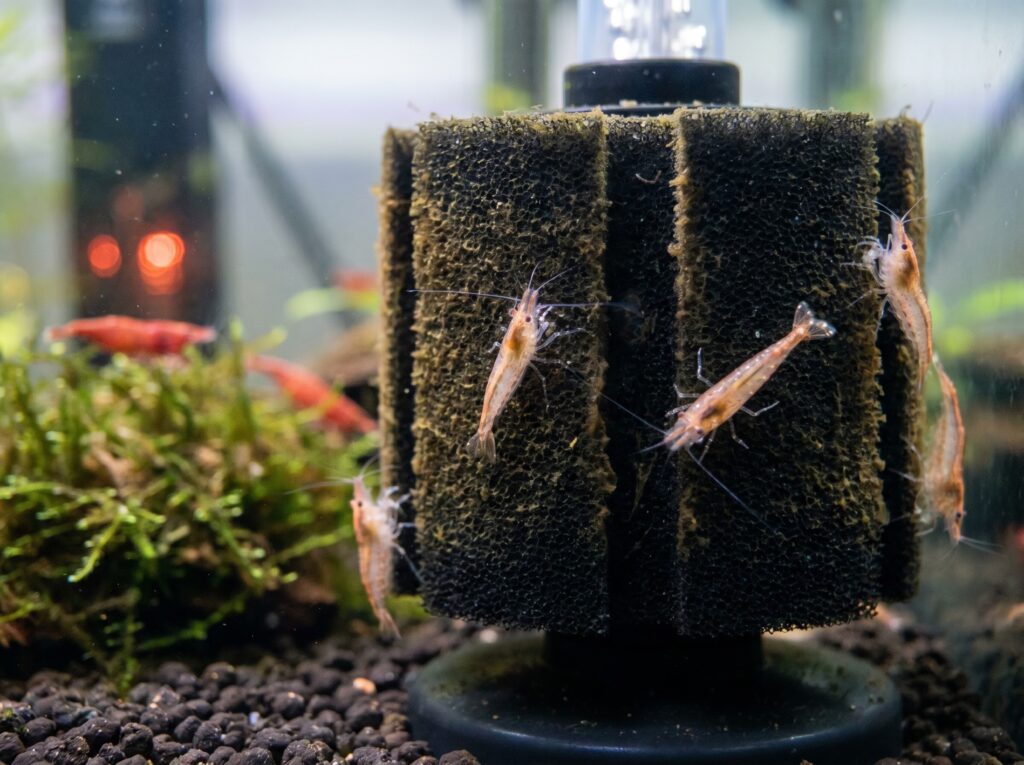
A 10-gallon (38L) tank is a practical starting point for a breeding colony. It holds enough water volume to buffer small parameter fluctuations, fits comfortably on a desk or shelf, and supports a population of 50-100 adults without the bioload becoming a challenge. You can keep cherry shrimp in 5 gallons, and many keepers do - but water changes become more critical and any spike hits harder in a smaller volume.
Filtration should be shrimp-safe. A sponge filter driven by an air pump is the standard recommendation for good reason: it has no impeller to trap shrimplets, the sponge surface colonizes with beneficial bacteria and biofilm that juveniles graze constantly, and it is easy to maintain. If you prefer a hang-on-back or canister filter for a larger tank, cover the intake with a fine sponge prefilter - shrimplets are tiny (about 1mm at hatch) and will be drawn into an uncovered intake.
Substrate is a matter of preference for Neocaridina, since they do not require an active buffering substrate the way Caridina do. Plain inert gravel, sand, or an aqua soil that does not aggressively buffer pH all work. Scientific research on color morph preferences found that all Neocaridina davidi morphs "selected the black background and avoided the white substratum," so a dark substrate will tend to bring out color more than light gravel. It also makes the shrimp easier to spot.
Live plants are strongly beneficial. Java moss, hornwort, Monte Carlo, and most stem plants provide surface area for biofilm and hiding places that reduce stress. Mosses in particular become nurseries for shrimplets, which spend their first weeks picking microorganisms off the branches. A tank with zero plants can work, but the breeding rate and shrimplet survival rate are noticeably lower.
A heater is only needed if your room temperature drops below 18°C. Brief dips toward the mid-teens (around 16°C) are usually survived without lasting harm, but sustained temperatures below 18°C stop breeding entirely and suppress immune response. Sustained temperatures above 25°C increasingly stress the colony - reduced feeding, faster molting, and faster bacterial growth in the water - and the stress becomes pronounced above 27°C. If you keep the tank in a climate-controlled room that stays around 20-24°C year-round, no heater is necessary.
Drip-acclimating new shrimp
How you introduce shrimp to a cycled tank matters more than almost anything else in the first week. Shrimp shipped or carried home sit in water with a different TDS, pH, and temperature than your tank, and dumping them straight in is the single most common week-one kill event - the osmotic jolt shows up as deaths over the following days, not on arrival. Drip-acclimate every batch:
- Float the sealed bag in the tank for 15-20 minutes so the bag water reaches tank temperature. Do not open it yet.
- Open the bag, pour the shrimp and their transport water into a small clean cup or bucket sitting beside the tank, and start a siphon through a length of airline tubing from the tank into that container.
- Tie a loose knot in the tubing (or use a valve) to set the flow to roughly 2-4 drops per second. Let it drip for 1-2 hours, until the volume in the container has roughly doubled or tripled. That slow dilution is what lets the shrimp adjust.
- Use a small net to transfer the shrimp directly into the tank and leave all the water in the container behind. Pour that container water down the drain rather than tipping it into the aquarium, because it carries dissolved waste and the original transport chemistry you spent the last two hours diluting.
The full method, including how to handle long-shipped batches, is in how to drip-acclimate shrimp.
Feeding and diet
Cherry shrimp are constant grazers. In a mature, planted tank with good biofilm development, they feed almost continuously - picking at plant surfaces, driftwood, substrate, and filter sponge. Wikipedia describes them as "omnivores and feed on biofilms, algae, and detritus; they do not eat vascular plants," which means your plants are safe, and a well-established tank provides a meaningful portion of daily nutrition without any commercial food.
That said, supplemental feeding improves color, breeding rate, and shrimplet survival. Feed small amounts two to four times per week, not daily. A quality shrimp-specific pellet or wafer is the practical base; rotate in blanched vegetables (zucchini, spinach, kale - boiled briefly and cooled) for variety. Remove uneaten food after 24 hours to avoid fouling the water. The single biggest feeding mistake beginners make is overfeeding: excess food decays, spikes ammonia, and crashes the colony far faster than underfeeding ever would. One small wafer for 20-30 shrimp, twice a week, is a reasonable start. Read more in the guide to what shrimp eat.
For accelerating biofilm development - particularly useful in new tanks and for raising shrimplets - keepers widely use GlasGarten Bacter AE, a microbial powder whose official description states it "adds important microorganisms, amino acids and enzymes to your aquarium" and "increases the development of the bio layer needed by shrimp and especially their offspring." Dose conservatively at first; too much at once can cloud water as bacterial populations bloom.
Breeding cherry shrimp
Breeding happens automatically once the colony is healthy and the tank is stable. There is no special trigger needed beyond consistent water parameters and regular feeding. Read the full walkthrough at how to breed cherry shrimp for step-by-step detail; here is the biology you need to understand it:
Females reach sexual maturity at roughly 4-12 weeks of age, depending heavily on temperature - warmer water (24-26°C) accelerates development noticeably. When ready to breed, they release pheromones that send males into a frantic swimming frenzy across the tank - this "breeding dance" is the first sign that a colony is reproductively active. Within hours, a female will be carrying a clutch of 20-60 eggs tucked under her abdomen (the "berried" state), with a healthy, well-fed colony averaging 30-50 per clutch. Peer-reviewed research reports 43-60 eggs per clutch for N. davidi; smaller clutches under 30 usually reflect younger or less-conditioned females. She fans the eggs constantly to oxygenate them and carries them for 2-3 weeks until they hatch as fully formed miniature shrimp, roughly 1mm long. There is no larval stage - hatchlings look exactly like adults, just transparent and very small.
Shrimplets need hiding places and biofilm. Dense moss and a sponge filter surface are critical for survival in the first weeks. They are not fast enough to compete with adults for food pellets; they graze continuously on microorganisms. Give a colony of 20 adults two to three months of stable conditions and you will typically see the first cohort of juveniles growing out visibly. From there, a healthy colony tends to roughly double every couple of months as each generation matures and breeds, so a starter group climbs into the low hundreds over roughly 8-12 months rather than overnight. Overcrowding eventually slows that curve as the colony self-limits to the tank's biofilm and bioload. Where shrimplets hide and how to spot them covers what to expect in the first weeks.
Cherry shrimp grades: the color ladder
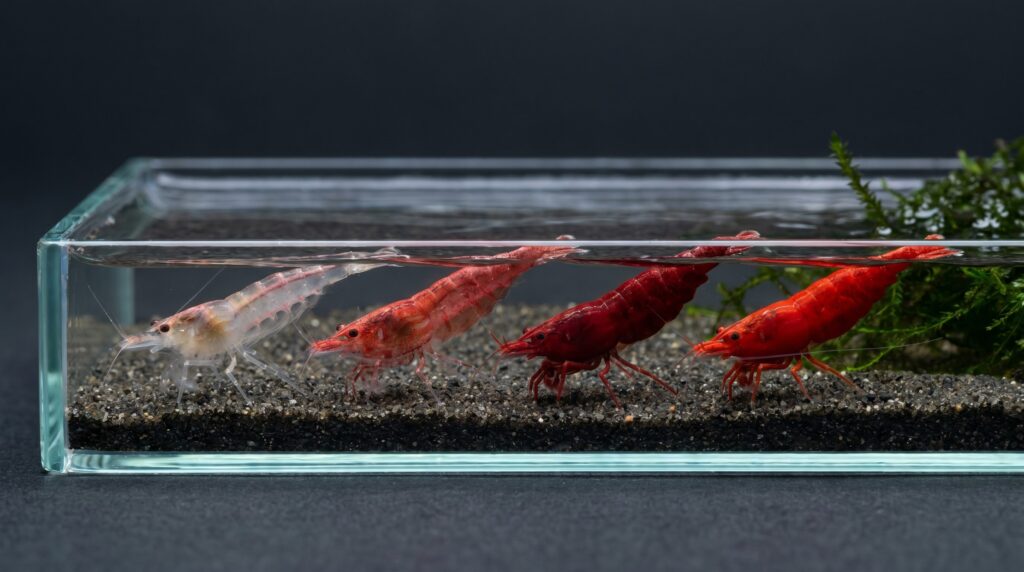
The hobby uses a grading system for red cherry shrimp that reflects the intensity and coverage of coloration. This grading is established trade terminology, not a standardized scientific classification - grades vary somewhat between sellers - but the hierarchy below represents the widely accepted ladder:
| Grade | Color description | Body coverage | Typical use case |
|---|---|---|---|
| Cherry / Low grade | Light pink to pale red, heavily transparent | Patchy, 30-50% | Starter colony, fishroom background stock |
| Sakura | Medium red, some transparency remaining | 50-70%, more uniform | Most common retail grade |
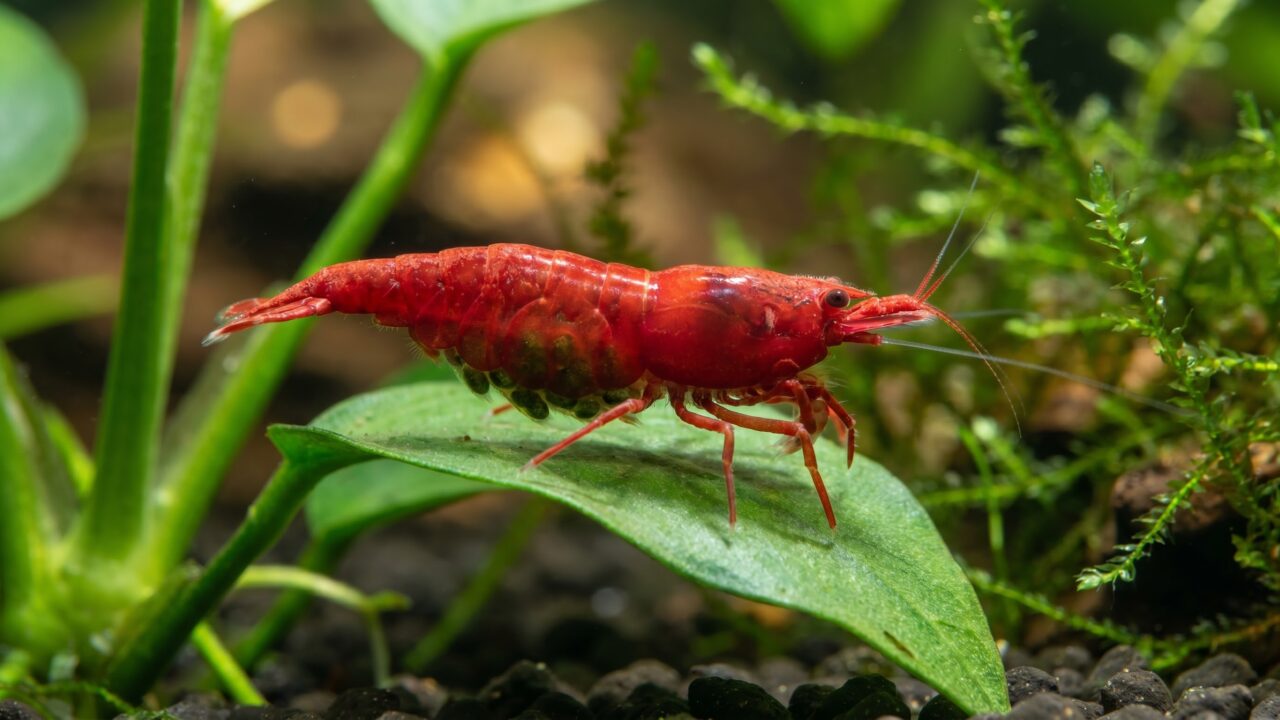
| Fire Red | Deep, rich red, legs included | 80-95%, near-opaque | Display tanks, color-focused breeding |
| Painted Fire Red (PFR) | Intense, fully opaque, uniform red throughout | 95-100%, no transparency | Top breeding stock, premium sale |
Grade reflects genetics and food quality together. PFR shrimp kept in poor water with inadequate diet will fade toward Sakura over time. Conversely, Sakura-grade shrimp from a good line, given high-protein food and dark substrate, often produce Fire Red offspring within two generations of selective culling. The grade is a starting point, not a ceiling.
If you mix any red line with a different Neocaridina color (say, blue dream, yellow, or orange), expect offspring that revert progressively toward brown over 2-4 generations - the wild-type pigmentation is genetically dominant over the selective color traits. Keep color lines in separate tanks. See the full grading article at Neocaridina grading for all color varieties.
Common problems and how to diagnose them
Shrimp dying after a water change
This is the most common beginner crisis and it is almost always an osmotic shock problem. Changing out a large volume of water too quickly - especially if the new water has a different TDS or temperature - causes the surrounding water chemistry to shift faster than the shrimp can adjust internally. Limit water changes to 10-15% of tank volume at a time, match temperature and TDS to the existing water before adding, and pour slowly or use a drip tube. See why shrimp die after a water change for a fuller diagnosis guide.
White ring of death
A white band encircling the shrimp's body between the carapace and abdomen means the molt has failed catastrophically - the exoskeleton broke at the thoraco-abdominal junction rather than hinging open properly at the head as a normal molt does. The shrimp is effectively split in two while still alive and almost always dies within hours. There is no treatment. Prevention is the only option: keep GH consistently in the 6-8 range, maintain stable water parameters, and feed a diet with adequate calcium and protein. Low GH is the most common cause. See the white ring of death guide for full detail on what triggers it.
Shrimp not molting, or molting too frequently
Adult cherry shrimp molt roughly every 3-4 weeks. Juveniles molt more often - sometimes every 1-2 weeks - because they are growing rapidly. What you watch for in adults is a change in rhythm: if a shrimp that has been on a steady three-to-four-week cycle suddenly starts shedding noticeably more often than its established rhythm without any matching growth, that points to unstable parameters (especially TDS or temperature fluctuations) rather than healthy development. If an individual shrimp appears to struggle through a molt or leaves an exoskeleton that is deformed, check GH first. See shrimp molting explained for the full biology.
Shrimp losing color
Color fading is not always a health crisis. A stressed shrimp pales temporarily - a freshly moved shrimp goes nearly clear for a day, and the presence of any fish big enough to look like a threat keeps colors muted. That kind of fading reverses on its own. Persistent fading over weeks is the one to act on: it usually points to GH too low (under 5), nitrates climbing above 30 ppm, or inadequate high-protein food. Dark substrate, dense plant cover, and consistent feeding reliably improve color in a genetically decent colony. Read why shrimp lose color for more detail.
Parasites: Scutariella and Vorticella
Two parasites appear frequently in cherry shrimp tanks. Scutariella japonica (tiny white worm-like organisms on the rostrum or around the eyes) and Vorticella (white fuzzy spots resembling a tuft, caused by a ciliate protozoan attached to the exoskeleton) are both manageable. Salt baths are commonly used for Scutariella; Vorticella detaches from the shed shell when the shrimp molts, providing temporary relief, and short aquarium salt dips can also reduce attachment. However, if the underlying cause - excess organic waste or declining water quality - is not corrected, Vorticella reattaches to the new shell within days. Clearing Vorticella permanently requires both supporting clean molts and improving tank conditions: reduce feeding slightly, increase water changes, and check that the filter is not clogged. Neither parasite kills healthy shrimp quickly, but both spread readily, so quarantine new shrimp before adding them to an established tank. See Scutariella on shrimp and Vorticella on shrimp for treatment detail.
Planaria and hydra
White, flat, triangle-headed worms gliding on the glass are planaria - predatory flatworms that will kill shrimplets and attack weakened adults. Hydra (tiny, tentacled polyps anchored to surfaces) can also kill shrimplets. Both are typically introduced on plants or equipment from an unquarantined source. Commercial treatments like No Planaria (betel nut extract) are effective against both and are safe for shrimp at label doses - but they are lethal to all snails, including Nerite, Ramshorn, and Mystery snails, without exception. Remove every snail from the tank before dosing. Multiple independent sources across the hobby confirm this unanimously; do not rely on older advice suggesting snails are unaffected. See planaria in shrimp tanks for full treatment steps.
Cherry shrimp quick-care card
| What | Value |
|---|---|
| Scientific name | Neocaridina davidi (Bouvier, 1904) |
| Adult size | Females to ~3.5 cm; males ~2-2.5 cm |
| Lifespan | 1-2 years |
| Temperature | 18-26°C (64-79°F); breeding optimum 22-26°C |
| GH | 6-8 dGH |
| KH | 1-4 dKH (any stable value fine; ~3 dKH as optional pH-buffering insurance) |
| TDS | 150-250 ppm |
| pH | 6.5-7.5 |
| Ammonia / nitrite | 0 ppm (non-negotiable) |
| Nitrate | Under 20 ppm |
| Minimum tank size | 5 gallons (10 gal recommended for a colony) |
| Starting colony size | 10-15 individuals (mixed sex) |
| Filter type | Sponge filter (safest) or HoB with prefilter sponge |
| Water change frequency | 10-15% weekly, temperature and TDS matched |
| Feeding frequency | 2-4x per week, small amounts; remove uneaten after 24h |
| Clutch size | 20-60 eggs per berried female (typically 30-50 in a healthy colony) |
| Incubation period | 2-3 weeks (temperature-dependent) |
| Time to first breeding | 4-12 weeks from hatch (temperature-dependent) |
| Copper tolerance | None - even trace levels are lethal |
| Color lines compatible? | No - keep one Neocaridina color line per tank |
| Suitable for beginners? | Yes - hardiest dwarf shrimp available |
Flat parameters matter more than perfect parameters. A colony running at GH 7 with zero ammonia and twice-weekly feedings will breed circles around a tank that hits every textbook number on paper but swings hard after each water change, because the swings are what kills shrimp. Get the colony settled, keep the numbers consistent, and resist the urge to tinker. The full detail on cherry shrimp lifespan explains how to push toward the upper end of that 1-2 year range.