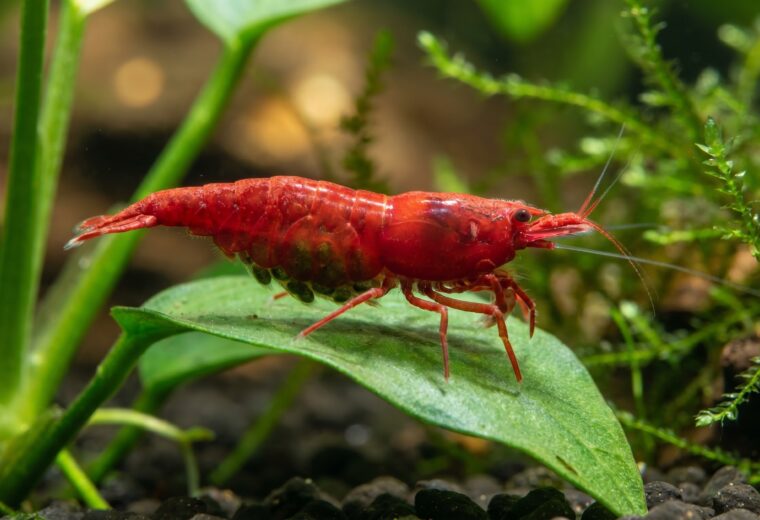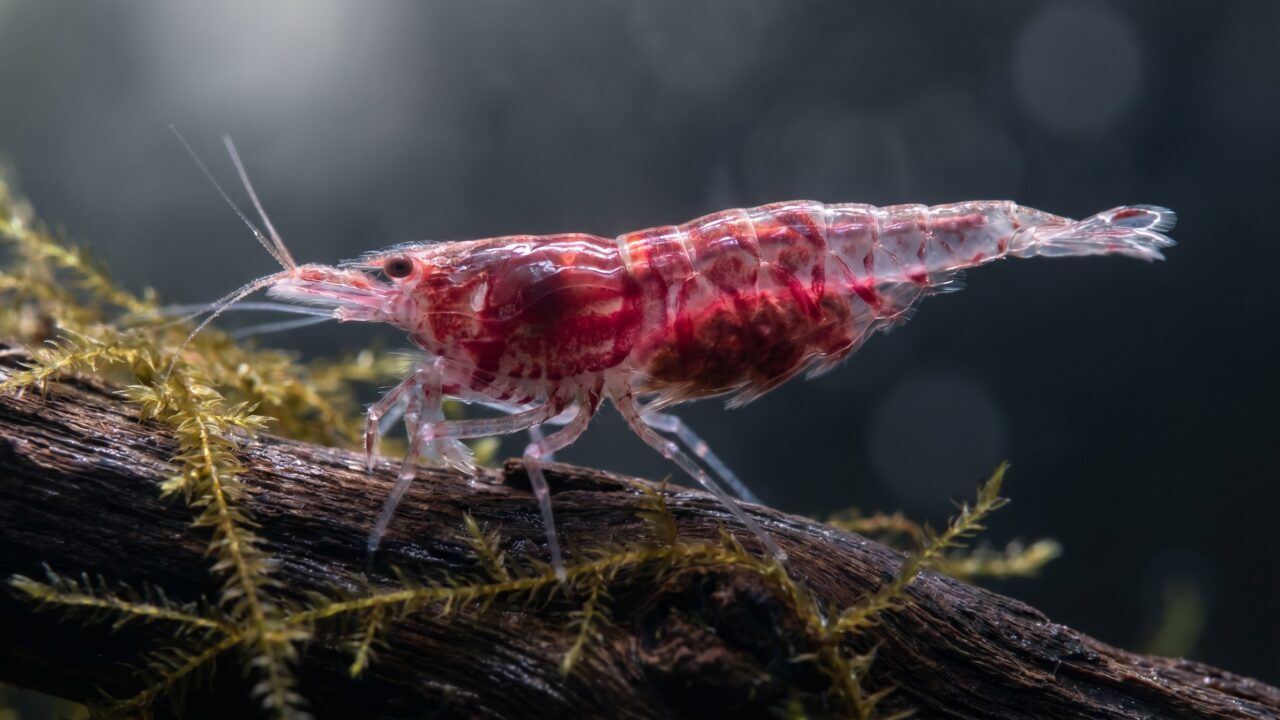
Put a Bloody Mary shrimp next to a top-grade Painted Fire Red and you will see the difference immediately. The Painted Fire Red looks opaque - a dense, solid slab of red pigment packed into the shell. The Bloody Mary glows. Light passes straight through its transparent carapace and the deep crimson tissue underneath is what you see, giving the shrimp an almost liquid quality that no other red Neocaridina strain produces. Both are the same species, Neocaridina davidi, but the way the color is built is fundamentally different, and that distinction shapes everything from how the shrimp photographs to how to keep the grade stable across generations.
Bloody Mary shrimp are not a higher grade of cherry shrimp; they are a separate strain, selectively bred from the Chocolate morph line rather than the standard red cherry line. Their care parameters are identical to any other Neocaridina, and they are just as beginner-friendly, but understanding the color mechanism helps keepers choose good specimens, maintain grade over time, and avoid the common mistake of mixing this strain with others.
How the color actually works
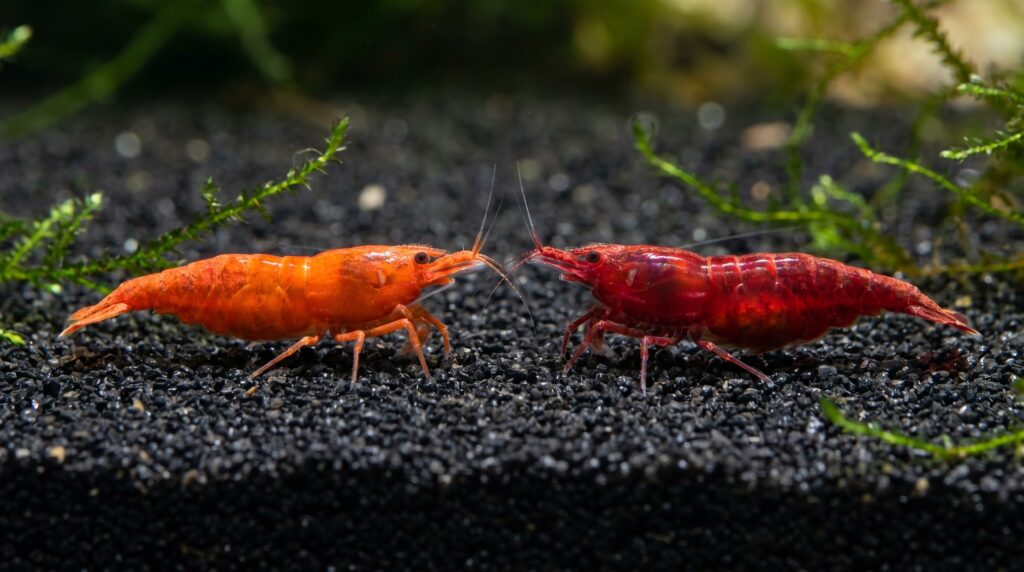
All Neocaridina davidi color morphs get their pigmentation from chromatophores - specialized color cells distributed through skin and shell tissue. The red and orange tones come specifically from erythrophores, which accumulate carotenoid pigments, particularly astaxanthin. Research published in PLOS One confirmed that crustaceans cannot synthesize carotenoids on their own and must obtain them through food. That finding matters for keeping any red Neocaridina: the intensity of color is partly genetic and partly dietary.
In standard red cherry strains, from the lowest grade up through Painted Fire Red, the erythrophores are concentrated in the shell itself. The shell becomes the color. A Painted Fire Red at peak grade has a shell so dense with pigment that it appears completely opaque, blocking light rather than transmitting it.
Bloody Mary shrimp carry their red pigmentation primarily in the underlying tissue, not the shell. The shell stays semi-transparent. This produces the characteristic glow: light enters through the carapace, reflects off the red tissue beneath, and exits. The effect is most dramatic under tank lighting, especially when the shrimp is moving across a dark substrate. On a white or light-colored substrate the effect is far less noticeable, because chromatophores adjust based on background - a peer-reviewed study on Neocaridina davidi color morphs found that shrimp bodies became darker on darker substrata within minutes of exposure, through physiological chromatophore changes. Dark substrate is not just aesthetic preference for Bloody Mary keepers; it is directly tied to color expression.
Red Neocaridina strain comparison: Sakura through Bloody Mary
Because these names get confused even in shops, here is a clear breakdown of all five red Neocaridina strain names you will encounter, ordered by how they look and where the color lives. This is a keeper reference - grading terminology is not standardized internationally, so expect some variation in how importers use these labels.
| Strain name | Color coverage | Shell opacity | Where pigment lives | Strain origin | Common beginner error |
|---|---|---|---|---|---|
| Cherry (basic) | Patchy, light pink-red; lots of clear areas | Mostly translucent | Shell - sparse | Red cherry line | Expecting females to look like males do not |
| Sakura | More red, some clear patches remain | Translucent to semi-opaque | Shell - building | Red cherry line | Buying males as a grading proxy - males stay paler |
| Fire Red | Near-total body coverage; minor gaps at joints | Semi-opaque to opaque | Shell - dense | Red cherry line | Confusing with Painted Fire Red; legs still show red clearly |
| Painted Fire Red (PFR) | Complete body coverage including legs | Fully opaque | Shell - maximum density | Red cherry line (top selection) | Mixing with Bloody Mary thinking they are the same |
| Bloody Mary | Complete body coverage, deep crimson | Transparent to semi-transparent shell | Tissue beneath the shell | Chocolate morph line (separate strain) | Crossing with PFR or other red strains - destroys both grades |
The single most important line in that table is the last column for Bloody Mary: crossing this strain with any other red Neocaridina line will produce offspring that revert toward wild-type brown or muddy coloration. All Neocaridina davidi color forms will interbreed freely, and the wild-type brown is the dominant phenotype when lines mix. Keep Bloody Mary in a dedicated tank with no other Neocaridina present. This applies even to other red strains - a mixed Bloody Mary and Painted Fire Red colony will not produce better red shrimp; it will degrade both over a few generations.
For a full breakdown of how Neocaridina grading works across all color varieties, see our guide on Neocaridina grading.
Water parameters and tank setup
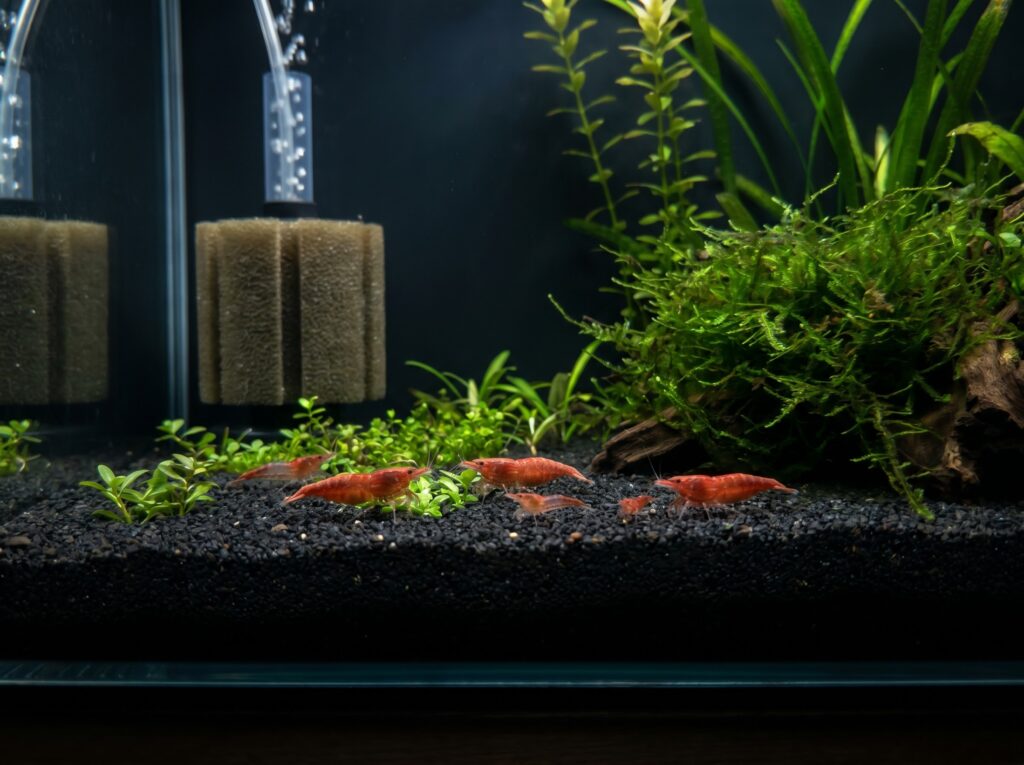
Bloody Mary shrimp require exactly the same water as any other Neocaridina. There is no special chemistry for this strain - which is good news, because Neocaridina are among the most forgiving shrimp in the hobby.
Target parameters:
- GH: 6-8 dGH
- KH: 1-4 dKH
- TDS: 150-250 ppm (the peer-reviewed astaxanthin study maintained 150-200 mg/L for cherry shrimp in good health)
- pH: 6.5-7.5
- Temperature: 18-26°C (64-79°F); peer-reviewed research on N. heteropoda (PMC4359132) measured the optimum for juvenile growth, maturation, and breeding at approximately 28°C, though most keepers target 22-24°C as a practical compromise between breeding activity, longevity, and sex ratio
- Ammonia: 0; Nitrite: 0; Nitrate: below 20 ppm
Stability is more important than hitting a precise number. A colony thriving at GH 7 and TDS 210 for months will handle those numbers far better than a colony subjected to swings between GH 5 and GH 10 week to week. The highest-frequency beginner failure with any Neocaridina is not a wrong target - it is erratic water changes causing swings in TDS and GH that stress the colony and trigger molting problems.
If you are working with tap water that reads low on GH (below 4 dGH), remineralize with RO water and a product like SaltyShrimp Shrimp Mineral GH/KH+. The manufacturer specifies approximately 2 g per 10 litres of RO water to reach a target of 6 dGH, producing a GH/KH ratio of 1.0/0.5 at a conductance of around 300 µS. Mix outside the tank and test before adding.
For a deeper look at remineralizer choices, see GH/KH remineralizer comparison, and for the full context on what GH does for shrimp health, see GH for shrimp.
Tank size and setup
A 10-gallon tank is the practical minimum for a Bloody Mary colony. Ten gallons gives enough water volume to buffer parameter fluctuations - a GH error in a 5-gallon tank hits the whole colony hard, while a 10-gallon gives you more margin. Larger is always better for stability.
Use an inert substrate in a dark color - black lava rock, dark sand, or dark aqua soil not used for active buffering (Bloody Mary need no active substrate; that is for Caridina). The dark background is not optional if you want full color expression. The substrate doubles as a visual cue that shifts the shrimp's chromatophores toward maximum pigment display.
A sponge filter is the correct choice. Sponge filters provide gentle flow, zero intake risk for shrimplets, and the foam surface itself becomes a biofilm buffet that shrimp graze constantly. Power filters with exposed intakes will kill juvenile shrimp. If you want to run a hang-on-back filter, cover the intake with a pre-filter sponge.
Live plants are strongly recommended. Java moss, Christmas moss, and thin-leaf stem plants like hornwort create surface area for biofilm growth and give shrimplets hiding places. A tank with no plants will have much lower juvenile survival, because newly hatched shrimp are 1-2 mm long and disappear into moss immediately - which is exactly what they need to do to survive. Dense plant cover is the single biggest practical improvement for shrimplet survival in any Neocaridina tank.
The tank must be fully cycled before any shrimp go in. Ammonia and nitrite must both read zero on two consecutive tests, 24 hours apart. These compounds are lethal at any detectable level for Neocaridina. A 4-6 week fishless cycle is the standard approach; seeding with established filter media cuts this to 1-2 weeks. For the full cycling walkthrough, see our beginner guide at cherry shrimp care.
The copper problem
Copper is lethal to all shrimp, including Bloody Mary. The risk is higher than most beginners realize because copper appears in unexpected places: some aquarium plant fertilizers contain copper sulfate, some fish medications use copper as an active ingredient, and old copper plumbing can leach enough into the first draw of tap water to harm invertebrates. Before dosing any fertilizer or medication in a shrimp tank, verify the product is copper-free. If in doubt, run a copper test. At acutely toxic concentrations, a shrimp colony can die within hours to days; at chronic low-level concentrations - such as slow leaching from old copper pipes - the colony may show gradual unexplained losses over weeks without a sudden crash, making copper easy to overlook as the cause. There is no reversal once significant exposure has occurred. For detailed guidance on sources and how to test, see copper and shrimp.
Feeding for best color
In a mature, planted tank, Neocaridina graze almost continuously on biofilm, algae, and detritus. This background grazing is meaningful nutrition. Feed a varied prepared diet on top of it, but do not overfeed: uneaten food degrades water quality fast in a small tank, and water quality problems show up immediately as stress-related color fading.
A practical feeding schedule:
- Days 1, 3, 5: a small amount of a high-quality shrimp food (a few pellets, or a pea-sized portion of gel food) - eat it within 2-3 hours, remove any remainder
- Days 2, 4: blanched vegetables (spinach, zucchini, cucumber) as supplemental grazing
- Days 6, 7: fast days - let the shrimp work the tank surfaces
For color specifically, diet matters because Neocaridina cannot produce astaxanthin on their own. Foods containing natural carotenoid sources - spirulina, Chlorella algae, and ingredients from crustaceans - support pigment accumulation in tissue. Research showed that dietary astaxanthin supplementation produced measurable color improvement in red cherry shrimp within an 8-week trial period. GlasGarten's Shrimp Baby Food contains Spirulina, Chlorella, and Nannochloropsis algae, giving a practical way to supply natural carotenoid sources alongside protein. Products with proprietary immune-support ingredients, like GlasGarten's ShrimpFit (which contains brewer's yeast hydrolyzate rich in beta-glucans and mannan-oligosaccharides), support molting health as a complement, though they are not a substitute for a balanced diet.
Color improvement from diet is a slow process - expect 6-8 weeks before changes become visible; the astaxanthin study recorded significant differences by day 42 of its 56-day trial. The most important practical takeaway from that research is not which product to buy: it is that consistent, varied feeding over weeks and months produces far more color improvement than any single high-carotenoid product used inconsistently. Pick a reasonable rotation and stick with it.
Molting and why GH matters more than KH
Every few weeks, a healthy adult shrimp sheds its entire exoskeleton and grows a new, slightly larger one. Juvenile shrimp molt far more frequently than adults - in an active young colony, discarded shells can appear daily or near-daily, which alarms new keepers who have not seen it before. This is normal. This process - molting - is where most unexplained shrimp deaths actually happen. The shrimp emerges from the old shell in a soft, vulnerable state, hides for one to several days while the new shell hardens, and then returns to normal activity. A successfully molted shrimp is fine; a failed molt is almost always fatal.
GH is the parameter that matters most for molting because it measures dissolved calcium and magnesium - the minerals the shrimp incorporates directly into the new shell. Too little calcium means the new shell cannot harden properly. The warning sign is the white ring of death: a white band that appears around the shrimp's midsection where the old shell started to separate but the shrimp could not complete the process. A shrimp showing the white ring will not survive. Cuttlebone and mineral blocks do not fix the problem once it has started - the only prevention is maintaining adequate GH before molting begins. For Bloody Mary shrimp, GH 6-8 dGH is the target range that keeps molting reliable.
Sudden large water changes are the most common trigger for stress-induced molting outside the normal cycle. A 50% water change dumps a drastically different TDS and GH into the tank in minutes, and the osmotic shock can force a shrimp to molt prematurely with insufficient mineral reserves. Keep water changes to 10-15% at a time, matched closely to the tank's GH and TDS, and drip new water in slowly if your source water differs from the tank. See shrimp molting explained for the full picture.
Breeding and grade stability
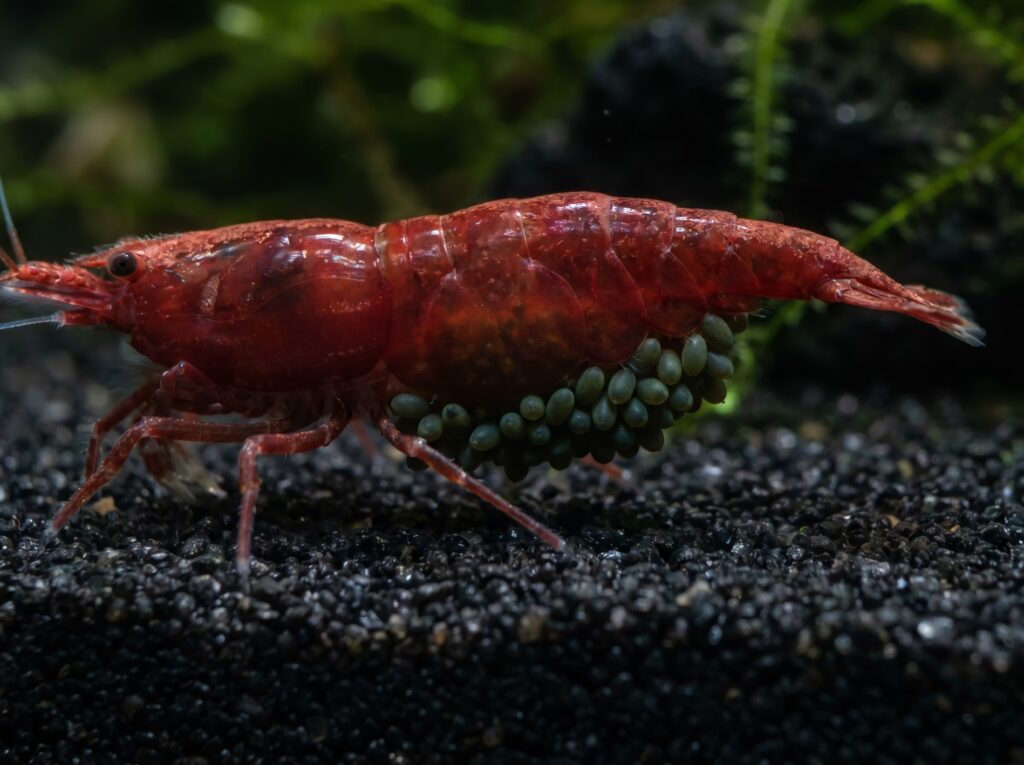
Bloody Mary shrimp breed readily under the same conditions as any healthy Neocaridina colony. Females reach sexual maturity at around two months of age. A berried female (one carrying eggs under her tail) incubates her clutch for roughly 21-25 days at 22-24°C - the peer-reviewed temperature study on N. heteropoda found that incubation at 24°C averaged about 21 days, extending as temperatures drop. Each female typically hatches 20-30 juveniles per clutch, which emerge as fully formed miniature shrimp with no larval stage. They can begin grazing immediately.
Start a colony with at least 10 shrimp, aiming for a roughly equal sex ratio. Males are smaller and less colorful than females - this is normal and consistent across all Neocaridina strains. Do not judge a colony by the males alone. Ten shrimp give you enough genetic diversity to avoid inbreeding depression and enough breeding pairs to get a colony going within the first 2-3 months.
Grade stability over time is the harder challenge. Without selection pressure, a high-grade colony will drift lower over generations. Some offspring in every clutch will show less color intensity, thicker shell opacity, or less of the characteristic translucent quality. Left in the tank, those individuals will contribute their genetics to the next generation and the colony average will drop.
Managing this practically:
- Set a culling threshold before breeding starts - for example, remove any shrimp showing an opaque (non-translucent) shell, which suggests drift toward the cherry shrimp shell-pigment pattern rather than the Bloody Mary tissue-pigment pattern
- Move culls to a separate tank rather than disposing of them - many keepers use culls as feeders or sell them as lower-grade stock
- Every 6-12 months, consider introducing 3-5 new high-grade Bloody Mary individuals from a reputable source to refresh the line
- Never introduce individuals from other red strains - even a single Painted Fire Red crossed into a Bloody Mary colony will produce offspring that look fine for one generation but revert hard in the second
For more detail on the genetics of color and how crossing works across Neocaridina, see the Neocaridina guide.
Acclimating new Bloody Mary shrimp
Drip acclimation is mandatory when introducing any new shrimp. The reason is osmotic stress: if the bag water is at TDS 180 and your tank is at TDS 230, pouring the shrimp directly into your tank forces an immediate osmotic adjustment that can kill even healthy shrimp. The shrimp's cells need time to equilibrate.
The process:
- Float the sealed bag in the tank for 15 minutes to match temperature
- Transfer the shrimp and bag water to a small container (a clean bucket or plastic cup works)
- Run airline tubing from the tank to the container, tie a loose knot in the tubing to slow the drip to about 2 drops per second
- Let it drip for 60-90 minutes until the container volume has roughly doubled
- Net the shrimp out and place them gently into the tank - do not pour the acclimation water in, as it may carry pathogens or copper from the previous tank's water
New shrimp often hide for 1-3 days after introduction. This is entirely normal - the shrimp are stressed from shipping and acclimation, and hiding is their standard response. Resist the urge to check the parameters constantly or add anything to the tank during this window.
Common problems and quick checks
A few issues come up more often with Bloody Mary shrimp than with hardier beginner strains, mostly because keepers are paying closer attention to color and notice problems sooner.
Color fading over days: Almost always a water quality issue or stress. Check ammonia, nitrite, nitrate, and TDS first. Stress causes chromatophores to contract, which washes out color quickly. If parameters check out, look for a new tankmate that may be harassing the shrimp, or an uncovered filter intake.
Color fading over generations: Genetic drift without selection. Start culling for the translucent-shell quality specifically, and remove any shrimp showing opaque red shell rather than tissue-red glow.
Shrimp dying after water change: TDS or GH swing too large, or new water added too fast. Keep changes to 10-15% and pour slowly. If using RO water, always remineralize to the same GH as the tank before adding. See why shrimp die after water changes for the diagnostic checklist.
No berried females after 3 months: Usually temperature (too cold or too warm), TDS too low to trigger breeding, or insufficient females in the colony. Verify you actually have females - sexing Neocaridina requires looking for the saddle (an ovary patch visible behind the head on adult females) and the rounder, larger abdomen. A colony that is mostly males will not breed. See why shrimp are not breeding.