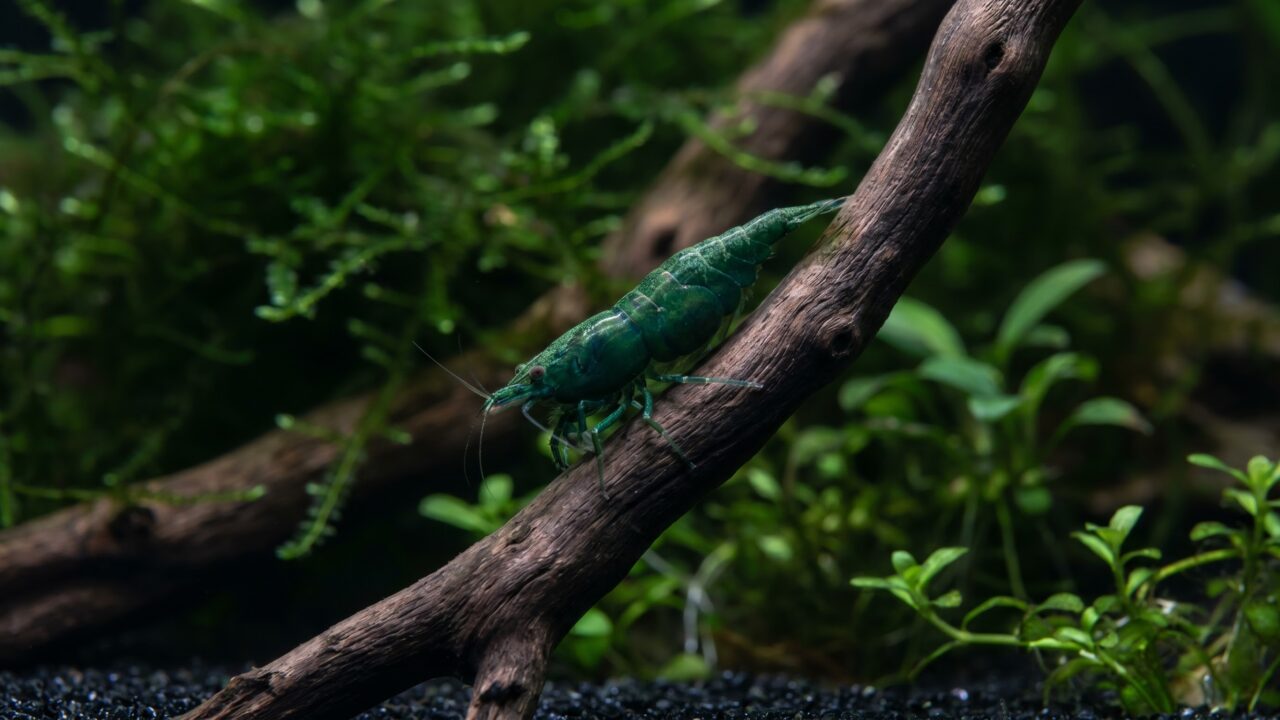
Most Neocaridina color lines trace back to red. Green is different. The green pigment in Neocaridina davidi comes from a combination of xanthophores (yellow pigment cells) and iridophores (cells that reflect blue light), and stabilizing that combination into a consistent, opaque line took breeders considerably longer than stabilizing cherry red or canary yellow. That effort makes green jade shrimp one of the more interesting Neocaridina to keep - and one of the more instructive, because color stability here is not automatic.
This guide covers everything a beginner needs to set up a tank, dial in parameters, and breed green jade shrimp in a way that keeps the color honest generation after generation. It also covers the lookalike species most often confused with green jade, and a grading note on what separates a mediocre green from a genuine jade.
What green jade shrimp actually are
Neocaridina davidi (family Atyidae) is native to freshwater streams and ponds across Taiwan, eastern China, the Korean Peninsula, and Vietnam. In the wild the species is a mottled brown - camouflage coloration against leaf litter. Every color variety sold in the hobby, including red cherry, yellow fire, blue dream, and green jade, is the same biological species selectively bred for a specific pigment expression.
Adults reach 3-4 cm (roughly 1.2-1.5 inches). Females are larger and more colorful; males are noticeably slimmer and often paler even in a well-bred line. Lifespan runs 1-2 years under good care. Sexual maturity comes at around two months of age, and females carry 20-30 eggs per clutch, incubating them for approximately 2-3 weeks.
The green color specifically comes from the interplay of multiple chromatophore types in the skin. According to research on N. davidi color morphs, color changes "depend on physiological (chromatophore distribution) and morphological (pigment amount) changes in epidermal chromatophores." The fast part - shrimp adjusting slightly to their surroundings - happens within minutes. The deeper, brighter, or darker shift that breeders actually care about (total pigment density) takes days or weeks. Feed matters as well: Wikipedia notes that "it is thought that the carotenoids in the food that shrimp consume provide pigmentation for their chromatophores." Spirulina-based foods and foods with natural carotenoids help the chromatophores express the pigment the genetics allow - they cannot override weak genetics, but they can ensure a good line is not running at half its potential.
For a broader introduction to the species, the Neocaridina shrimp guide covers all color lines and the biology behind them.
Water parameters and tank setup
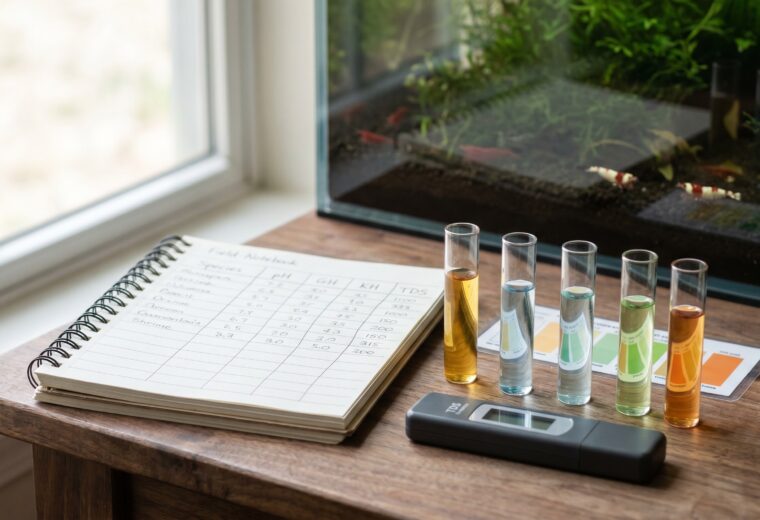
Green jade shrimp are full Neocaridina in their water needs - no special treatment required beyond what any Neocaridina-grade setup provides. The ranges below are the practical targets, not theoretical maxima.
| Parameter | Target range | Why it matters |
|---|---|---|
| GH (general hardness) | 6-8 dGH | Calcium and magnesium for molting; below 6 dGH risks failed molts |
| KH (carbonate hardness) | 1-4 dKH | Buffers pH; Neocaridina tolerate low KH without a buffering substrate |
| TDS (total dissolved solids) | 150-250 ppm | Reflects total mineral load; swings over 50 ppm cause osmotic stress |
| pH | 6.5-7.5 | Consistent reading within this range matters more than where exactly it lands |
| Temperature | 18-26 C (64-79 F) | Breeding is most active around 22-24 C; higher temps shorten lifespan |
| Ammonia / Nitrite | 0 ppm | Non-negotiable; any detectable level stresses or kills shrimp |
| Nitrate | Below 20 ppm | Low nitrate supports good color and healthy shrimplets |
If you are using reverse osmosis (RO) water or very soft tap water, you will need to remineralize before adding it to the tank. SaltyShrimp Shrimp Mineral GH/KH+ is the most widely used product for Neocaridina; the manufacturer specifies approximately 2 g per 10 liters to reach around 6 dGH and 300 µS conductance - a solid starting point for green jade. More detail on remineralizing is in the shrimp water parameters guide.
Chasing a textbook number is less useful than holding whatever number your tank naturally settles at. A colony at a steady 7.2 pH and 200 TDS does far better than one that swings from 6.8 to 7.6 every few days because the keeper keeps correcting with fresh RO. That TDS and GH swing is not subtle to the shrimp; it hits all at once and can trigger a stress molt that wipes out a berried female's eggs. Keep regular water changes to 10-15% of tank volume, done slowly, with pre-mixed water matched to the same temperature and TDS as the tank before it goes in.
Tank size and filtration
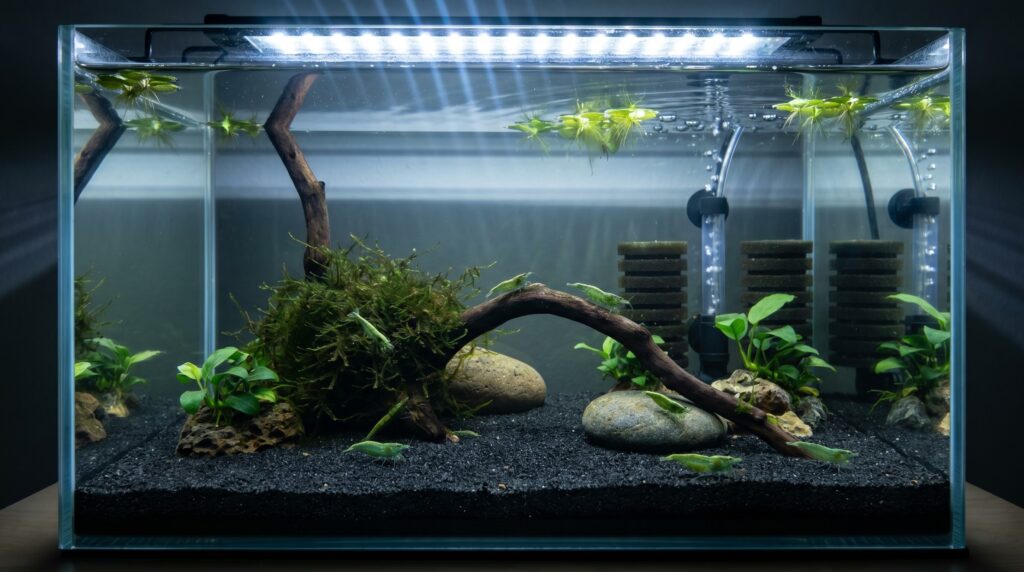
A 10-gallon (38-liter) tank is the practical minimum for a breeding colony. Smaller tanks swing in parameters faster, which works against stability. A sponge filter is the right choice: it provides biological filtration, creates a grazing surface for biofilm, and poses no risk to shrimplets. Canister or HOB filters with fine pre-filter sponges on the intake also work, but the bare intake on a power filter will kill baby shrimp.
Dark substrate amplifies green jade color visibly. The PMC research on N. davidi morphs found that "all the morphs selected the black background and avoided the white substratum" - meaning shrimp are instinctively calmer on dark surfaces, and calmer shrimp show more color. Black or dark inert gravel, fine volcanic substrate, or dark aquasoil all work. (Caridina-style active substrate that lowers pH is not needed and not appropriate here - green jade does fine on inert substrate at Neocaridina pH.)
Dense planting matters. Java moss, Anubias, Bucephalandra, and floating plants like salvinia give green jade places to forage and hide, reduce stress, and keep the biofilm rich. A well-planted, mature tank that has been running for at least six weeks before shrimp are added produces far fewer losses than a brand-new setup.
Cycling the tank first
Ammonia and nitrite must both read 0 ppm before any shrimp go in. A complete nitrogen cycle typically takes 4-6 weeks without a bacterial starter, or 2-3 weeks with one; cycles that drag past 8 weeks usually indicate a problem (too little ammonia source, too cold, or a stalled bacterial colony) rather than a normal upper end. Do not stock green jade into an uncycled tank. The shrimp will die within days from ammonia poisoning, which looks like sudden loss but is entirely predictable and preventable. Test with a liquid test kit (not strip tests, which are imprecise for the ranges that matter to shrimp) before adding anyone.
Copper: the silent killer
Copper kills shrimp at doses that leave fish unaffected. Research puts the 96-hour LC50 for shrimp anywhere from 0.05 to 2.00 mg/L depending on water hardness and pH, and standard copper-based ich treatments deliver 0.15-0.20 mg/L directly into that window. A single treatment in a shrimp tank can clear the colony in under a day, with the fish looking completely normal the whole time. Check every fertilizer, medication, and supplement label before adding it. First-draw tap water from old copper plumbing can also carry enough copper to cause slow dieoff over days rather than hours, which makes the cause harder to identify. If your tap source is questionable, an RO filter removes copper effectively.
Acclimating new shrimp
Acclimate new arrivals slowly: float the sealed bag for 10-15 minutes to equalize temperature, then transfer the shrimp and their water into a small container and drip tank water into it via airline tubing at about 2-4 drops per second for 60-90 minutes. The slow TDS shift is what matters, giving the shrimp time to adjust osmotically rather than hitting a wall of different water all at once. Dump the acclimation water and move the shrimp in with a net. A colony of at least 10 individuals gives you enough genetic diversity and social stability to get breeding started reliably.
The green color line: rarity, variability, and what sets it apart
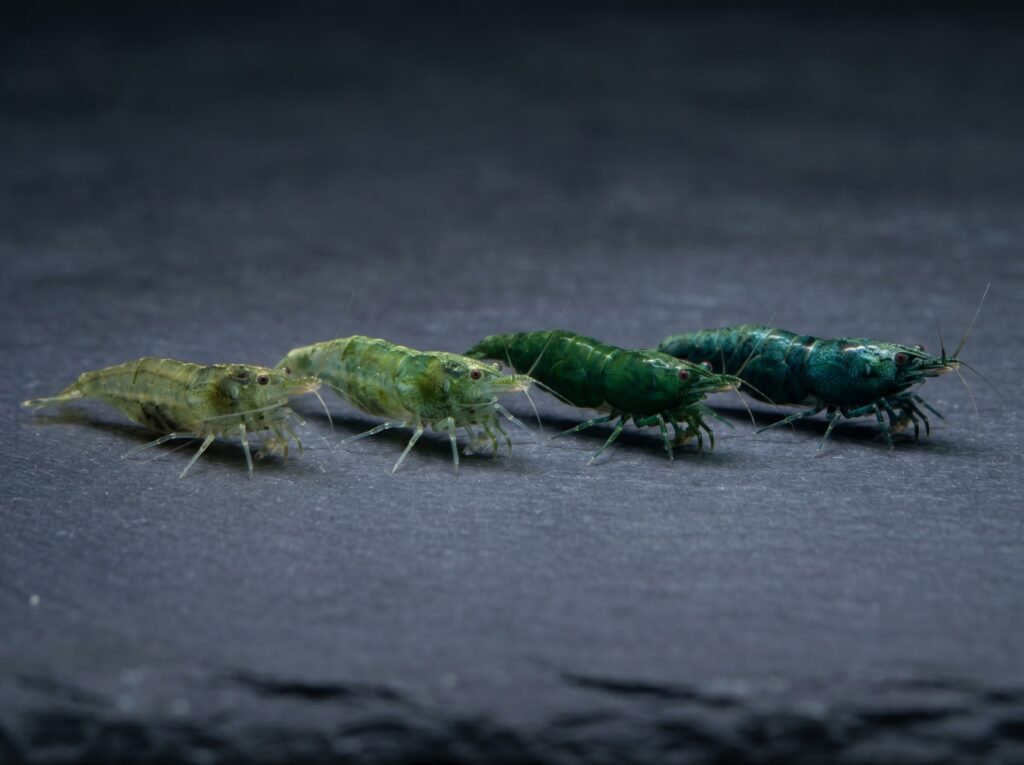
Green is rare among Neocaridina lines for a specific reason: the color depends on two separate chromatophore systems working together. Xanthophores carry the yellow-green base, while iridophores reflect blue light to push that base toward true green. If the iridophore expression weakens, the shrimp looks olive or yellow-green rather than jade. If xanthophores are thin, the shrimp appears washy or translucent. Only when both are expressed strongly and consistently do you get the deep, cool, slightly gem-like green that gives this morph its name.
This dual dependency makes green jade more variable than red or yellow lines, where a single pigment type dominates. In a colony of unsorted green jade, you will routinely see:
- Deep opaque jade green (the target grade)
- Olive or yellow-green (xanthophore-heavy, iridophore-weak)
- Blue-green or teal-shifting individuals (iridophore-strong, variable)
- Pale or translucent green (low total pigment density)
- Wild-reversion brown-green (indicating crossbreeding or a weak line)
Young shrimp - under 6-8 weeks old - often appear olive or brownish regardless of their genetic potential. Full color develops as they mature. Judging a line's quality from juveniles alone is misleading; evaluate adults at 3-4 months.
A grading note for the green line
Neocaridina color grades are typically described by opacity and coverage. The table below maps green jade quality so you can assess what you are buying or culling toward.
| Grade | What you see | Keeper decision |
|---|---|---|
| Low (entry) | Pale, translucent, visible organs through the body; olive or washed-out tone; golden or yellow dorsal stripe (signals xanthophores pulling yellow rather than jade) | Cull from breeding; sell or rehome |
| Mid | Solid green but patchy; some translucency at the tail or head; variable between individuals | Keep females if green is the stronger trait; monitor males |
| High (jade) | Fully opaque, even coverage from nose to tail; cool, deep green; male color approaching female quality | Priority breeders; keep all of these |
| Select / show | High-grade body with metallic or gem-like sheen; male as opaque as female; no yellow or brown undertone | Never cull; use as foundation stock |
Males in any Neocaridina line are naturally paler than females due to body composition differences. The benchmark for a high-grade green jade line is when males carry visible, substantial green rather than appearing nearly translucent next to the females. Lines where males are fully pale and females are the only showpiece tend to produce patchy juveniles.
The golden or yellow dorsal stripe listed in the table above is the cull marker most commonly missed by beginners - it is easy to overlook at a glance, but those individuals do not improve the line. Remove them from the breeding pool at the same time you remove the pale low-grades.
Breeding true: keeping the green from reverting
This is where most beginners run into trouble with green jade specifically. Neocaridina davidi color lines are not separate species - they are all the same animal with different pigment genetics. Wild-type brown is the dominant expression. All the color varieties - red, yellow, blue, green - are recessive traits that were isolated through generations of selective breeding. When you cross any two Neocaridina color lines, the offspring tend toward brown or mottled wild-type within one to two generations.
For green jade this means one clear rule: never mix green jade with any other Neocaridina color. No red cherry, no yellow fire, no blue dream in the same tank. Even if you never see mating directly, it happens, and the offspring will not be green. They will be brown, or muddy intermediate colors that make grading impossible. If you want to understand the full mechanism of why color lines revert under crossbreeding, the Neocaridina color reversion article covers the genetics in detail.
Within a pure green jade colony, selective breeding does the work. Every generation, cull the palest individuals - meaning remove them from the breeding tank, not necessarily kill them (they can go to a species tank or be traded). Keep the deepest, most opaque greens as your breeding stock. Over 5-8 generations of consistent selection, the line tightens noticeably. This is how breeders move a mediocre mid-grade colony toward a show-quality line without any outside genetics.
Feeding for color support
Diet cannot override weak genetics, but it can help good genetics express fully. Carotenoid-rich foods support the pigment cells responsible for color density. Spirulina flake or wafer, blanched zucchini or spinach, and quality commercial shrimp foods (GlasGarten Bacter AE, for example, also supports biofilm growth that improves juvenile survival) all contribute. Feed small portions 3-4 times per week, removing uneaten food within 2-3 hours to avoid fouling the water. The biofilm that grows naturally on driftwood, rocks, and plant surfaces is the shrimp's primary food; supplemental feeding adds variety, it does not replace grazing.
Molting and the one failure mode beginners miss
Shrimp cannot grow without shedding their exoskeleton. A healthy adult Neocaridina molts roughly every 3-4 weeks under normal conditions; juveniles molt more frequently as they are actively growing. Temperature is the main driver of pace - warmer water toward the top of the 20-25 C range speeds the cycle, cooler water slows it. After each molt, the shrimp is soft and vulnerable for several hours; this is normal.
The white ring of death is what happens when a molt stalls partway through: you see a pale pale band across the body where the old shell failed to split away cleanly from the new one. The shrimp cannot pull free, and the outcome is nearly always fatal. The primary cause is insufficient GH - specifically, too little calcium and magnesium for the shrimp to build and then shed its shell properly. If you see repeated white rings or find molted shells that look incomplete, check your GH first. GH below 6 dGH is the most common trigger for Neocaridina molting problems.
Adding a piece of cuttlebone to the tank is sometimes suggested as a calcium supplement. Cuttlebone does dissolve slowly and raises GH slightly, but it cannot fix the root problem if your baseline GH is consistently low - it is not a reliable substitute for proper remineralization. If molting failures are happening, measure GH with a drop test kit and remineralize your water change water to the target range of 6-8 dGH before adding it.
More context on the molting process and what is normal versus concerning is in the shrimp water parameters guide.
Lookalikes and how to tell them apart
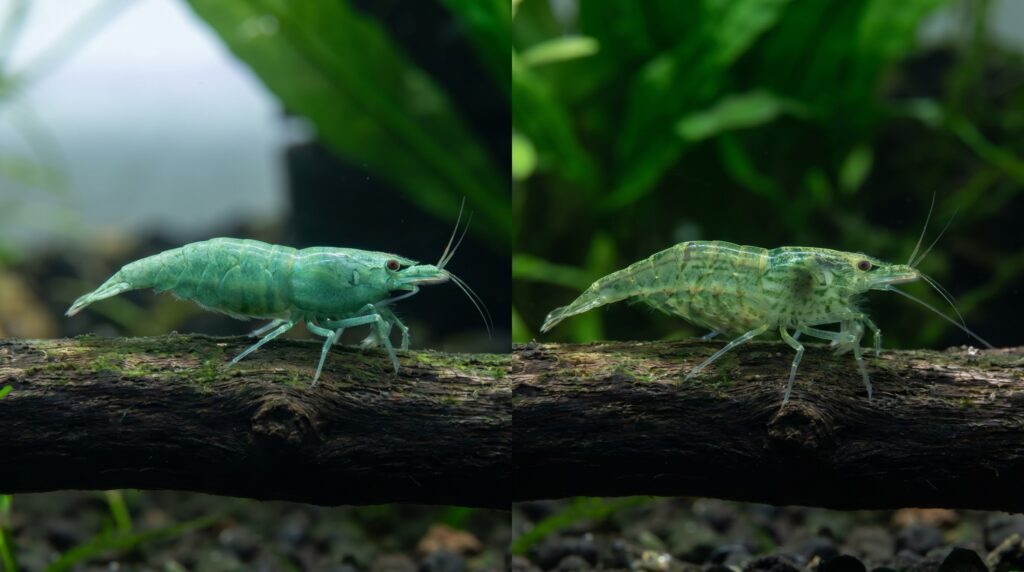
Three animals get sold under green names and confused with green jade. Knowing the differences saves a lot of frustration.
| Species / variety | Scientific name | Color appearance | Water preference | Will crossbreed with green jade? |
|---|---|---|---|---|
| Green jade | Neocaridina davidi | Opaque jade to deep emerald; consistent full-body coverage in high grades | GH 6-8, KH 1-4, pH 6.5-7.5, TDS 150-250 | N/A (is the subject) |
| Green babaulti | Caridina cf. babaulti | Variable green, often more translucent; some have a striped or mottled pattern; body shape slightly different (more arched back) | Broad tolerance (GH 4-14, KH 0-10, pH up to 8.0); no strong soft-water preference and can breed at Neocaridina parameters or slightly harder | No - different genus |
| Wild-type Neocaridina (green-brown) | Neocaridina davidi | Mottled olive-brown to greenish-brown; never solid; speckled pattern | Same as green jade | Yes - same species, will dilute color |
| OE (Orange Eye) green jade | Neocaridina davidi | Same jade green body; eyes are orange/amber instead of black | Same as standard green jade | Yes - same species; can be kept together if you want OE offspring |
The most practically important distinction is green babaulti versus green jade. Caridina cf. babaulti has a more curved dorsal profile and often a less saturated, more variable green. It tolerates a wide hardness range (GH 4-14 dGH, KH 0-10 dKH, pH up to 8.0) and some keepers report breeding at slightly alkaline pH - so it has no meaningful soft-water preference and can be kept comfortably at standard Neocaridina parameters. Babaulti belongs to a different genus and will not produce offspring with N. davidi. A babaulti mixed into a green jade colony will not corrupt the color line the way another Neocaridina color would - but it does mean you will have unintended mixed-species breeding attempts and some confusion about which eggs belong to which female. Keep them separate for clarity.
Wild-type Neocaridina are the more dangerous lookalike to have in a green jade tank, precisely because they are the same species and will crossbreed freely. A single wild-type male in a green jade colony will not cause obvious problems in the first generation, but by generation two the color will be muddier and harder to select back from.
Orange Eye green jade (OE) is a variant with a recessive mutation that eliminates black eye pigment, leaving the eyes orange or amber. The body is otherwise the same jade green. OE shrimp command higher prices and are kept as a separate, select line. They share identical water and care requirements with standard green jade. For breeding details - including what happens when you cross OE to black-eyed stock - see the FAQ section below.
Frequently asked questions
Why is my green jade shrimp turning brown or olive?
Two causes are common: the shrimp is young and has not reached full color yet (under 8 weeks), or the colony has been crossed with another Neocaridina color line and wild-type genetics are expressing. Stress from unstable parameters also temporarily mutes color. If adults in a stable, pure-line tank are consistently olive rather than jade, the line itself may need more selective culling toward the deeper greens.
Can green jade shrimp live with cherry shrimp or blue dream shrimp?
They can live together physically - same parameters, same behavior. But they will crossbreed, and within 2-3 generations the colony will trend toward mottled brown. Keep color lines in separate tanks if breeding true color matters to you.
How many green jade shrimp should I start with?
Start with at least 10, ideally 15-20. A smaller group has less genetic diversity and is more vulnerable to a single bad molt cycle or parameter swing wiping out the population. Colonies establish fastest from a balanced sex ratio (roughly 1 male per 2-3 females).
Do I need a heater for green jade shrimp?
In most homes, yes. Green jade shrimp do well between 18-26 C (64-79 F). If your room consistently stays in that range, a heater is optional. Below 20 C (68 F) activity slows noticeably and breeding slows or stops - this matches the target floor in the parameters table above. Above 27 C (80 F) stress and dieoff risk increases. A small adjustable heater with a separate thermometer is inexpensive insurance.
What is the orange eye (OE) green jade?
OE green jade carries a recessive mutation that removes black pigment from the eyes, turning them orange or amber. Body color and care needs are identical to standard green jade. The OE trait requires selective breeding to maintain - crossing OE to non-OE produces F1 offspring that all have black eyes but carry one copy of the OE gene; none will show orange eyes, though they can pass the trait to the next generation. Two homozygous OE parents (OE/OE x OE/OE) produce 100% OE offspring. OE lines typically command a price premium in the hobby.