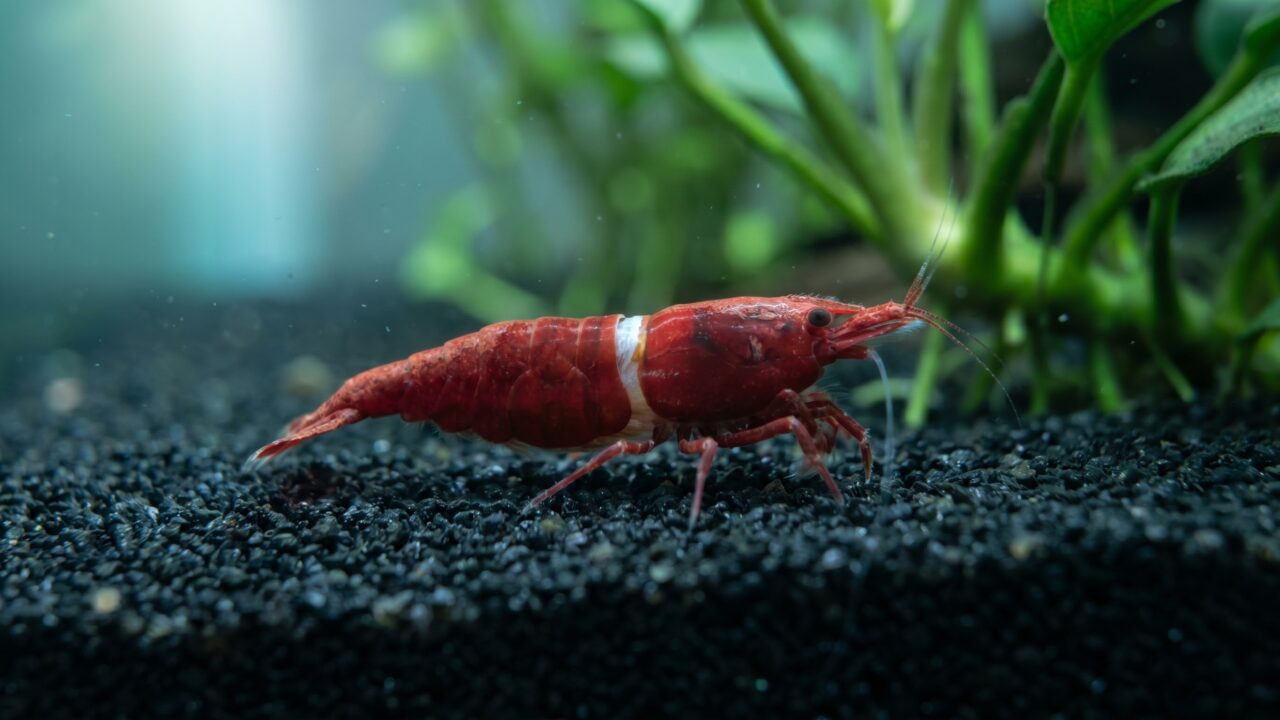
That faint white band encircling a shrimp just behind the head is one of the hardest things to see in this hobby. It means the molt is failing. The white ring is the visible gap at the carapace-abdomen junction, the seam where the front shell meets the body, that has separated prematurely or incompletely so the shrimp cannot finish working its way out of the old shell. The pale band you see in the ring is exposed soft new cuticle and a hemolymph-filled gap, not a clean break. Most shrimp showing a visible white ring die within 24 to 48 hours, and there is no intervention that reliably saves them at that stage.
The good news is that white ring of death is largely preventable. Two overlapping failures cause most cases: insufficient calcium and magnesium in the water, and sudden swings in water chemistry that hit a shrimp mid-molt. Get those two right and you remove the most common triggers, though a handful of other causes covered below, copper and trace-element depletion among them, can still produce a failed molt in an otherwise well-run tank.
What a normal molt looks like - and where it goes wrong
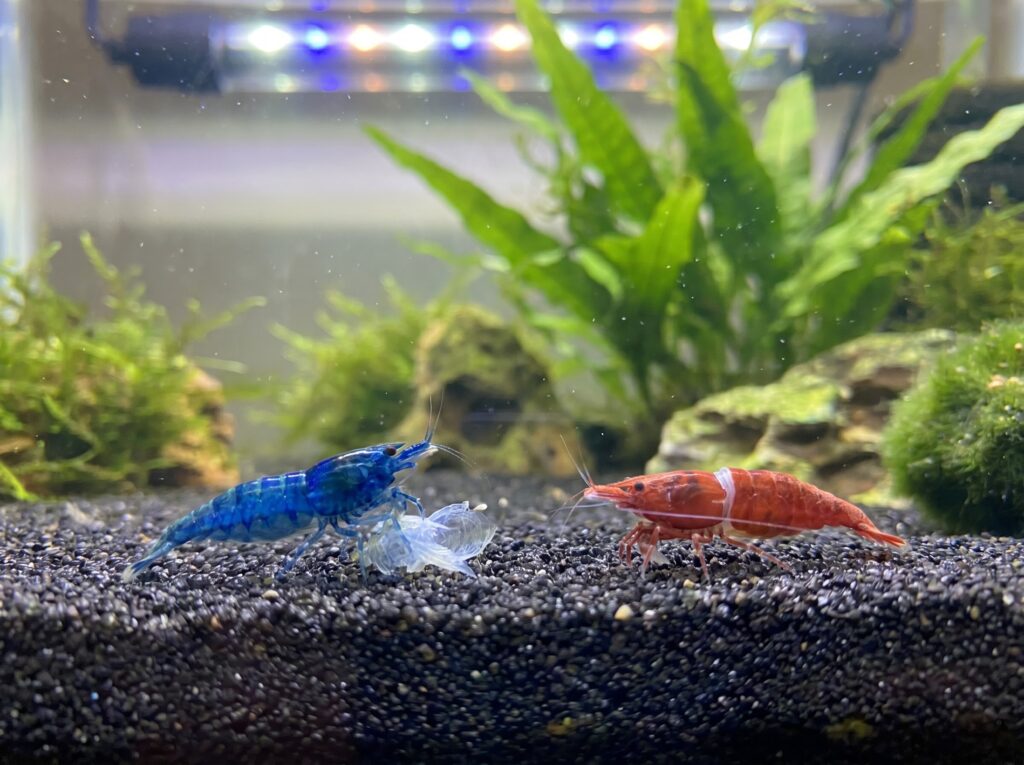
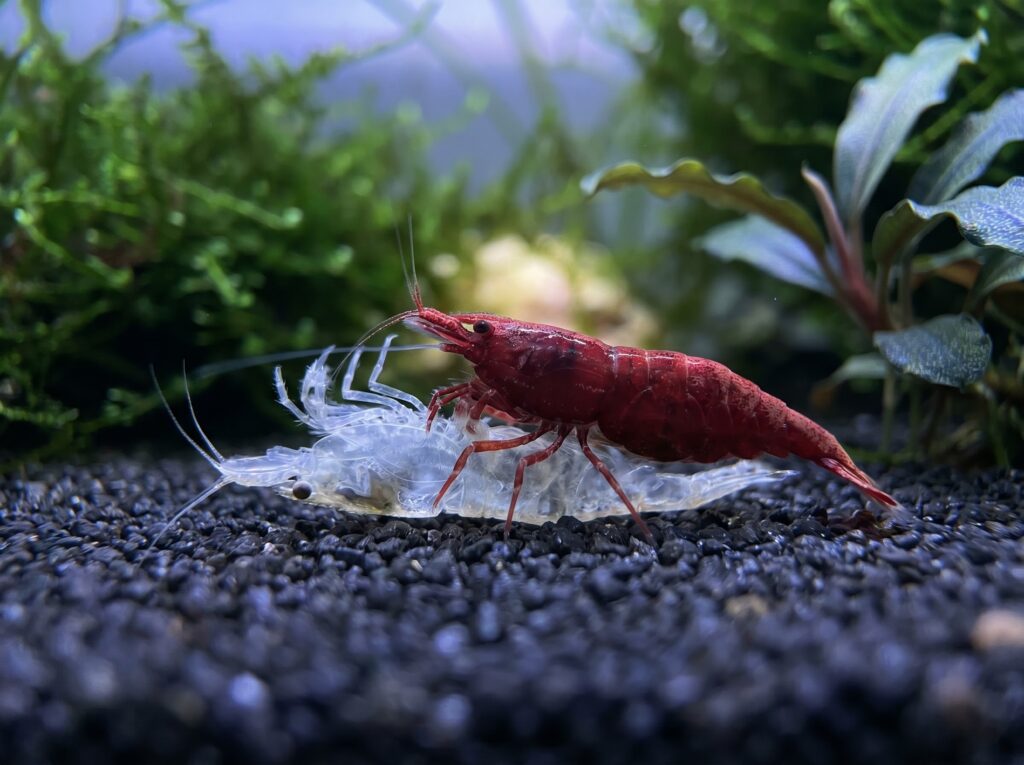
To understand the white ring, it helps to know what a healthy molt actually involves. Shrimp cannot grow inside a rigid shell, so they shed the whole thing on a cycle that varies a lot with the tank. Warm, well-fed adult Neocaridina often molt every one to three weeks; cooler or older shrimp stretch closer to once a month; juveniles in a fast growth phase shed even more often, roughly every one to two weeks. There is no single fixed interval, so treat any number you read, including this one, as a rough band rather than a clock. In the days before the shed, the shrimp reabsorbs calcium from the old shell back into its body, softening the cuticle. Then it takes on water rapidly, building internal pressure until the old shell loosens at the carapace-abdomen junction near the back of the head shield. The shrimp arches into a U-shape and slides out in seconds.
Post-molt, the new shell is soft and paper-thin. The shrimp hides, often in a corner or under a plant, while calcium and magnesium from the water harden the new cuticle. In larger decapods that have been studied closely, such as freshwater prawns, mineral content swings sharply across the molt cycle and the animal lays down most of its new-shell minerals in the days after the shed; the same broad pattern is assumed for dwarf shrimp by analogy, though it has not been measured directly in Neocaridina. The shrimp usually eats the discarded shell too, reclaiming trace minerals from the cast-off cuticle that help support rehardening. A healthy molt takes a few seconds for the actual shed and up to 48 hours to fully harden.
The white ring appears when that pressurized water-uptake phase goes wrong. The working model among keepers is that the carapace-abdomen junction separates too early or only part way, so instead of the shell loosening cleanly and letting the shrimp slide out, it opens into a gap the shrimp cannot push through. What you see as the pale ring is the soft new cuticle and hemolymph showing through that gap, not shed material. The exact mechanics have never been formally documented for dwarf shrimp, so this is a model inferred from observed cases and general crustacean molting biology rather than a measured fact; what is consistent across reports is that once the ring is visible, the U-bend escape that works in a healthy molt no longer works, and the shrimp is effectively stuck.
For a closer look at what the whole molting cycle looks like in a healthy shrimp, see our article on how shrimp molting works. If you are not sure whether what you found is a failed molt or a dead shrimp, this comparison guide can help you identify it.
What causes the white ring
Low or imbalanced GH
General hardness (GH) measures the concentration of calcium and magnesium ions in your water, and both minerals feed into the shrimp's mineralized exoskeleton. Calcium is the main building block hardening the new shell, and magnesium is needed alongside it; the precise way the two work together in the cuticle is not something hobbyists can measure in a home tank, so it is enough to know that a shortfall of either tends to leave the new shell too soft. Without enough of both, the new shell forming under the old one is thinner and weaker than it should be, and the shrimp struggles to complete the shed at the carapace-abdomen junction.
It is not just the total amount that matters; the balance between calcium and magnesium counts too. Most of the hard data here comes from larger crustaceans rather than dwarf shrimp. In feeding trials on Chinese mitten crabs, for example, very high dietary calcium reduced molting frequency and raised the animals' magnesium requirement, because in the gut excess calcium competes with magnesium for absorption. That is a dietary, gut-level finding in a much bigger crustacean, so read it as a useful analogy rather than a measured rule for Neocaridina: the practical takeaway is simply that a remineralizer should supply both minerals in sensible proportion, not calcium alone.
For Neocaridina species (cherry shrimp, blue dreams, bloody marys, and the rest of the color-form lines), a GH of 6 to 8 dGH hits the right range. Caridina (crystal red, crystal black, Taiwan bees) need softer water at 4 to 6 dGH. Running a Neocaridina tank on very soft tap water - say, 2 to 3 dGH - leaves shrimp mineral-deprived at every molt. Running a Caridina tank at 8 dGH puts excessive mineral load on a species adapted to nearly mineral-free mountain streams.
The aquariumscience.org shrimp reference summarizes it plainly: "If the shrimp do not have enough calcium and magnesium the shell will not be strong and will break during molting (the infamous white ring of death). The shrimp cannot get the broken shell off and dies as a result." Equally, the same source warns that too much GH makes the shell too rigid, requiring dangerous exertion that can also kill the shrimp. The sweet spot exists for a reason.
For a full breakdown of GH, how it differs from KH, and how to reach your target number, see our guide on GH for shrimp.
Sudden water-chemistry swings
A shrimp's body regulates its internal fluid balance against the surrounding water - a process called osmoregulation. This works well when the external chemistry is stable. Add a large bucket of very different water quickly, and the shrimp's body has to work extremely hard to re-equalize. If a shrimp is anywhere in the premolt stage when that swing hits, the consequences can be a forced early molt, a failed molt, or a white ring.
This is especially damaging because molting shrimp are actively taking on water to build internal pressure. Any external chemistry shift during that window disrupts the hydraulics of the process. A shrimp that was two hours from a clean shed can instead have the junction give way badly and end up stuck with a white ring.
Water changes are the most common trigger. Replacing 30 to 50% of tank water with new water, even correctly remineralized new water, can shift GH, TDS, or temperature enough to stress shrimp in premolt. Smaller, more frequent changes manage nitrates with less disruption. Keeping nitrates below 20 ppm matters beyond just water quality: chronically elevated nitrate is a background stressor that compounds vulnerability during molting, which is why shrimp in high-nitrate tanks often show more molting failures even when GH looks correct. For detailed guidance on frequency and method, see shrimp tank water changes.
Other things that cause failed molts
Low or swinging GH is the headline cause, but it is not the only one, and it is a mistake to blame every white ring on hardness plus water-change speed. Molts also fail in tanks where GH is perfectly adequate. KH and pH that sit too high or too low for the species, a tank running low on potassium and trace elements after months without remineralizing, plain old age in an end-of-life shrimp, and general stress from heat, crowding, or aggressive tankmates can all produce a botched shed. If your GH is solid and you are still losing shrimp to failed molts, widen the search to KH, pH, trace-element depletion, and the age of the animals rather than assuming it has to be calcium. Our guides on KH for shrimp and pH for shrimp cover those parameters in detail.
Copper: the hidden killer to rule out
One cause deserves its own warning because it kills fast and is easy to introduce by accident. Shrimp are far more vulnerable to dissolved copper than fish, with acute lethality at concentrations that a fish would not even notice, and copper is one of the most common reasons a seemingly healthy colony crashes overnight. It hides in places keepers do not always check: many fish and snail medications are copper-based, most general-purpose plant fertilizers contain copper, and copper household plumbing can leach into tap water that sits in the pipes. The rule is simple. Never dose a copper-based medication or a copper-containing plant fertilizer in a shrimp tank, and be cautious with tap water from copper plumbing. If shrimp are dropping suddenly with no obvious molt or parameter cause, copper belongs near the top of your suspect list. See copper and shrimp for safe products, testing, and how to strip copper from a contaminated tank.
Why cuttlebone will not fix this
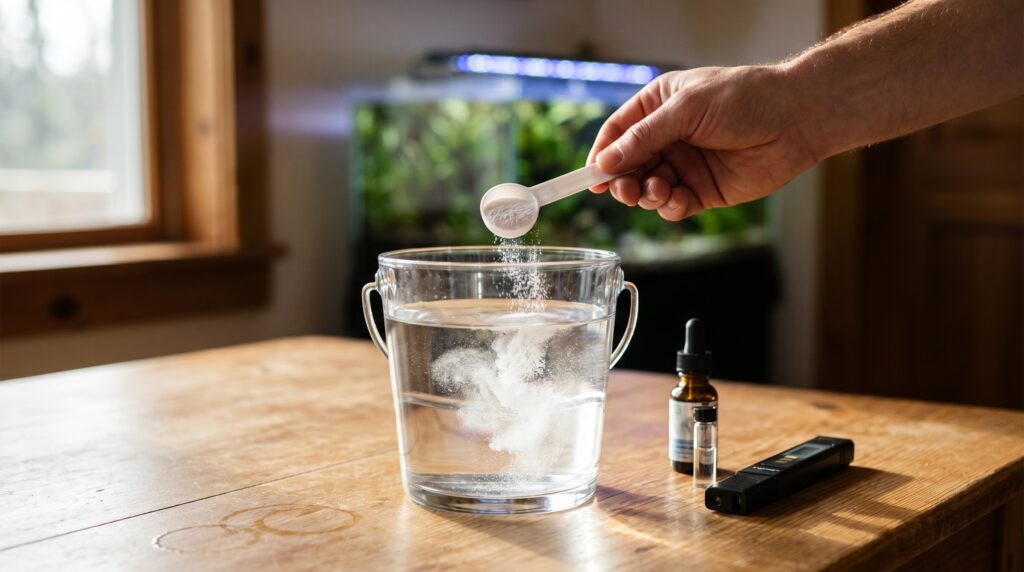
A common piece of advice on shrimp forums is to drop a piece of cuttlebone into the tank after seeing a white ring or after a molting death. The idea is that cuttlebone releases calcium and fixes the mineral deficiency. This is well-intentioned, but it misunderstands both the timing and the chemistry.
Cuttlebone is overwhelmingly calcium carbonate, the same compound as limestone and aquarium coral. Calcium carbonate dissolves fastest when hydrogen ions in acidic water react with it, and as pH rises toward neutral and above that reaction slows sharply. Most Neocaridina tanks sit around pH 7.0 to 7.5, near the alkaline end where dissolution is slowest. It does not switch off at any neat pH value, despite what some forum posts claim; the chemistry shows it keeps dissolving in neutral-to-slightly-alkaline water, just slowly and at a rate that is hard to predict in a closed tank. The practical problem is that in a typical shrimp tank cuttlebone releases calcium too slowly, and at too uncontrolled a dose, to reliably move GH where you want it.
Even if dissolution were faster, it would not help a shrimp that already shows a white ring. That shrimp's molt is already failing, and no calcium source can reverse a shed that has already gone wrong at the carapace-abdomen junction. The moment to correct mineral levels is in the weeks before a molt, not in the hours during one.
Cuttlebone also provides only calcium, with no magnesium, no potassium, and no trace elements. Shrimp need calcium and magnesium together in a sensible ratio, and a calcium-only source does nothing for the magnesium side of that balance. A purpose-made remineralizer that already contains both is a far more sensible way to set your GH than a slab of calcium carbonate that may barely dissolve.
What actually works is remineralizing the water properly before it goes into the tank, using a purpose-formulated product that delivers a sensible calcium-to-magnesium ratio at a known, measurable dose. SaltyShrimp Mineral GH/KH+, for example, is designed to reach about 6 dGH at roughly 2 g per 10 liters, with calcium and magnesium delivered alongside potassium and trace elements in a dissolved form you can test and adjust the same day, rather than a solid block that dribbles calcium into the tank at an unpredictable rate.
What to do if you see a white ring
There is no rescue protocol that reliably works once a white ring is visible. By that point the shed has already gone wrong at the junction and the shrimp cannot complete it. Some keepers try gently helping the shrimp in a small container of tank water, but the success rate is very low and the handling stress often hastens death. The most useful thing you can do is record the event and investigate why it happened, so the rest of your colony does not follow.
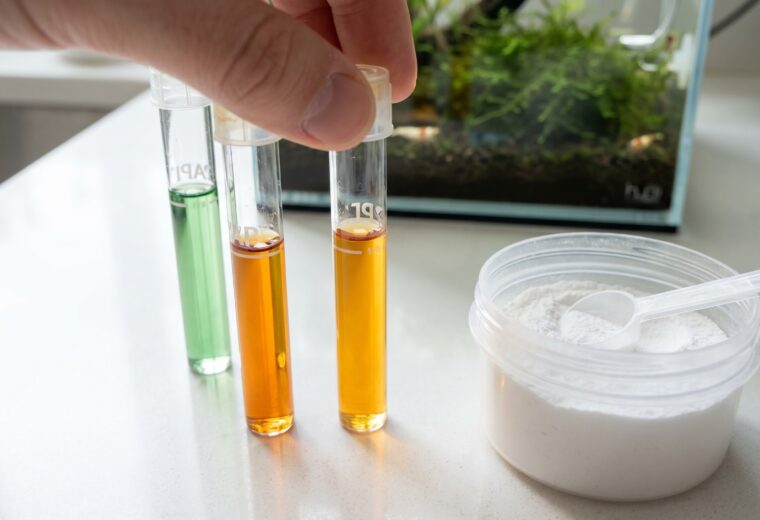
Check your GH immediately with a reliable drop-count test kit. Check the TDS with a pen meter. Think back to the last water change: how much did you replace, how quickly did you add it, and was the replacement water at the same temperature and GH as the tank? One or more of those factors is almost always the explanation.
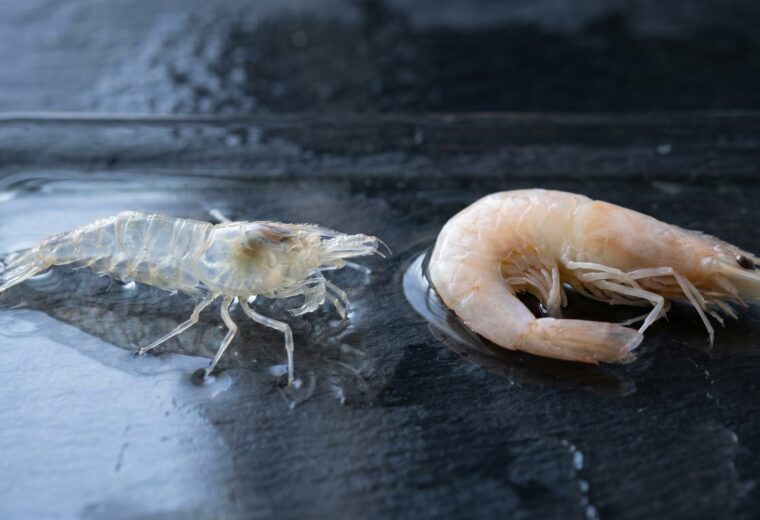
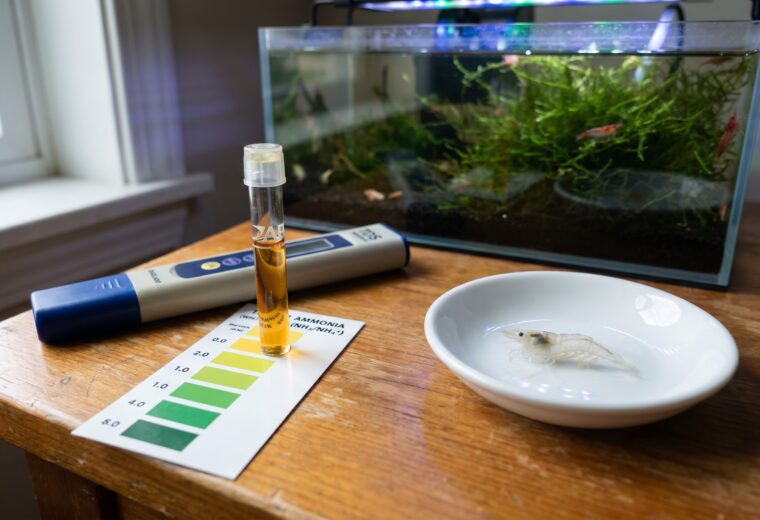
Remove the shrimp after death - a white-ring shrimp deteriorates quickly and a decomposing shrimp can spike ammonia in a small tank. Leave healthy molts in the tank for the colony to consume.
WROD prevention checklist
The table below pulls together the controllable variables that drive most cases of white ring of death. Work through it once when setting up a tank and revisit it any time you see a molting problem.
| Variable | Target / Action | Why it matters |
|---|---|---|
| GH - Neocaridina | 6-8 dGH | Provides calcium and magnesium needed to form a strong new cuticle |
| GH - Caridina | 4-6 dGH | Matches the low-mineral adaptation of the species; excess GH is also harmful |
| Remineralizer choice | Purpose-formulated product (e.g. SaltyShrimp GH/KH+); NOT cuttlebone | Delivers dissolved, immediately available calcium and magnesium at a known, testable dose; cuttlebone dissolves too slowly and unpredictably near neutral pH to set GH reliably |
| Remineralize new water before adding | Yes - mix and test in a bucket first | Ensures replacement water matches tank GH before it enters; prevents a GH drop on change day |
| Water change volume | 10-15% at a time as a starting point | Small volume changes minimize osmotic disruption to shrimp in premolt |
| Water change addition speed | Drip or slow pour over 15-20 minutes minimum | Slowing the addition rate reduces the rate of parameter change the shrimp experiences |
| Temperature match | New water within 1-2 °C of tank water | Temperature shock can force a premature molt as surely as a GH swing |
| GH consistency over time | Same target on every water change; test before and after | A tank that holds GH steady at 7 dGH will produce far fewer failed molts than one that swings between 5 and 9 even when the average looks fine; the mineral environment a shrimp experiences at each molt is what counts, not the weekly average |
| Nitrate level | Below 20 ppm; preferably below 10 ppm for Caridina | Elevated nitrate adds chronic background stress that compounds molting vulnerability |
| Molt removal | Leave in tank unless infection is present | Colony consumes the shed shell and reclaims trace minerals from the cast-off cuticle that support rehardening |
| Mineral-rich food | Rotate in specialist shrimp foods with calcium and magnesium content (e.g. GlasGarten Mineral Junkie Bites) | Dietary minerals supplement water-column GH and support the premolt mineral-loading phase |
| Cuttlebone | Not a reliable GH source near neutral pH - skip it | Dissolves slowly and unpredictably in neutral-to-alkaline tanks; provides only calcium with no magnesium; cannot rescue a failing molt |
| Copper | Zero - no copper meds or ferts; check copper plumbing | Acutely lethal to shrimp at very low levels; a common hidden killer from medications, plant fertilizers, and copper pipes |
A note on the "it must be diet" argument
Some keepers who see a white ring immediately focus on food and add calcium supplements to the diet. Diet does matter, and mineral-rich shrimp foods support the premolt loading phase. But food only helps if the water GH is already in range. Aquatic crustaceans take up minerals from the water around them as well as from what they eat, which is why hardness in the tank does so much of the work; if the water is consistently soft, no amount of spinach or mineral food makes up for it. Fix the water first, then use food as support.
On the flip side, keepers who have their water parameters dialed in but change 40% of tank water every week, quickly, with cold tap water, will still see molting problems regardless of how good their food is. Fix the water and the feeding; neither alone is enough.
Frequently asked questions
Can a shrimp survive the white ring of death?
Occasionally, but not reliably. Some keepers report a shrimp lingering for a day or two after the ring appears, and there are rare anecdotal accounts of a shrimp managing to work free when the separation at the junction was only partial rather than a complete gap. If you want to try, move the shrimp gently into a small container of tank water to reduce current and tankmate interference, and watch for any movement at the ring. Do not handle the shrimp directly. If it has not improved within a few hours, the outcome is almost certainly fatal; remove the body promptly to avoid an ammonia spike in the main tank.
My GH is fine - why did I still see a white ring?
Check three things. First, when did you last test GH? If it was weeks ago, the level may have drifted. Second, how large was your last water change, and how quickly did you add the new water? Even with correct GH, a fast large change can trigger a failed molt if a shrimp was already in premolt. Third, check that your replacement water was remineralized to the same GH as the tank before it went in.
Is white ring of death contagious?
No. It is a water-chemistry problem, not a disease. If you see multiple shrimp with white rings, the tank-wide conditions - low GH, recent large water change, a sudden temperature shift - are affecting multiple shrimp simultaneously. Investigate the parameters, not the individual shrimp.
How soon after changing water parameters will molting improve?
Shrimp carry their mineral stores between molts, so the colony will not show immediate improvement. Give it two to three full molt cycles at stable, correct parameters before drawing conclusions. Because adult molt intervals vary so much, that works out to anywhere from a few weeks to a couple of months depending on your temperature, feeding, and the age of your shrimp, so judge by the trend over several molts rather than by a fixed deadline. Breeding activity, color intensity, and successful molts should all gradually improve if the fix was correct.