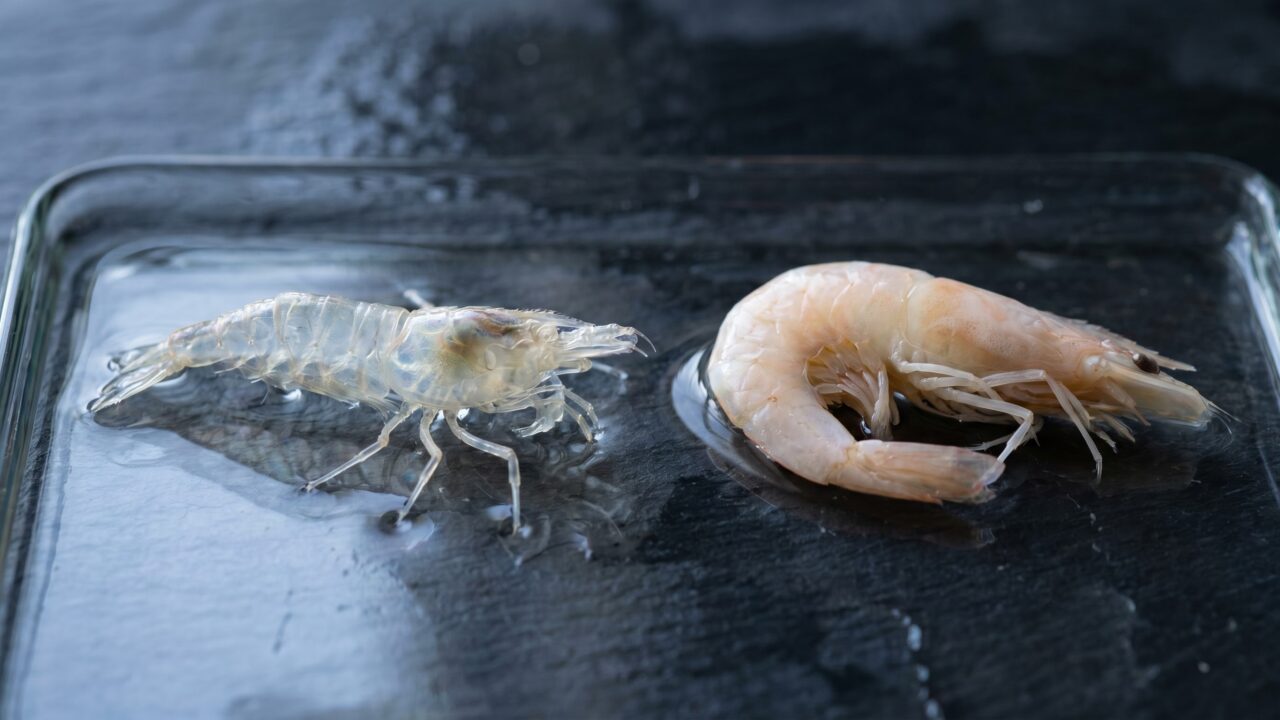
That pale shape on the substrate is almost certainly a molt. A dead shrimp looks nothing like a clean empty shell - it turns opaque white or pinkish within an hour of death, and its body stays intact. Once you know the five visual differences, you will identify a molt in about five seconds and stop worrying every time your colony grows.
What you are actually looking at: the exuvium
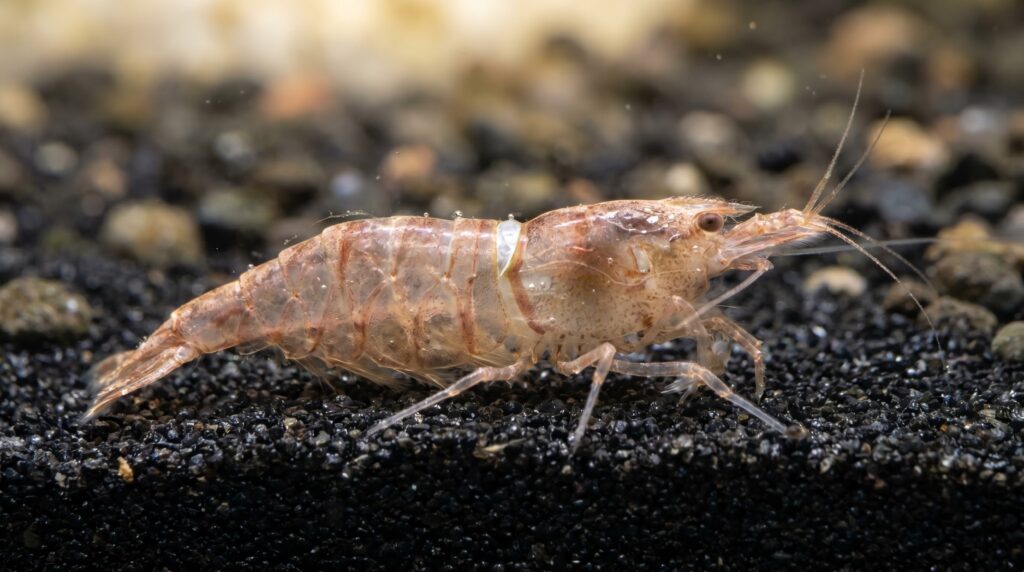
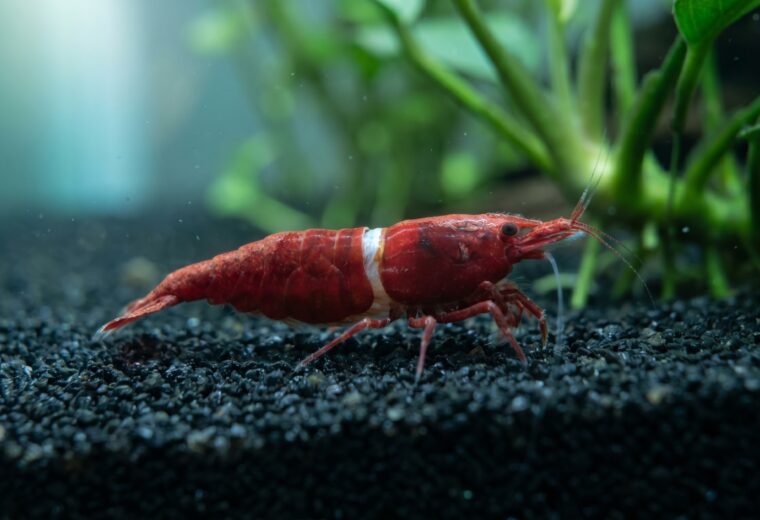
When a shrimp outgrows its exoskeleton, it sheds the whole thing in one piece - this cast shell is called the exuvium (plural: exuviae). According to Wikipedia's taxonomy entry, exuviae are "the remains of an exoskeleton and related structures that are left after ecdysozoans have molted." For a dwarf shrimp keeper, this means a complete hollow replica of the shrimp, down to the antennae and walking legs, left sitting right where the animal wriggled free of it.
The shell looks so convincing because it IS the old exoskeleton - every joint, every leg segment, every whisker, all present. What is missing is the shrimp itself, and that absence is the first clue you will learn to read.
Before shedding, the shrimp reabsorbs much of the calcium stored in the old cuticle. Research on crustacean biomineralization published in PMC confirms this "partial decalcification of the old cuticle in every premolt," which is exactly why the exuvium looks so pale and translucent once it lands on the substrate - the mineral content that gave the living shell its opacity has already been recycled into the animal's body to help harden the new exoskeleton forming underneath.
The five visual checks
Use this table whenever you find a suspicious shape in the tank. Running through all five takes less than a minute.
| What to check | Molt (exuvium) | Dead shrimp |
|---|---|---|
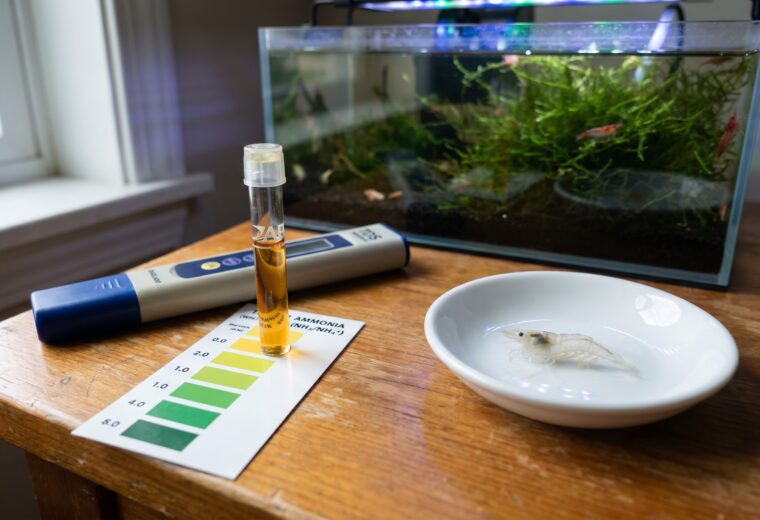
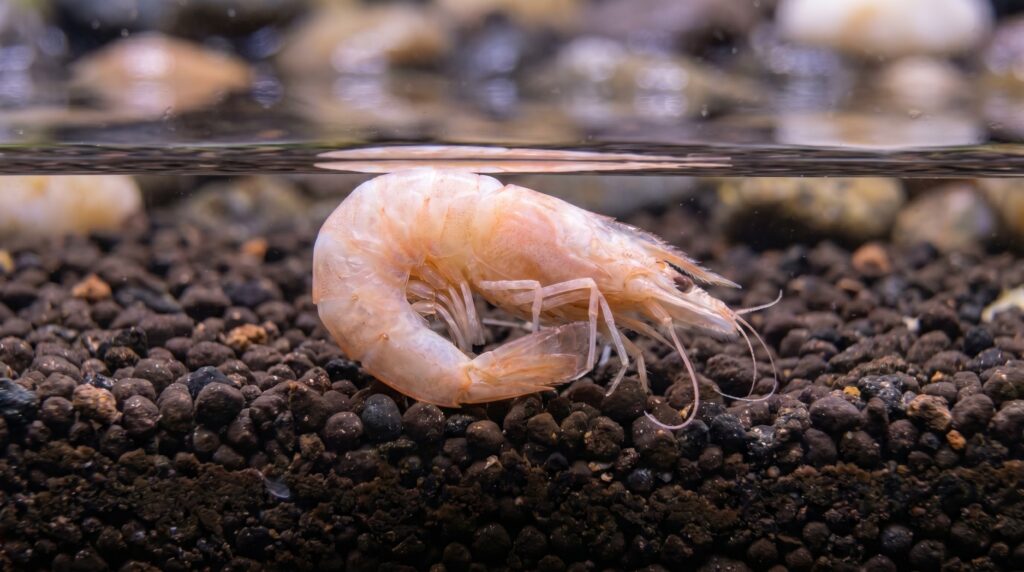
| Color | Clear to pale translucent; slight iridescent sheen | Milky white to pink-orange within 1-2 hours; opaque throughout |
| Body contents | Hollow - light passes through; you can see the substrate through it | Full and solid; internal organs still present |
| Split seam | Visible break between carapace and abdomen where the shrimp escaped - researchers confirm the "ecdysial suture opened between the carapace of the cephalothorax and the abdomen along the dorsal and lateral margins" | No seam; body is intact and continuous |
| Shape | Flat and slightly crumpled; legs spread loosely outward | Body stays mostly lifelike in shape; legs tucked, often a slight C-curve as muscle tone leaves |
The three most reliable checks are color, translucency, and the split seam. A clear shell with light passing through it and a visible dorsal break is a molt, every time. A solid opaque body that looks like a tiny cooked shrimp is a death. The pink-orange color comes from astaxanthin, a carotenoid pigment bound to a protein in live tissue. When the shrimp dies, that protein denatures and releases the pigment - the same chemistry that turns shrimp pink in a pan of hot water. (Smell can also confirm: a dead shrimp develops a distinctly foul, ammonia-like odor within a few hours. A molt is essentially odorless. But color and translucency are visible before you open the lid - smell is a backup, not a first check.)
The C-curve: stress molt versus normal molt
Here is a detail that trips up even experienced keepers. A freshly shed exuvium often lands in a loose, slightly curved or flat posture - it deflates as the shrimp pulls free. A dead shrimp, by contrast, may display a pronounced C-shape, curled inward along the abdomen, as muscle tension releases and then locks. If you see a distinctly curled body that is opaque, that is not a molt. If you see a loose, crinkled, translucent shell that happens to look curved, that is just where it fell.
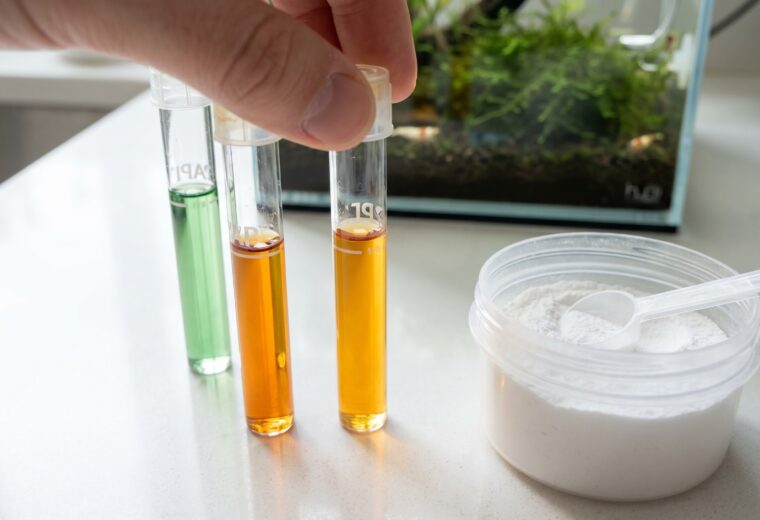
The stress molt is a separate scenario worth knowing. Sudden swings in water chemistry - a large water change with different TDS, a spike in ammonia, a temperature crash - can force a shrimp into an emergency molt before it is ready. As a working guideline, replacing water with more than a 10-15% TDS difference relative to the tank is the threshold most experienced keepers flag as a stress-molt risk; smaller top-offs are generally safe. These stress molts sometimes happen so fast that the exuvium is thicker and less cleanly separated than a healthy molt, and they often leave a visibly soft, vulnerable shrimp hiding for 24-48 hours afterward. If you are finding molts and also noticing shrimp that look pale and lethargic, check your water parameters before assuming the molt is the problem. Stress molting and shrimp losses often share the same root cause: a parameter shift the colony could not absorb.
Why you should leave the molt in the tank
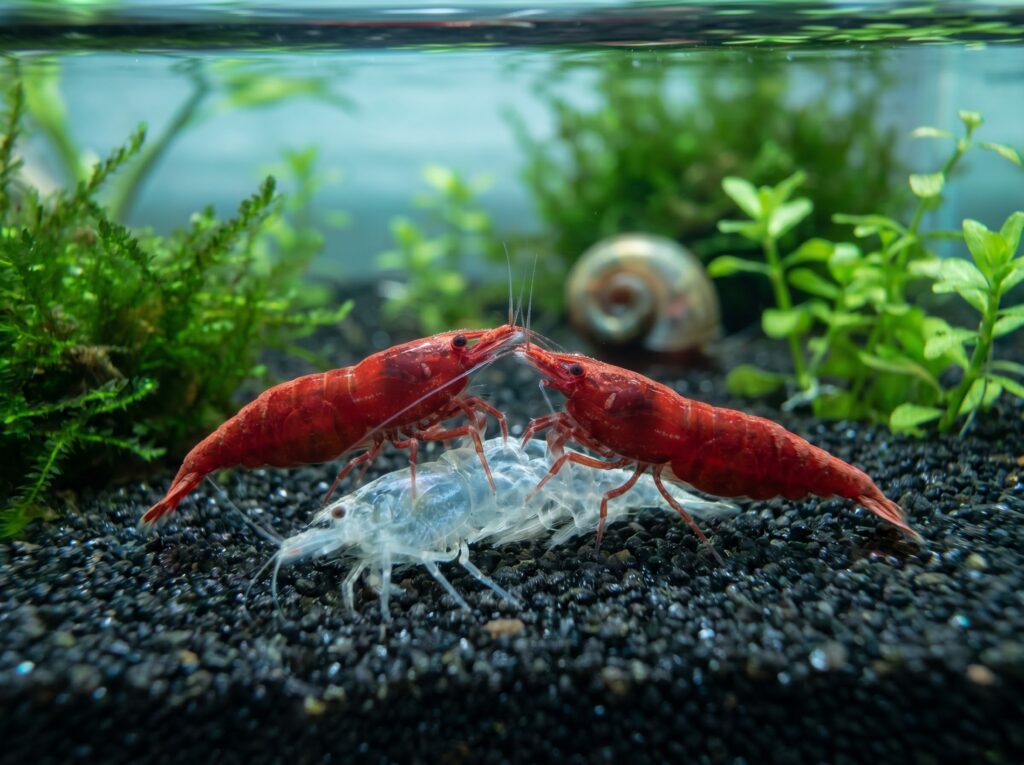
New keepers sometimes remove the exuvium thinking it is waste. Leave it. The other shrimp will eat it, usually within 24-48 hours. The exoskeleton is composed of chitin and calcium carbonate, and while the premolt calcium reabsorption already pulled the bulk of the mineral back into the shrimp's body, the remaining chitin and trace minerals are still useful. PMC's biomineralization research notes that "food (including sometimes the exuviae), a possible source of calcium ions, represents a minor contribution to the cuticle calcification" - so the shrimp eating the shed shell is a documented calcium-recycling behavior, not just scavenging.
More than 80% of calcium in crustaceans is deposited in the exoskeleton, and research on crustacean calcium physiology confirms that "inadequate calcium intake from water or feed may lead to unsuccessful molting, poor exoskeleton mineralization, reduced defensive capacity, and increased mortality." The exuvium offers a small top-up. It is not a substitute for proper GH, but it is free nutrition - removing it is a pointless loss.
The full molting guide covers how often shrimp molt, what triggers the cycle, and how to read the pre-molt signs before the shell even drops. Molt frequency varies with temperature, age, and individual condition, so no single interval applies universally. What the research does pin down: under laboratory conditions at 23°C, researchers (Kelleher and Mykles, SICB) recorded the approximate interval between consecutive molts as 10 days in adult male Neocaridina davidi - shorter than many hobbyist estimates, and measured on adults, not juveniles. Wikipedia's species entry separately confirms that juvenile shrimp molt more often than adults, consistent with their faster growth rate.
When to actually worry
Finding a molt is normal. Finding a molt every few days from what seems like the same animal, or finding molts and then not seeing that shrimp again, is worth a closer look. Here is how to separate routine from problematic.
- Shell left uneaten for more than 48 hours. If no tankmate touches it, the colony may be underpopulated or underfed. Not an emergency, but worth noting.
- Molt with a white band around the mid-section. This is not a normal exuvium. A white ring visible on what appears to be the shrimp's own body - not a discarded shell - is the white ring of death, a failed molt where the shrimp is trapped. Read the white ring of death guide for what it means and what GH levels have to do with it. Cuttlebone does not fix a failed molt in progress; only stable mineral-rich water prevents them.
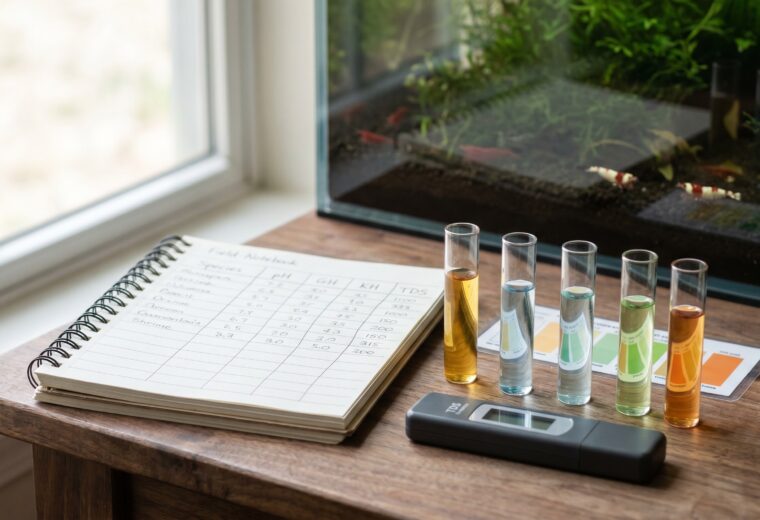
- Multiple deaths alongside frequent molts. When you are finding actual dead bodies (opaque, intact, pinkish) at the same time as lots of exuviae, the colony is under stress. Check TDS, GH, ammonia, nitrite, and nitrate. See the guide to shrimp deaths for a step-by-step diagnosis.
- Soft shrimp visible after molting. A freshly molted shrimp is soft and vulnerable for roughly 24-48 hours while the new cuticle hardens. This is normal. If shrimp routinely stay soft longer than that, GH is likely too low to support fast mineralization. For Neocaridina, the target range is 6-8 dGH, and a comfortable working point for reliable molting sits toward the middle of that band, and SaltyShrimp's GH/KH+ dosing guide is calibrated to produce "a total hardness of about 6 °dGH" as a practical starting point.
A note on copper and medications
If you have recently dosed any medication, plant fertilizer, or tap water treatment and are now finding dead shrimp rather than molts, check the label for copper. Copper is lethal to shrimp even at trace concentrations - research on Neocaridina and related freshwater invertebrates shows lethal effects at concentrations below 0.1 mg/L in soft water, which is far below what most product labels flag as a concern. This includes many common algaecides, some multipurpose fish medications, and liquid fertilizers that list copper sulfate or chelated copper among their ingredients. Old copper pipes in a house's plumbing can also shed copper into the first draw of tap water. A shrimp killed by copper will appear opaque and pink quickly, and deaths across the whole tank happen fast. If you suspect copper, do a large water change immediately and do not dose the compound again.