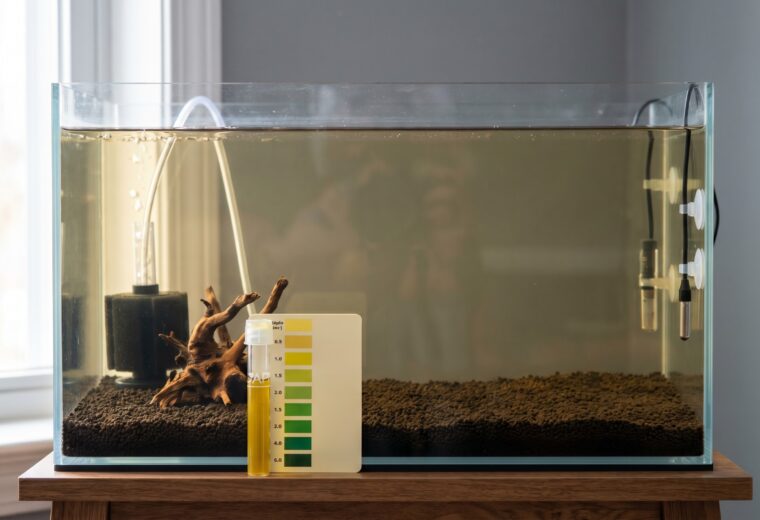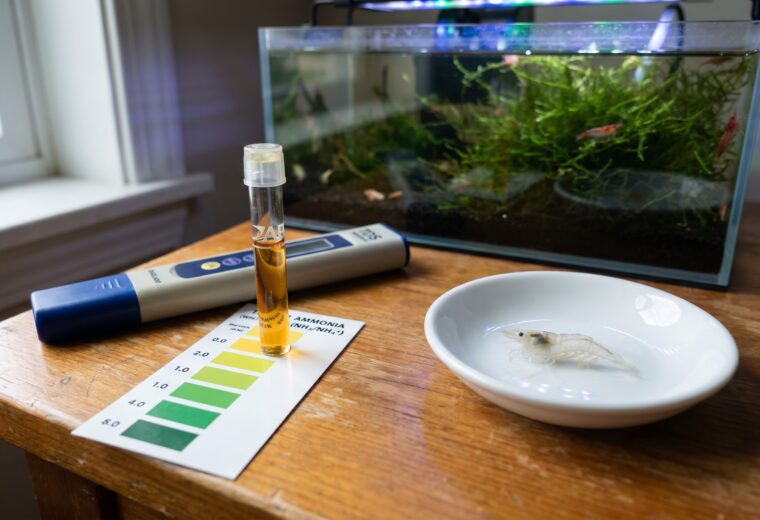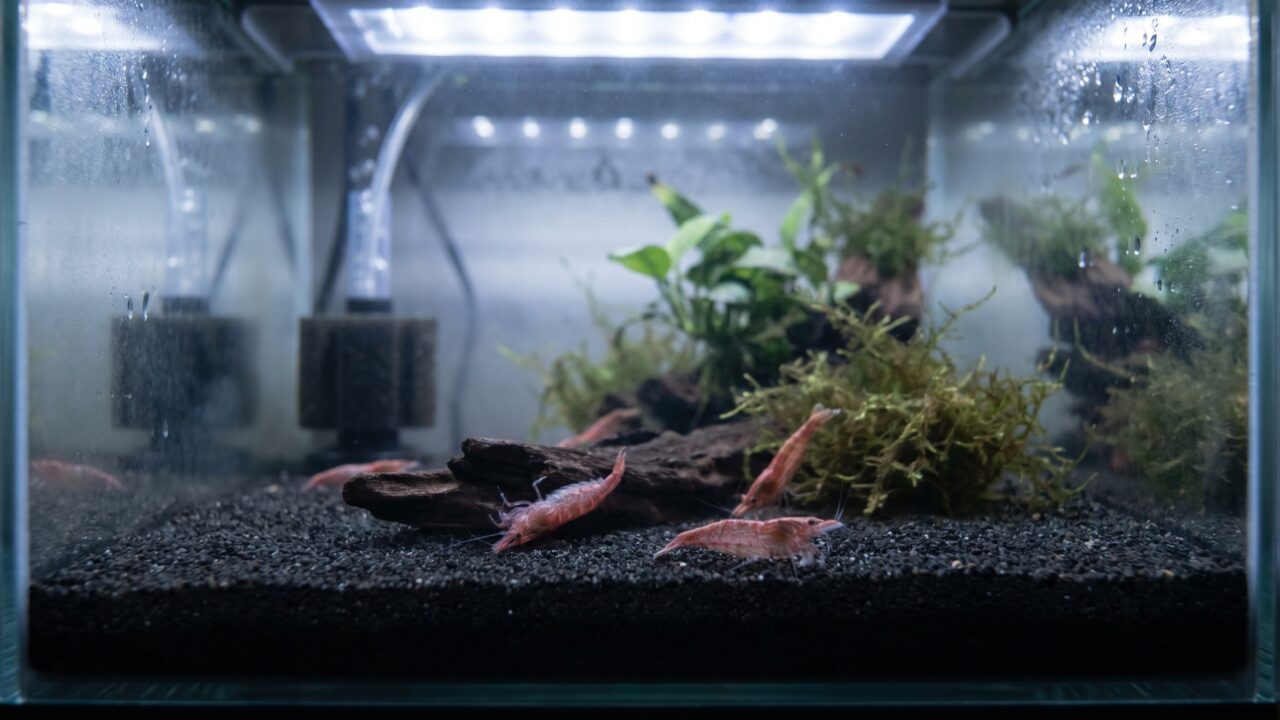
You woke up to dead shrimp. Not one or two, but the whole colony, or nearly all of them, gone in hours. That speed is actually useful diagnostic information: a slow dieoff over days points to a different set of problems than a sudden overnight wipeout. When a colony crashes in under 12 hours, the cause is almost always acute. Five things cause the vast majority of these crashes: copper poisoning, an ammonia spike, temperature failure, a water change that went badly wrong, and untreated tap water from a forgotten dechlorinator. Work through this list in order, because each cause has a specific fix.
If any shrimp are still alive and moving, your first move is a 20-30% water change with conditioned, parameter-matched water. Do it now, before you finish diagnosing. It buys time regardless of the cause.
Step one: check for copper
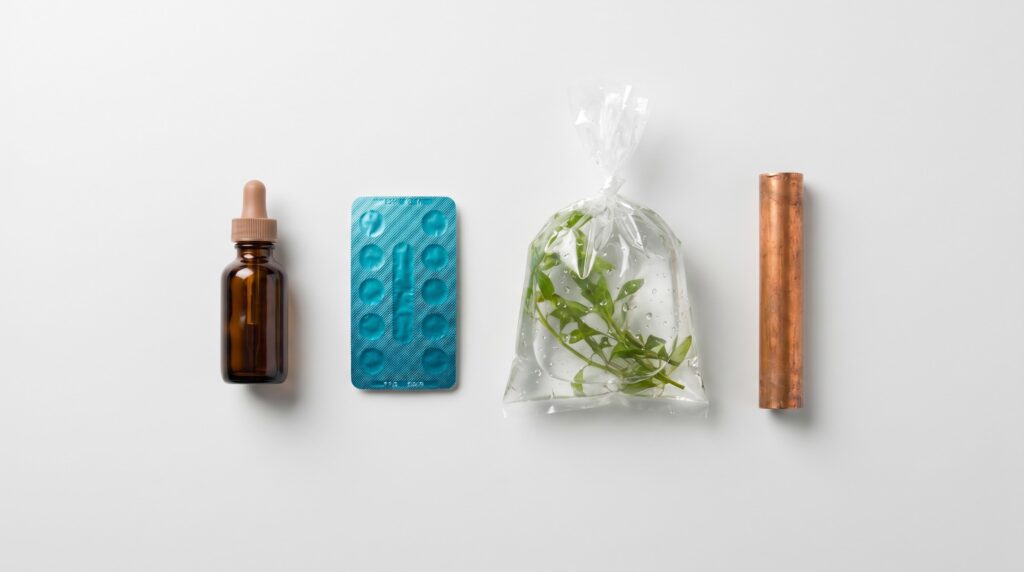
Copper is the single fastest killer of shrimp in a home aquarium, and it is far more common than most keepers realize. The mechanism is direct: copper disrupts hemocyanin, the protein shrimp use to carry oxygen in their blood. Fish use hemoglobin and tolerate low-level copper exposure far better; shrimp do not. Concentrations as low as 0.03 mg/L (0.03 ppm) have been documented killing sensitive shrimp species, and Seachem's own Cupramine label instructs keepers to remove all invertebrates, noting that "they are extremely sensitive to copper and will not tolerate treatment with a copper-based medication." Death can happen within hours.
Run through this checklist mentally:
- Did you add any fish medication in the last 48 hours? Any product marketed for ich, velvet, parasites, or bacterial infections may contain copper sulfate or chelated copper. Check the ingredients list. Copper-based medications are not labeled "dangerous for shrimp" prominently enough.
- Did you dose a liquid plant fertilizer? Many all-in-one fertilizers contain copper as a micronutrient. Seachem Flourish, for example, contains copper sulfate at a very low trace level that Seachem says is safe at the recommended dose. However, overdosing any copper-containing fertilizer, or switching to a different brand with a higher copper fraction, can push levels into the lethal range. Read the label of anything new you added.
- Did you add a new plant from a store? Plants sold at fish stores are sometimes treated with copper-based pesticides or algaecides. A plant dropped straight into a shrimp tank without a rinse or quarantine can release enough copper to crash a colony within hours.
- Did you do a large water change using water that sat in copper pipes? This one surprises keepers most. If your home has copper plumbing and you filled your bucket from a tap that had not run for several hours (overnight, for example), the standing water can carry a meaningful copper load. Running the cold tap for two to three minutes before filling a bucket significantly reduces first-draw copper concentration. This is especially relevant for early-morning water changes.
- Has that tank ever been treated with copper, even by a previous owner or before you set it up? Copper binds to silicone seams, substrate, and decorations. It can leach back into the water column months later, particularly if water chemistry shifts. The University of Florida's aquatic systems guidance recommends that treated systems not be restocked with invertebrates until copper reads 0.01 mg/L or lower (ideally undetectable).
What to do if copper is the likely cause: Move any surviving shrimp immediately to a clean, cycled, copper-free tank. Do not try to detox the contaminated tank in place while shrimp are still in it. To remove free ionic copper from the water, use a copper-specific ion-exchange resin such as Seachem CupriSorb - activated carbon does not reliably remove free ionic copper and will give you false confidence that the water is safe. Test with a copper test kit (API and Seachem both make them) before ever putting shrimp back in. If you used a copper medication in that tank, treat it as permanently unsuitable for invertebrates unless you can confirm levels are below detectable thresholds after running a copper-specific resin and replacing the substrate.
For more detail on every copper pathway and how to make a tank safe again, see our guide on copper and shrimp.
Step two: test for ammonia and nitrite
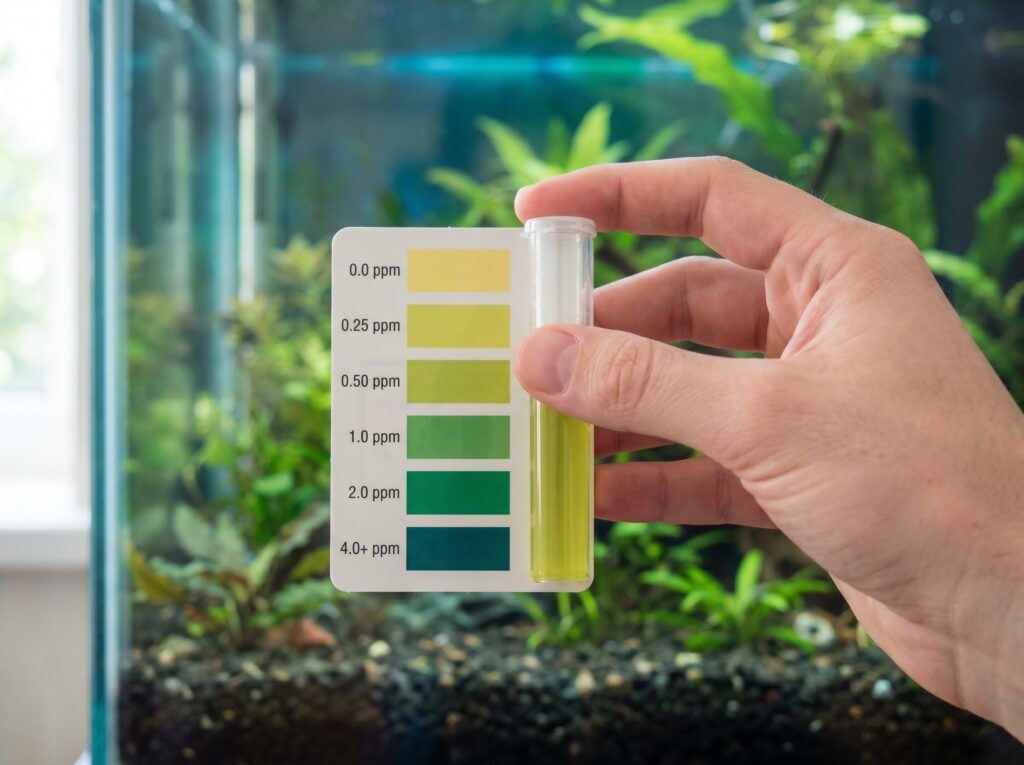
The second most common cause of overnight crashes is an ammonia spike. Un-ionized ammonia (NH3) is the toxic fraction, and its proportion rises with both temperature and pH. At pH 7.5 and 25°C, a significantly larger share of total ammonia nitrogen is in the dangerous NH3 form than at pH 6.8 and 20°C. The US EPA's aquatic life criteria document states that high ammonia leads to "toxic buildup in internal tissues and blood, and potentially death" when organisms cannot excrete it fast enough.
Common triggers for an overnight spike:
- New active substrate. ADA Amazonia and similar buffering soils leach large amounts of ammonium immediately after setup; this is documented behavior, not a defect. A tank set up with active substrate and stocked the same day is almost certain to spike. Ammonia release from some batches can persist for weeks.
- An uncycled or undercycled tank. A tank needs established colonies of nitrifying bacteria before it can handle any bioload. DrTim's Aquatics notes that the cycling process can take 30 to 45 days, during which "ammonia and nitrite can reach toxic levels." Shrimp added before cycling is complete are at serious risk. See our full guide on cycling a shrimp tank.
- Overfeeding or uneaten food left in the tank. A single uneaten feeding left overnight in warm water can push ammonia from near-zero to 1 ppm or higher in a small, lightly filtered tank. Shrimp are light eaters. More food than they consume in two to three hours is too much.
- A dead fish or a dead shrimp that was missed. One medium-sized fish decomposing unnoticed can crash a small tank overnight. If you lost a fish recently and did not find the body, check every corner of the tank and under every decoration.
- Filter failure. A clogged sponge filter, a pump that stopped overnight, or a power outage that ran long enough to crash the bacterial colony will cause ammonia to rise sharply. The bacterial colony in a sponge filter can begin to die in under an hour without oxygenated water flow.
What to do if ammonia is elevated: Test immediately with a liquid test kit (not strips, which are too imprecise for triage). Any reading above 0.25 ppm total ammonia nitrogen is dangerous for shrimp, especially at higher temperatures or pH. Do a 30-50% water change with dechlorinated, parameter-matched water. Add a dose of Seachem Prime. According to Seachem's own FAQ, it temporarily detoxifies ammonia and nitrite for 48 hours (Seachem states it works by converting free ammonia to the less toxic ammonium form, though independent testing has not confirmed this mechanism; treat it as a short-term buffer, not a replacement for a water change), buying time for the bacterial colony to process it. Do not overfeed. If the tank is new, do not add more shrimp until ammonia and nitrite both read zero on at least three consecutive days.
Step three: check the temperature
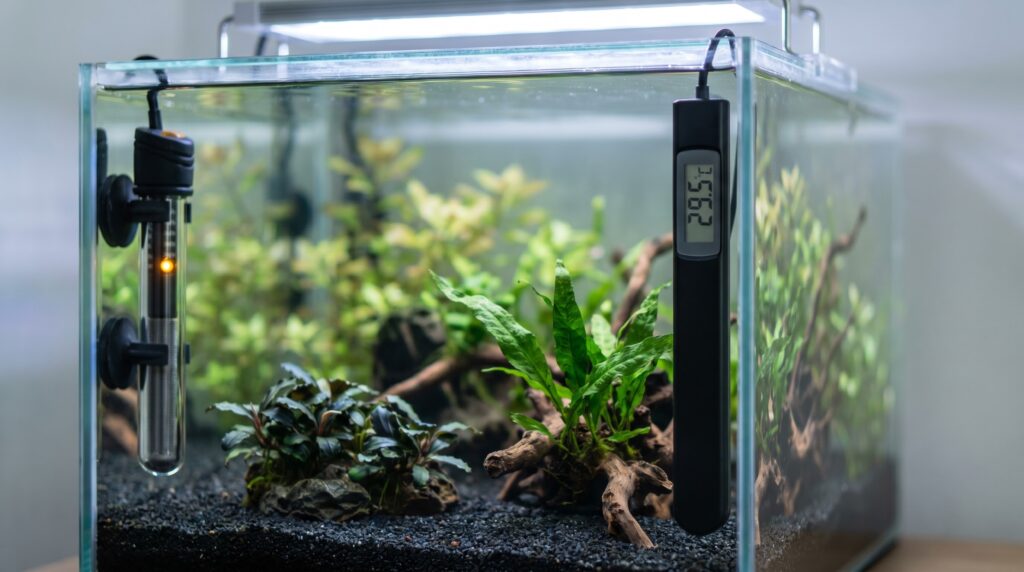
Heater failures are underestimated because they happen silently. A heater stuck in the "on" position will cook a tank; a heater that failed "off" on a cold night will chill it. Both kill shrimp quickly, but a runaway hot side is usually faster.
Neocaridina shrimp (cherry shrimp and all color strains) tolerate a range of about 18-28°C (65-82°F), with 26-28°C being the practical upper limit cited by experienced keepers and supported by peer-reviewed research showing N. heteropoda maintaining good growth performance at 28°C. Caridina shrimp (crystal red, Taiwan bee, and related varieties) prefer a tighter window of 20-24°C (68-75°F) and are more sensitive to heat in particular. Research on thermal tolerance in Caridina species confirms they are genuinely vulnerable to warming, with stress beginning well before temperatures reach obviously dangerous levels. Once water climbs past about 28-29°C (82-84°F), metabolic demand exceeds what dissolved oxygen can support in a small, warm tank. Deaths compound quickly.
Check the thermometer right now. If you do not have a thermometer, get one: a $5 submersible thermometer is non-negotiable kit for any shrimp tank. An aquarium thermometer is your early warning system for both heater failure modes.
If the tank is too hot: Float sealed bags of ice water against the glass (not ice directly in the tank; the TDS and mineral disruption matters). Increase surface agitation to raise oxygen exchange. Point a small fan at the water surface. Bring temperature down slowly, no more than 1-2°C per hour. A crash cool is a second shock layered on the first.
If the tank is too cold: Replace or add a heater with a reliable thermostat. Warm slowly. A submersible digital thermometer with an audible alarm set at your species' upper limit is worth every penny after a heater-stuck-on incident.
Step four: review any recent water change
A water change that seems routine can kill a colony if the replacement water is significantly different in TDS, GH, temperature, or pH from what is in the tank. Shrimp experience water through their gill membranes and the surface of their exoskeleton; a big, fast parameter shift causes osmotic shock. Research on aquatic invertebrates shows that sudden changes in water chemistry trigger oxidative stress, cellular damage, and ion balance disruption, and the rate of change matters as much as the absolute values involved.
The two most common water-change mistakes:
- Replacing too much water at once. A 50% water change sounds moderate, but if your tap water is 250 TDS and your tank was at 150 TDS, you just swung the whole tank by roughly 50 TDS in minutes. For Neocaridina, the target range is roughly 150-250 TDS; for Caridina, 100-150 TDS. Even within the acceptable range, a jump of 50-80 TDS in one change can stress or kill a colony. Keep single water changes to 15-20% for established shrimp tanks.
- Using water at a different temperature. Tap water in winter can be 5-8°C colder than tank water. Pouring it straight in is a temperature shock on top of any chemistry shift. Always match water change temperature to within 1-2°C of the tank before adding it.
For a full breakdown of what goes wrong during water changes and how to do them safely, see why shrimp die after water changes.
Step five: check whether dechlorinator was added
One of the most common causes of a rapid overnight colony crash is a water change where the dechlorinator was simply forgotten. Chlorine and chloramine are added to tap water by municipal utilities and are acutely lethal to shrimp. Unlike fish, which may tolerate a small dose of chlorinated water and recover, shrimp exposed to untreated tap water typically die within hours. The crash looks identical to a copper event: fast, total, no obvious signs before it happened.
Ask yourself whether you actually added a dechlorinator to the bucket before filling the tank, or whether you added it afterward and then poured it in. If you added it to the tank rather than the bucket, shrimp were briefly exposed to untreated water while it mixed. If you forgot entirely, this is almost certainly the cause.
What to do: Treat this the same way as a copper event. Move any survivors to a clean, dechlorinated tank. Do a large water change (50%) in the crashed tank using properly conditioned water, then test daily for two to three days before restocking. Always pre-mix dechlorinator in the bucket before the water touches the tank.
The overnight-crash emergency triage checklist
Use this table the moment you find the crash. Work top to bottom. Each row lists what to check, what a positive finding looks like, and the immediate action to take.
| Priority | Check | Positive sign of this cause | Immediate action |
|---|---|---|---|
| 1 | Any survivors still moving? | Yes | 20-30% water change with matched, conditioned water - do this before anything else |
| 2 | Copper: any new meds, fertilizers, plants, or first-draw tap water in the last 48 h? | Yes to any of the above | Move survivors to clean tank; run a copper-specific resin (e.g. Seachem CupriSorb) in the crashed tank - not standard activated carbon, which does not reliably remove free ionic copper; test copper before restocking |
| 3 | Ammonia: test with liquid kit right now | Ammonia above 0.25 ppm, or nitrite above 0.1 ppm | 30-50% water change; dose Seachem Prime; find and remove decomposing matter; check filter is running |
| 4 | Temperature: check thermometer | Above 28°C (82°F) or below 16°C (61°F) | Correct slowly (max 1-2°C per hour); inspect heater; add fan or ice packs as needed |
| 5 | Water change: was one done in the last 12 h? | Large volume (>25%), mismatched temp or TDS | Bring tank parameters back gradually with conditioned RO or dechlorinated tap matched to target values |
| 5b | Dechlorinator: was it added to the bucket before filling? | Water change in the last 12 h and dechlorinator may have been skipped or added incorrectly | Move survivors to a clean, dechlorinated tank; do a 50% water change with properly conditioned water in the crashed tank; test daily before restocking |
| 6 | Dead stock: any fish, snails, or shrimp unaccounted for? | Missing animal / foul smell / cloudy water | Find and remove decomposing body; test ammonia; increase filtration |
| 7 | Filter: is it running, unclogged, producing bubbles? | Filter stopped or significantly reduced flow | Restart or replace; do not clean with tap water (kills bacteria); rinse media in tank water only |
| 8 | New additions: any new decor, rock, wood, or substrate in the last week? | Yes | Remove suspect item; test ammonia and copper; research material for known shrimp toxins |
What to do after the crash
Once you have identified the cause and the tank is stable, give it at least a week before restocking. Test ammonia, nitrite, and nitrate daily. Let the bacterial colony re-establish fully if filtration was disrupted. If you are using activated carbon, replace it on the manufacturer's schedule - typically every two to four weeks - not sooner; rinse new carbon before first use to remove dust, but do not rinse or re-use carbon that has reached the end of its service life. If copper was involved, replace the carbon with a copper-specific ion-exchange resin (such as Seachem CupriSorb) and confirm copper reads undetectable before restocking.
When you do restock, start with 8-10 shrimp rather than trying to replace the full colony immediately. A smaller group gives you early warning if something is still wrong, and the loss is less devastating. Drip acclimate every new arrival over at least 60-90 minutes by pouring tank water into the bag/cup at a rate of roughly one drop per second using airline tubing with a loose knot. This gives their bodies time to adjust to your tank's TDS, GH, and pH rather than hitting it all at once.
If you cannot identify the cause from this checklist, the crash may have had multiple contributing factors, or the problem is subtler. A slow dieoff that you mistook for a crash, or ongoing parameter instability, points to a different diagnostic path. Our guide on why shrimp keep dying covers those longer-pattern problems in detail.
The causes that do not announce themselves
Two additional killers belong on your radar even if they did not cause this specific crash.
Hydrogen sulfide from deep substrate. Compacted substrate more than about 5-6 cm (2 inches) deep with poor flow through it can develop anaerobic pockets that produce hydrogen sulfide (the gas that smells like rotten eggs). Disturbing the substrate during a gravel vacuum, or stirring a long-undisturbed area, can release a dissolved pulse directly into the water column. It is acutely toxic to shrimp. If you smell rotten eggs during or after a water change, treat it as a serious event: increase surface agitation, do a water change, and improve substrate circulation going forward.
Spray, air freshener, and surface spray contamination. Keepers frequently overlook household chemicals. Aerosol sprays used near an open tank, cleaning products on hands before reaching into the water, bug spray, scented candles, and even new painted walls nearby have crashed shrimp colonies. Shrimp tanks should have a cover or lid, and hands should be rinsed and dry before any contact with tank water.