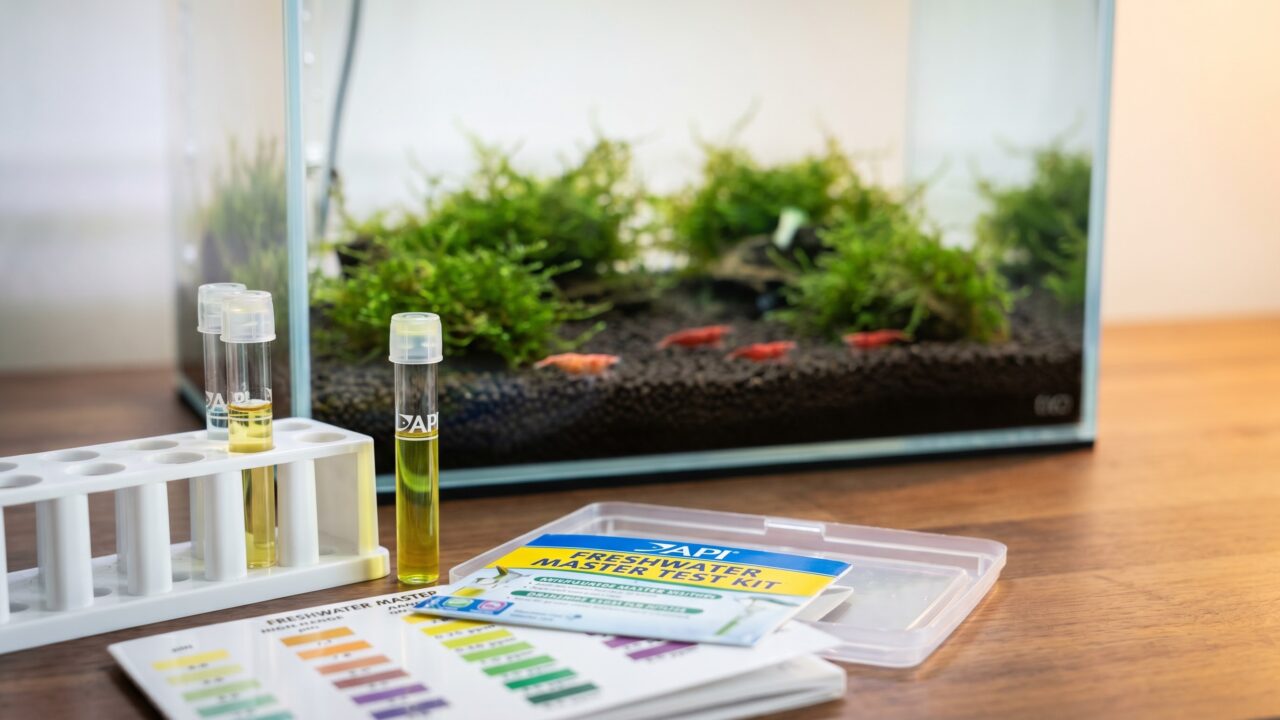
Most shrimp die in the first two weeks, and almost always for the same handful of reasons. This list ranks the 10 most common beginner shrimp keeping mistakes from deadliest to least dangerous - so if you are just starting out, fix the ones at the top first.
One thread connects nearly all of them: parameter consistency is what keeps shrimp alive through the learning curve. A colony settled into slightly imperfect water will almost always outlast one that sees correct numbers on Monday and something else entirely by Friday. That lens reframes several of the mistakes below from a question of "right number" to a question of "how much does it move."
1. Adding shrimp to an uncycled tank
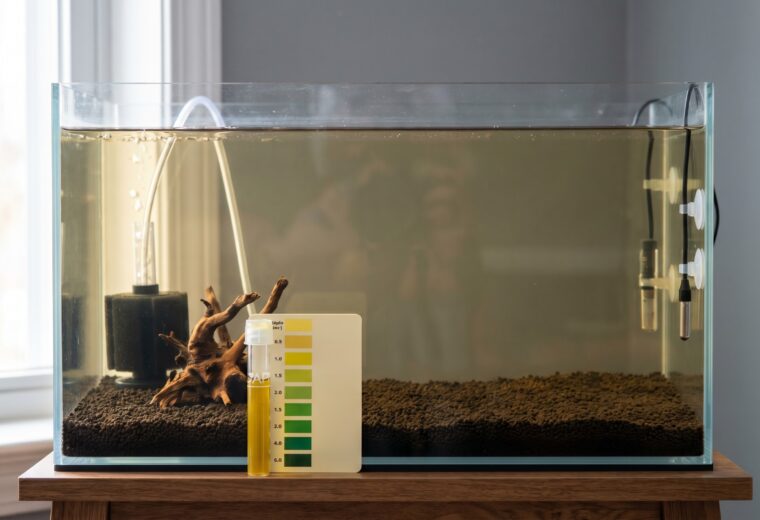
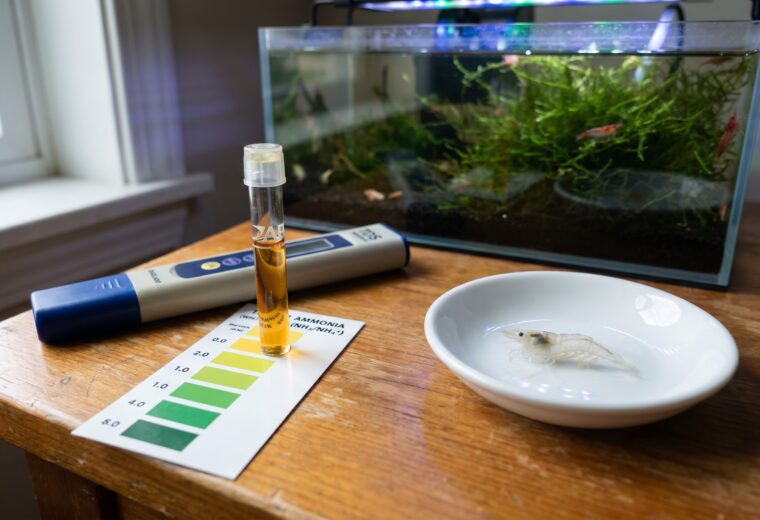
An uncycled tank has no established colony of nitrifying bacteria. When shrimp excrete waste, ammonia builds up in the water with nothing to break it down. Even a small spike is enough to kill every shrimp in the tank within hours. This is the single fastest way to lose an entire order of shrimp.
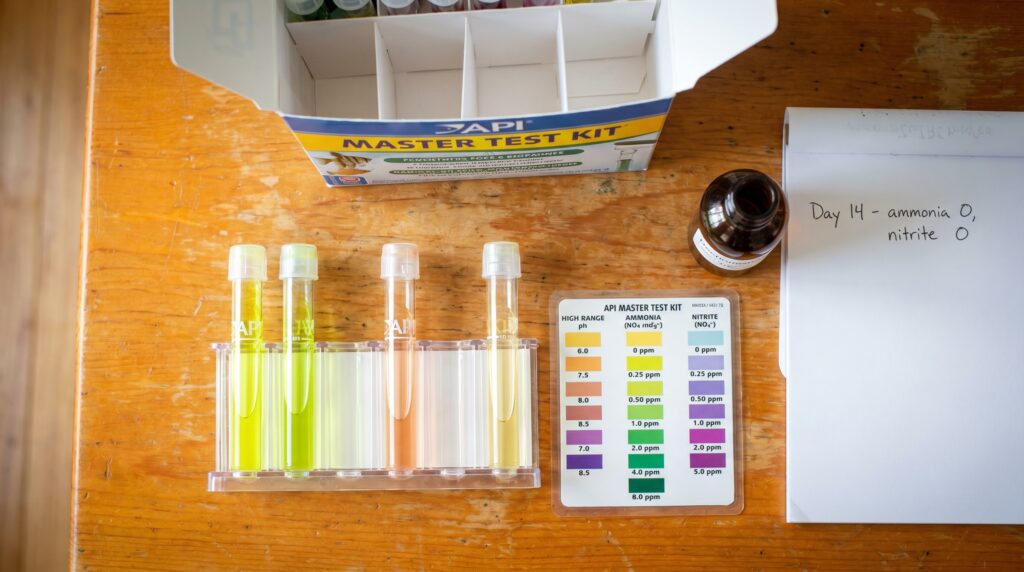
The nitrogen cycle converts ammonia to nitrite (also toxic), then nitrite to nitrate (much less harmful). The cycle is complete only when you get consistent readings of 0 ppm ammonia and 0 ppm nitrite. Until that point, your tank is not safe for shrimp. Cycling typically takes four to eight weeks, though it can take longer depending on conditions.
Fix: Run the tank without shrimp and dose a small amount of ammonia - a pinch of fish flakes works - every few days to feed the growing bacteria. Test every two to three days. When ammonia and nitrite both read zero after a deliberate ammonia dose, the cycle is done. Only then add shrimp. Full details are in our guide to cycling a shrimp tank.
2. Copper exposure
Copper is acutely lethal to all crustaceans. A freshwater shrimp species studied in controlled conditions showed a 96-hour median lethal concentration of just 0.0313 mg/L of copper - a concentration invisible to the eye and too low to detect without specialized equipment. At those levels, shrimp die quickly with no warning signs.
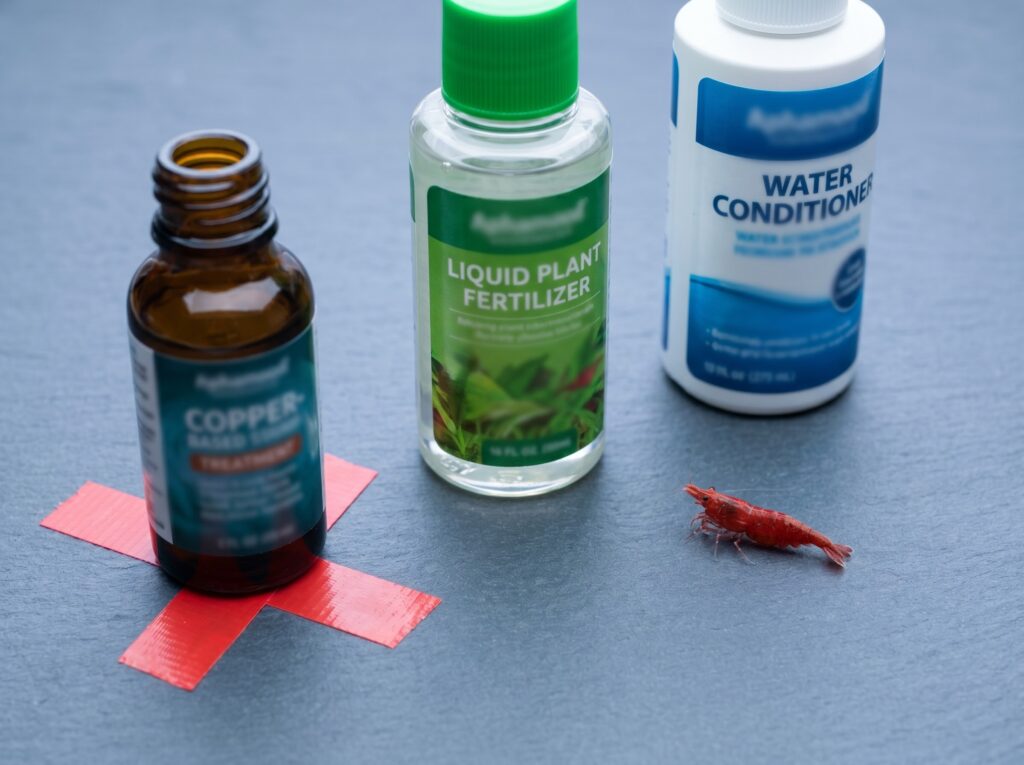
The sources of copper that catch beginners off-guard are worth naming specifically. Copper-based medications (used for treating ich and other fish parasites) are the most common culprit - treat any sick fish in a separate hospital tank, never in the shrimp tank. Old copper plumbing releases copper into tap water, especially in the first draw of the morning; letting the tap run for a minute before filling your buckets reduces this risk. Some plant fertilizers contain chelated copper. Seachem Flourish, for example, raises copper by roughly 0.002 mg/L at the recommended dose, which the manufacturer confirms is well below the stress threshold - but if you ever drastically overdose a liquid fertilizer, check the label for copper content before doing so in a shrimp tank.
Fix: Never use copper-based medications in any tank that houses shrimp or ever will. Use a dechlorinator that also binds heavy metals. If you have old copper pipes, use a good-quality water conditioner and let the tap run before collecting water. Read fertilizer labels. More on this is covered in our article on copper and shrimp.
3. Skipping acclimation
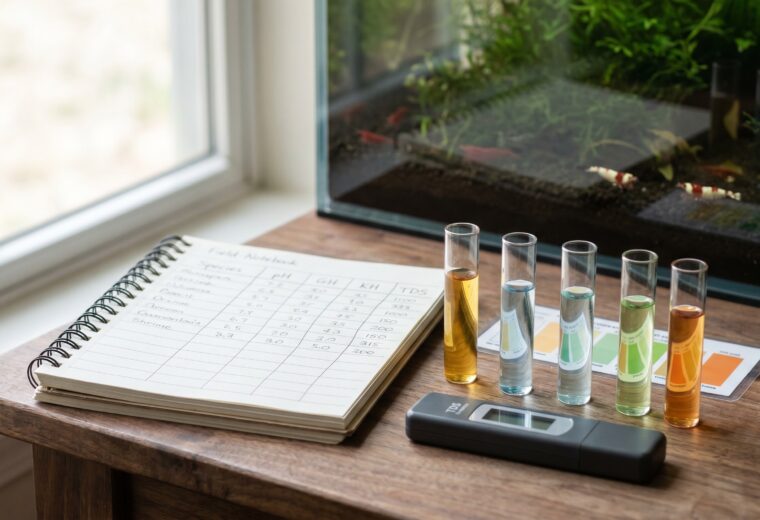
Shrimp shipped from a seller arrive in water with a specific pH, GH, KH, and TDS that almost certainly differs from your tank. Pouring them straight in - even into perfectly set up water - forces their bodies to deal with a sudden osmotic shift they have no way to compensate for. You may not see deaths immediately, but the stress shortens lives and often causes a slow die-off over the following days.
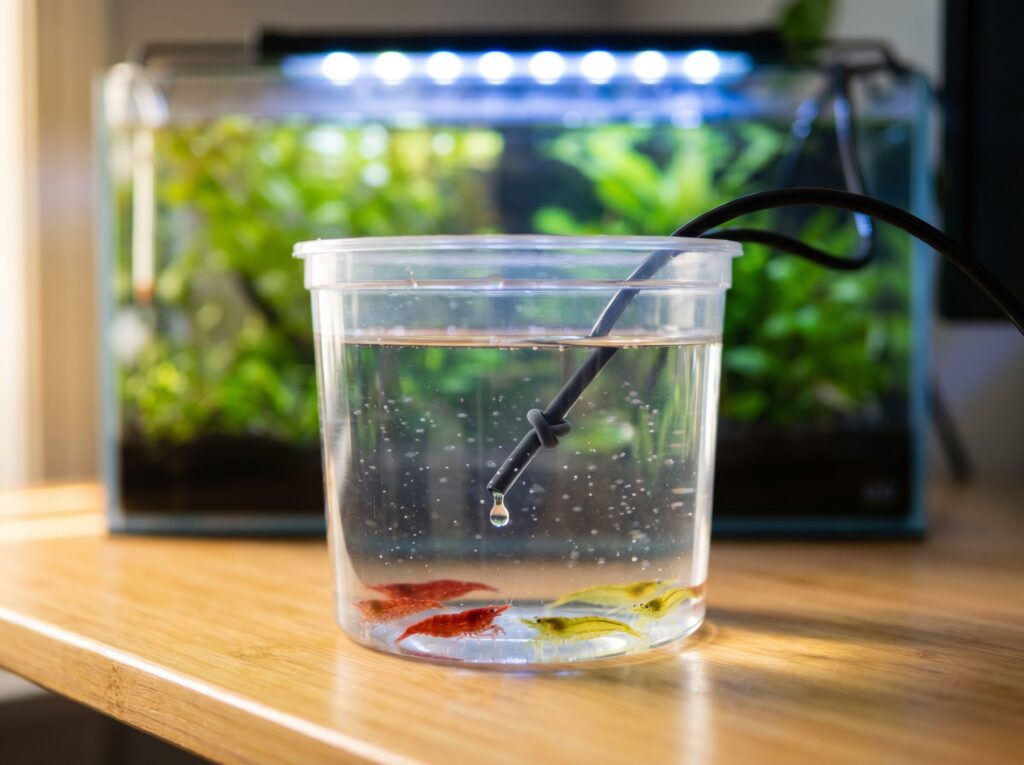
Drip acclimation is the standard method. Put the shrimp and their bag water into a small container, then use a piece of airline tubing to siphon tank water into the container, tying a loose knot in the tubing to throttle the flow to a slow but steady trickle. After 60 to 90 minutes the volume in the container should have roughly doubled, meaning the shrimp are now sitting in a mix that is mostly your water. Scoop them out with a fine net and transfer them directly to the tank, leaving the container water behind. Step-by-step instructions are in our drip acclimation guide.
4. Putting Neocaridina and Caridina in the same tank
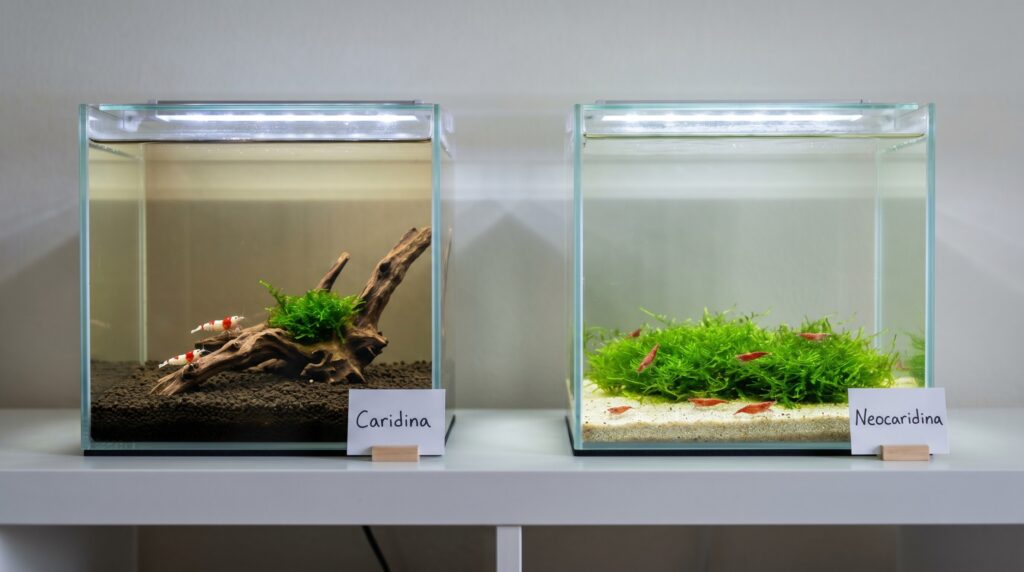
These two groups need fundamentally different water chemistry. Neocaridina (cherry shrimp and all the color variants - blue dreams, bloody marys, yellows) thrive at GH 6-8, KH 1-4, TDS around 150-250 ppm, and pH 6.5-7.5. Caridina (crystal red, crystal black, bee shrimp, Taiwan bees) need soft, acidic water: GH 4-6, KH 0-1, TDS around 100-150 ppm, and pH 5.8-6.4. Those ranges do not overlap.
If you compromise on parameters to try to keep both, you end up with conditions that stress both groups. Caridina kept at Neocaridina pH will have chronic health problems and almost zero breeding success. Neocaridina kept at Caridina pH (below 6.5) are not in immediate danger but breed poorly and tend to color up less vividly. One group always loses.
Fix: Give each group its own tank. Run Neocaridina on tap water (if your tap falls within range) or remineralized RO water. Run Caridina on RO water remineralized with a Caridina-specific mineral supplement and an active buffering substrate to hold pH in the 5.8-6.4 range. Our comparison article on Caridina vs Neocaridina tanks covers this in full.
5. Large, sudden water changes
Water changes are essential maintenance. The mistake is doing them too large or too fast. Swapping 30-50% of the tank volume in one go can shift TDS, GH, pH, or temperature enough to trigger osmotic stress - the shrimp equivalent of going from a warm room directly into cold water. Deaths can happen within hours, or you might see a slow die-off as weakened shrimp succumb over a week.
The safe range for a routine water change in a shrimp tank is 10-15% of the tank volume, no more than once or twice a week. Make sure replacement water is the same temperature as the tank (within 1°C or 2°F). If you are using remineralized RO water, mix the remineralizer into the fresh water before adding it, and aim for the same TDS reading as the tank. If your tap parameters are very different from what is in the tank, drip the new water in slowly rather than pouring it all at once. Full guidance is in our article on shrimp tank water changes.
6. Starting with Caridina instead of Neocaridina
Crystal red and crystal black shrimp are beautiful. They are also genuinely difficult - they require RO water, a specific remineralizer, an active buffering substrate (which costs more and needs replacing every 12-18 months), and stable soft-acid parameters that most tap water cannot provide at all. When parameters drift even slightly outside their narrow window, Caridina stop breeding and start dying.
Neocaridina, especially red cherry shrimp, tolerate a much wider range of conditions. Wikipedia notes that *Neocaridina davidi* has colonized thermally polluted waterways as feral populations, which gives you a sense of just how adaptable the species is compared to most ornamental shrimp. For a beginner, that tolerance is a huge buffer against the inevitable small mistakes made while learning. Start with Neocaridina, learn water chemistry and tank management, then move to Caridina once you have a track record of stable parameters. See our full article on why Caridina are not for beginners for the details.
7. Overfeeding
Uneaten food decays and releases ammonia. In a shrimp-only tank with a light bioload, even a small amount of rotting food can push ammonia from zero to detectable levels within 24 hours - and any detectable ammonia in a mature tank is a problem. Overfeeding is also the leading cause of bacterial blooms, cloudy water, and snail population explosions.
Shrimp in a planted tank with algae and biofilm graze constantly and do not need daily feeding. In a well-planted setup, two to three times per week is the right starting point - or even less if biofilm growth is established and shrimp are visibly picking at surfaces between feeds. In a bare or lightly planted tank with little natural food, two to four times per week applies. Either way, keep portions small: roughly the size of a pea, or a single sinking wafer for every 10-15 shrimp. Feed at the same time of day, watch what happens in two hours, and remove anything left over with a turkey baster or pipette. If shrimp swarm the food immediately and finish it within 30 minutes, you can feed slightly more. If food sits uneaten after two hours, feed less next time. More detail on portion sizing and frequency is in our overfeeding shrimp guide.
8. Expecting breeding too soon
New shrimp keepers often worry that something is wrong when their colony does not breed within the first few weeks. In most cases, nothing is wrong - shrimp simply need time to settle, and females follow their own schedule.
According to Wikipedia, *Neocaridina davidi* females reach sexual maturity at roughly two months of age. Once a female is carrying eggs ("berried"), those eggs take two to three weeks to hatch at typical temperatures. Shrimplets take another two to three months to reach breeding size themselves. So from the day you buy juvenile shrimp, you could easily wait three to four months before seeing a real population increase - and that is completely normal.
The key variables are temperature (slightly warmer water speeds development) and stability. Shrimp that are busy adapting to new parameters spend energy on survival, not reproduction. Give new shrimp two to three weeks to settle in before expecting any breeding activity. If nothing has happened after two to three months with mature, healthy adults, check our guide on why shrimp are not breeding for a structured troubleshooting list.
9. Starting with too few shrimp
Buying five shrimp as a "test" feels like a cautious move. In practice, a group that small is fragile for two reasons. First, you might end up with all females or all males by chance - shrimp sexing is not always easy, and small samples produce skewed sex ratios more often than you would expect. Second, a tiny group has almost no resilience: one bad water change or a brief temperature spike can wipe out the whole colony.
Starting with 10 or more shrimp gives you a realistic chance at a balanced sex ratio, enough genetic variety to avoid immediate inbreeding effects, and a buffer against early losses while you are still learning. More shrimp also produce more waste, which helps maintain an active bacterial colony in the filter. (Experienced keepers consistently recommend starting with at least 5-10 shrimp to ensure a balanced sex ratio; we recommend erring toward the higher end for the reasons above.)
A colony of 10 well-chosen Neocaridina in a stable, cycled tank can grow to 50-80 individuals within four to six months under good conditions - so the upfront investment pays off quickly.
10. Mistaking a molt for a dead shrimp
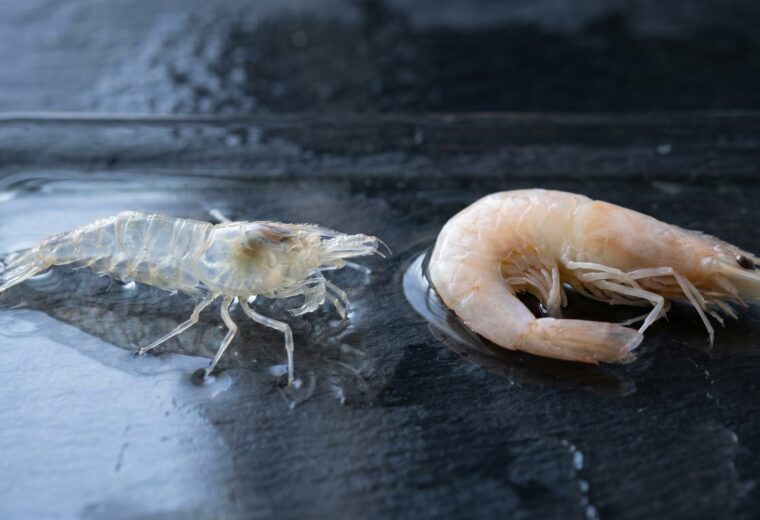
Every shrimp keeper eventually fishes out what looks like a dead shrimp, only to realize it is the discarded shell from a molt. A molted exoskeleton is translucent, slightly curved, and looks like a perfect shrimp outline - hollow, and usually whitish. A truly dead shrimp turns opaque and pinkish (even in red species), has limp antennae, and may smell within a day or two. The shell has none of those qualities.
Molts are good news - a shrimp that molts is growing. Leave the shell in the tank for a day or two; the shrimp will eat it to recover the calcium and other minerals. Do not panic and remove it immediately.
Important distinction: confusing a shed shell for a dead shrimp causes no harm - that is why this mistake ranks last. But a failed molt is a different situation entirely and is almost always fatal. If you see a white ring around a shrimp's body mid-molt - where the shell has split between the carapace and abdomen but the shrimp cannot complete the exit - that shrimp is in serious trouble. This is called the white ring of death and it belongs in a higher risk tier than the harmless scenario described above. Low GH (insufficient calcium and magnesium in the water) is the primary cause. The fix is to keep GH in the correct range for your species from the start, not to add cuttlebone after a failed molt has already begun - that does not save a shrimp already stuck. More on molting problems is in our article on molt vs dead shrimp and the dedicated guide to the white ring of death.
The ranked mistake table
Here is how the 10 mistakes stack up by speed of harm and how recoverable the situation is. Use this as a checklist before you buy your first shrimp.
| Rank | Mistake | How fast it kills | Recoverable? | One-line fix |
|---|---|---|---|---|
| 1 | Uncycled tank | Hours to days | No (lose the whole batch) | Cycle fully before stocking - 0 ammonia, 0 nitrite |
| 2 | Copper exposure | Hours | No (irreversible once dosed) | No copper meds in shrimp tanks, ever |
| 3 | No acclimation | Hours to days | Rarely | Drip acclimate for 1-2 hours minimum |
| 4 | Mixing Neo + Caridina | Weeks (chronic stress) | Yes - separate tanks | One species group per tank |
| 5 | Large water changes | Hours to days | Partially | Max 10-15% per change, matched temp and TDS |
| 6 | Starting with Caridina | Weeks (slow decline) | Yes - switch to Neocaridina | Learn on cherry shrimp first |
| 7 | Overfeeding | Days to weeks | Yes - remove food, stop feeding | Feed 2-4x per week, remove leftovers in 2 hours |
| 8 | Impatience on breeding | No deaths | N/A | Wait 2-3 months before troubleshooting |
| 9 | Too few shrimp | No immediate deaths | Yes - add more | Start with at least 10 |
| 10 | Confusing molt with death | No deaths (from the mistake itself) | N/A | Check color and firmness - shells are translucent |
One pattern runs through most of these: the mistakes that kill shrimp fastest are chemical (ammonia from no cycle, copper, osmotic shock). The ones further down the list are setup choices or expectations problems that you can recover from. Fix the chemistry first, then worry about the rest.
Parameter stability vs. perfect numbers
Mistake #5 touched on this, but it deserves its own summary: water that barely moves beats water that occasionally reaches a textbook number. A Neocaridina colony parked at a steady pH 7.3 and TDS 200 ppm will reproduce more reliably than one that oscillates between pH 6.8 and 7.2, even though 6.8 sits closer to the recommended midpoint. Every time parameters shift, shrimp redirect energy toward rebalancing their internal chemistry rather than growing and breeding. Predictable conditions somewhere inside the acceptable range outperform perfect-on-paper conditions that cannot hold.
This is especially important for Caridina, where the acceptable range is narrow to begin with. It is also why fixing an existing stable tank that has slightly off parameters is often better than chasing a specific number through repeated corrections. Make changes small, make them slow, and test before and after. Our guide to shrimp water parameters lays out the full target ranges for both groups.